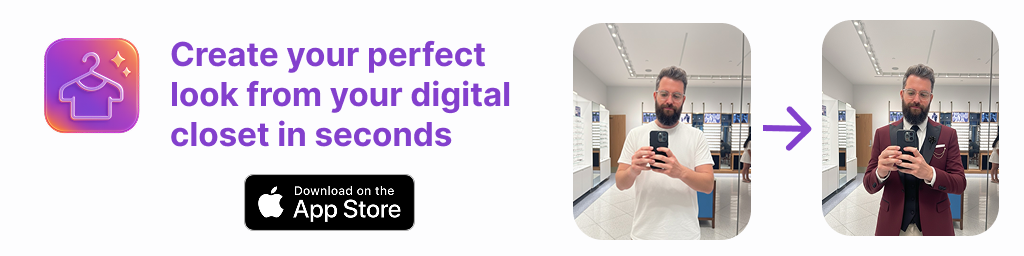
Standing in front of your closet and asking, “What should I wear?” is a universal, daily problem. A what to wear generator solves it by turning your wardrobe into a searchable, smart system that suggests complete outfits based on your clothes, the weather, your calendar, and your personal style rules. This guide explains what these tools are, how they work, and how to set one up so it gives consistently great suggestions you’ll actually wear.
What Is a What to Wear Generator?
Definition: A what to wear generator is an AI-powered outfit planner that analyzes your wardrobe, context (weather, occasion, location), and preferences to recommend ready-to-wear looks—often with mix-and-match alternatives and styling notes.
Some generators are simple “outfit spinners” that assemble random combinations. Modern solutions go further: they catalog your closet, understand garment attributes (color, fit, fabric, season), incorporate constraints (dress codes, laundry status), and learn from your feedback. Many include virtual try-on or realistic outfit previews so you can see how items look together without getting changed.
How a What to Wear Generator Works (Under the Hood)
While each app differs, most follow a similar pipeline:
- Closet intake: You add items via photos or product links. Computer vision detects categories (e.g., blazer vs. cardigan), colors, patterns, and sometimes silhouette.
- Metadata + tags: You confirm or refine details: seasonality, formality, fit notes, care, and occasion tags (work, gym, date night).
- Context ingestion: The generator pulls in weather (temperature, precipitation), your calendar or manual occasion input, and location/time.
- Constraints + rules: Your preferences (“no heels on rainy days,” “smart casual for presentations”) filter options.
- Scoring and selection: The system ranks possible outfit sets for coherence (color/pattern harmony), appropriateness, comfort, and novelty (to avoid repeats).
- Feedback loop: You save, tweak, or reject picks; the model learns your taste over time.
In practice, the best generators balance style rules with real-life constraints. For example, combining monochrome base + statement layer + weather-appropriate footwear can score higher if your history shows you favor minimal looks with one standout piece.
Set It Up Right: A Workflow for Reliable Suggestions
Great outputs start with clean inputs. Use this setup checklist to train your what to wear generator for dependable results:
- Photograph your essentials first. Capture clear, well-lit photos of tops, bottoms, layers, dresses, and shoes you wear weekly. You can add rarely worn items later.
- Standardize angles. Flat lay or on-hanger against a plain background helps computer vision detect details cleanly.
- Tag consistently. Apply uniform tags for color, category, fabric, formality, and season. Avoid novel synonyms that fragment your data (“cream” vs. “off-white”).
- Add fit and comfort notes. Mark items as “loose,” “tailored,” “stretch,” “break-in needed,” or “all-day comfortable.” These influence day-long wearability.
- Record restrictions. E.g., “dry clean only,” “no rain,” or “needs seam repair.” Your generator can exclude them when weather or time is against you.
- Connect context sources. If available, sync your calendar and enable local weather. Otherwise, manually enter the day’s occasion and conditions.
Example Closet Item Schema
A simple, structured approach boosts accuracy. Here’s a sample JSON describing a blazer that a what to wear generator could use:
{
  "id": "item_1247",
  "category": "blazer",
  "name": "Navy wool blazer",
  "colors": ["navy"],
  "pattern": "solid",
  "fabric": "wool",
  "fit": "tailored",
  "closure": "two-button",
  "season": ["fall", "winter", "spring"],
  "formality": "smart-casual",
  "occasions": ["work", "presentation", "dinner"],
  "notes": "Best with light chinos or dark denim; avoid heavy rain",
  "care": "dry-clean",
  "status": {"clean": true, "available": true},
  "wear_count": 27,
  "cost": 180
}
Useful Tags to Maintain
| Tag | Why It Matters | Example Values |
|---|---|---|
| Formality | Maps to dress codes and occasions | casual, smart-casual, business, formal |
| Season | Filters for weather comfort | spring, summer, fall, winter |
| Color family | Improves color matching | neutrals, brights, pastels, earth tones |
| Fabric | Impacts drape, breathability, care | cotton, linen, wool, denim, silk |
| Fit | Comfort and silhouette coordination | relaxed, regular, tailored, oversized |
| Restrictions | Avoids bad-weather or care mishaps | no rain, dry-clean only, heels>3in |
Daily Use: A Five-Minute Morning Flow
Use this repeatable routine to get value from your what to wear generator every day:
- Open your day’s context. Confirm weather, temperature, and the primary occasion (e.g., client meeting, WFH, gym).
- Set preferences. Choose a mood or style lane: monochrome, playful color, or minimal classic.
- Get 3–5 suggestions. Review outfit cards with tops, bottoms, layers, shoes, and accessories.
- Tweak constraints. Add a rule like “no dry clean pieces” or “breathable fabrics only.” Regenerate options.
- Save and wear. Bookmark a favorite; mark what you wore so the system reduces near-term repeats.
Prompt and Constraint Examples That Produce Better Picks
The way you ask matters. Try these targeted prompts within your what to wear generator:
- “Smart casual presentation outfit, no heels, rain expected, navy palette.”
- “Carry-on only travel capsule for 4 days: 2 tops, 2 bottoms, 1 dress, 1 sneaker, 1 flat.”
- “WFH look that’s Zoom-ready waist-up, ultra-comfortable waist-down.”
- “Monochrome base with one pop-color accessory under 75°F.”
- “Brunch outfit that’s machine-washable and stroller-friendly.”
Constraints help the engine enforce real-life rules:
- Weather-aware: exclude suede in rain; prefer linen above 80°F; add a light layer below 65°F.
- Mobility needs: no tight skirts on commute days; prioritize stretch denim for long flights.
- Care constraints: avoid dry-clean-only on busy weeks.
- Style continuity: maintain a consistent color story across top, bottom, and layer (e.g., two neutrals + one accent).
Use Cases and Scenario Playbooks
Work: Smart Casual With a Presentation
Prompt: “Client-facing, smart casual, 60–68°F, subtle color.” The generator might propose: navy blazer + light blue oxford + gray chinos + brown loafers + leather belt. Optionally swap chinos for dark denim if your office leans casual.
Travel: Weekend Carry-On
Prompt: “3 days urban travel, no ironing, 55–70°F.” Suggests: black jeans + white tee + light trench + scarf + sneakers, plus an alternate top and a knit dress that pairs with the trench and scarf.
Gym-to-Brunch
Prompt: “Athleisure base that transitions to brunch, 72°F.” Suggests: black leggings + moisture-wicking tank + oversized button-down as layer + white trainers + crossbody bag.
Evening Out
Prompt: “Date night, 65°F, one statement piece.” Suggests: slip dress + cropped leather jacket + block heels + bold earrings, with an alternate version substituting ankle boots if walking is involved.
Troubleshooting: When Suggestions Miss the Mark
- Issue: Repetitive outfits. Fix: Increase novelty weight or set a “cooldown” on items (e.g., no repeats within 10 days).
- Issue: Suggestions ignore weather. Fix: Reconnect weather permissions; add explicit season tags; mark “no rain” restrictions on sensitive materials.
- Issue: Color clashes. Fix: Add color family tags (neutrals, earth tones); define a palette preference; use “one pattern per outfit” rule.
- Issue: Not my style. Fix: Rate or reject suggestions consistently; the system learns your silhouettes and color bias over time.
- Issue: Pieces suggested that are at the cleaner or in laundry. Fix: Keep item availability updated; enable automatic exclusions for unavailable status.
Measure What Matters: Time, Cost, and Closet Utilization
Track a few simple metrics to see the real value of your what to wear generator:
| Metric | How to Track | Why It Helps |
|---|---|---|
| Time-to-outfit | Average minutes from open to decision | Showcases daily time savings |
| Wear distribution | % of closet worn in last 30 days | Identifies underused items to rotate in |
| Repeat interval | Days between similar looks | Balances novelty with signature style |
| Cost per wear | Item cost / wear count | Informs future purchasing decisions |
// Example: quick pseudocode for wear distribution
const wornItems = outfitsLast30Days.flatMap(o => o.items)
const uniqueWorn = new Set(wornItems)
const distribution = (uniqueWorn.size / totalClosetItems) * 100
Choosing a What to Wear Generator: Criteria That Matter
Evaluate tools with these questions in mind:
- Accuracy of visual recognition: Does it correctly detect categories, colors, and patterns from your photos?
- Context awareness: Can it incorporate weather and calendar events smoothly?
- Virtual try-on realism: Are outfit previews believable enough to make a confident decision without changing?
- Tagging ergonomics: Is adding or editing metadata fast, with helpful defaults and suggestions?
- Learning loop: Does it improve as you accept/reject looks and record wears?
- Privacy and control: Can you keep photos private, export data, and manage permissions easily?
- Platform and reliability: Does it perform well on your device, work offline for travel days, and sync quickly?
- Sharing and collaboration: Can you save, share, or compare outfits with friends or a partner?
Advanced Styling Logic You Can Encode
Teach your what to wear generator proven formulas so it proposes outfits that feel intentional:
- Rule of Three: Base + Layer + Accessory (e.g., tee + blazer + scarf). Forces finished looks.
- Two Neutrals + One Accent: Keeps harmony while allowing personality.
- Texture Triad: Mix at least two textures (denim, knit, leather) for depth.
- Silhouette Balance: Fitted top with relaxed bottom, or vice versa.
- Laundry Logic: Prioritize machine-washable items midweek; save delicate pieces for lighter schedules.
Temperature-to-Outfit Heuristics
| Temp Range | Suggested Base | Layer | Shoes |
|---|---|---|---|
| >80°F (27°C+) | Breathable tee or tank, linen dress | None/light overshirt | Sandals or breathable sneakers |
| 65–80°F (18–27°C) | Cotton tee, blouse, chinos/jeans | Light cardigan or denim jacket | Sneakers, loafers |
| 50–65°F (10–18°C) | Long-sleeve knit, heavier denim | Trench, bomber, blazer | Boots or leather sneakers |
| <50°F (<10°C) | Thermal base, wool layers | Coat, insulated jacket | Weatherproof boots |
Use these as rules in your generator to automatically adapt suggestions when temperatures swing.
Frequently Asked Questions
Will a what to wear generator work if my closet isn’t big?
Yes. Smaller wardrobes actually help the algorithm learn your preferences faster. The key is thorough tagging and a few versatile items that can be styled multiple ways.
Do I have to photograph everything?
No. Start with your top 20–30 most-worn pieces. Add seasonally or as you do laundry—an incremental approach keeps setup painless while still yielding useful suggestions.
What about personal style—won’t AI make me dress like everyone else?
When you rate suggestions and encode your style rules, the system adapts to you. Over time it proposes looks that reflect your signature silhouettes, color palette, and comfort thresholds.
Getting Started Today
A what to wear generator becomes truly powerful when you pair clean item data with clear constraints and a short daily feedback loop. Start with your everyday staples, add simple rules (weather, formality, laundry), and ask for 3–5 options each morning. Within a week, you’ll spend fewer minutes deciding, discover new combinations you already own, and reduce impulse buys by wearing more of what you have. If you’d like an iOS option that combines a what to wear generator with realistic virtual try-ons and a smart closet organizer, consider Outfit Maker.