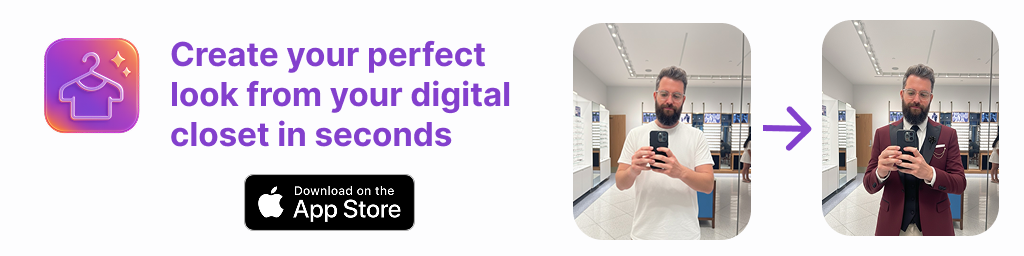
Standing in front of a full closet and still feeling like you have nothing to wear is a familiar problem. A what to wear app can make the decision more manageable by helping you review clothes you already own, consider outfit combinations, and plan a look for a specific day or occasion. Instead of repeatedly changing clothes, you can compare possibilities before getting dressed.
The most useful approach is not to expect an app to make every style decision for you. Use it as a visual planning tool: provide a clear picture of your wardrobe, narrow your choices based on the day ahead, and decide which combination feels right. AI outfit tools can help you picture garments together, but they do not replace your judgment about comfort, fit, weather, or personal style.
What does a what to wear app do?
A what to wear app is a digital tool for organizing clothes and exploring outfit ideas. Depending on the app, you may be able to create a digital closet from photos of your garments, put items together into looks, or use virtual try-on to visualize combinations. Some tools use AI to suggest or display outfit pairings, while others focus on cataloging and planning.
The key difference from a general fashion inspiration feed is that a digital wardrobe can be based on your own garments. That makes it easier to consider whether a top you already have works with a particular pair of trousers, or to revisit a look you saved for a future event. The app supports the decision; it does not know every detail of your day unless you provide that context.
Start with the day, not the entire closet
When you are stuck, avoid scrolling through every item at once. Begin with the practical details that will shape your choice: the occasion, your plans, the expected conditions, and how formal or relaxed you want to feel. Then narrow your digital closet to a few relevant categories, such as tops, bottoms, shoes, and a layer.
For example, imagine you have a casual office day with a walk between meetings. You might compare a striped shirt with dark jeans and loafers against a knit top, tailored trousers, and comfortable flats. If the forecast looks cool, add a cardigan or jacket to each option. Seeing the combinations together can help you decide whether the complete look suits your plans, rather than judging each garment on its own.
This simple sequence also helps prevent an app from producing ideas that look interesting but do not work for the day. A party outfit and a commute-friendly outfit have different practical requirements. Your calendar and preferences remain important inputs.
How to use a digital closet to make a decision
- Choose a specific use. Start with a real situation, such as a workday, dinner, class, or weekend errand. A clear occasion gives your choices a useful boundary.
- Find a few suitable pieces. Select garments that fit the setting and conditions. If your wardrobe is cataloged, browse the relevant categories instead of reviewing everything.
- Build two or three combinations. Try changing one item at a time, such as switching the shoes or outer layer. That makes it easier to understand what changes the feel of a look.
- Visualize and compare. If the app offers virtual try-on, use it to see how the photographed items may look together. Compare the complete outfits rather than evaluating a single item in isolation.
- Check the real-world details. Consider comfort, movement, dress code, weather, and whether each garment is clean and available. Choose the option that works for your actual day.
Keeping the comparison small matters. If you make ten nearly identical looks, you may create more indecision instead of less. A short list of distinct options—one relaxed, one more polished, and one suited to changing conditions—is usually easier to assess.
A concrete example: choosing a look for a casual dinner
Suppose you are meeting a friend for dinner after work. In your digital wardrobe, you find a black top, a soft blue shirt, straight-leg jeans, a midi skirt, ankle boots, and clean sneakers. Rather than trying everything on, create two options: the black top with the skirt and ankle boots, or the blue shirt with jeans and sneakers.
A virtual preview may help you notice that the first combination feels more dressed up, while the second looks relaxed. You can then ask practical questions: Will you be walking? Is the restaurant casual? Do you want a warmer layer? If the answer to the last question is yes, add a jacket to both combinations and compare again. The app helps you visualize the garments; your plans determine which outfit makes sense.
This is also where saved looks can be useful. If you decide that the shirt, jeans, and boots combination works well for similar plans, saving it can give you a starting point next time. You can still adjust the shoes, layer, or accessories to suit a different day.
What to look for in an outfit-planning app
Not every person needs the same features. A useful what to wear app should fit the way you make decisions, rather than adding a complicated routine. Consider these questions before choosing a tool:
| What to check | Why it matters |
|---|---|
| Digital closet | Can you organize photos of garments so your outfit ideas reflect clothes you own? |
| Outfit visualization | Can you see combinations together before changing clothes? |
| Saving looks | Can you keep combinations you may want to wear again? |
| Ease of updating | Can you add, remove, or revise items as your wardrobe changes? |
| Privacy and permissions | Are you comfortable with how the app handles uploaded photos and account information? |
Be realistic about setup, too. A digital closet is more useful when its photos are clear and its contents reflect what you actually wear. You do not have to photograph everything in one sitting. Start with frequently worn items or a group of clothes for a particular season, then add more when it is convenient.
What AI virtual try-on can—and cannot—tell you
AI outfit generation and virtual try-on can support style visualization. They may help you consider color combinations, compare garment pairings, or preview how items could look together in an image. This is valuable when you want to explore options without physically changing clothes for each one.
However, an image is not a fitting room. A virtual preview should not be treated as a reliable prediction of exact fit, sizing, drape, texture, or fabric behavior. Photos can be affected by lighting, camera angle, garment positioning, and how the item was photographed. A top may appear to sit differently in an image than it does when worn, and a fabric’s weight or stretch may not be visible at all.
Use the preview to answer questions such as, Do these colors feel cohesive? or Which combination looks more formal? For fit and comfort, rely on the garment itself, your experience wearing it, and any available sizing or care information. Keep the distinction clear: visualization helps you compare ideas, while real-world wear tells you how an outfit feels.
Make outfit planning a light habit
A what to wear app works best when it reduces friction rather than becoming another task. Try planning only a few days at a time, or save a look as soon as you discover a combination you like. A quick review the evening before a busy day can help you catch practical issues, such as needing a clean shirt or a warmer layer.
- Use accurate photos: Photograph garments clearly so you can recognize their color and shape.
- Keep categories simple: Useful labels might include tops, bottoms, shoes, outerwear, and occasion.
- Save outfits with context: A note such as work, dinner, or rainy day can make a saved look easier to reuse.
- Review what you actually wear: If a saved combination does not suit your comfort or routine, update it rather than forcing the plan.
For travel, the same method can help you think about how pieces work across several days, though you should still account for the destination, forecast, activities, and baggage limits. For everyday use, start small and focus on the decisions that most often slow you down.
Is a what to wear app worth using?
It can be helpful if you want a visual record of your wardrobe, enjoy comparing outfit combinations, or often forget which pieces work well together. It may be less useful if maintaining a clothing catalog feels burdensome or if you prefer making choices by trying clothes on. The best tool is one that fits your habits and offers a clear benefit without requiring more effort than it saves.
For a practical starting point, add a handful of garments you wear regularly, create two combinations for a real occasion, and use any virtual preview as a guide—not a guarantee of fit. If you want to learn more about building a catalog, the digital closet guide from Outfit Maker explains the basics of organizing a wardrobe digitally.
Ultimately, an app cannot decide what feels like you. It can make your options easier to see, help you reuse combinations you already like, and turn a crowded closet into a more considered set of choices. Start with the clothes you own and the day you need to dress for; that is often enough to make the next outfit decision simpler.