An outfit planner is a simple system for deciding what you will wear before you need to wear it. Done well, it saves time, lowers decision fatigue, and helps you get more value from the wardrobe you already own. This guide shows you how to build a weekly outfit planner that adapts to your life, your local weather, and your style goals, with practical templates you can use today.
Plan outfits when you are calm, not when you are rushing. Consistency beats last-minute inspiration.
How a Weekly Outfit Planner Works
Think of your weekly outfit planner as a repeatable loop. You set constraints, map your week, and pre-select combinations that fit your schedule and the forecast. A clear loop makes planning sustainable:
- Context: what you are doing each day, from office meetings to workouts.
- Climate: expected highs, lows, rain chance, and wind that affect layering.
- Color: a simple palette strategy for easy mixing and matching.
- Comfort: shoes and fabrics that match movement and weather.
By front-loading these decisions, you turn getting dressed into a quick execution step rather than a creative struggle.
Build Your Baseline Wardrobe Grid
Start with a small, mixable set. You do not need a capsule wardrobe forever, but a compact grid makes a weekly plan easier. Try this structure:
- 3 tops: one neutral knit, one crisp shirt or blouse, one accent tee or shell
- 2 layers: one blazer or cardigan, one lightweight outer layer
- 3 bottoms: one tailored pant or skirt, one smart casual jean or chino, one relaxed option
- 2 shoes: one dressy flat or heel, one sneaker or boot
- 2 wildcards: a statement piece or seasonal layer and an extra top
This 12-piece grid can yield dozens of outfits using simple formulas: top plus bottom plus layer plus shoe plus accessory. As you refine your outfit planner, rotate items for seasonality and events.
Weekly Outfit Planner Template
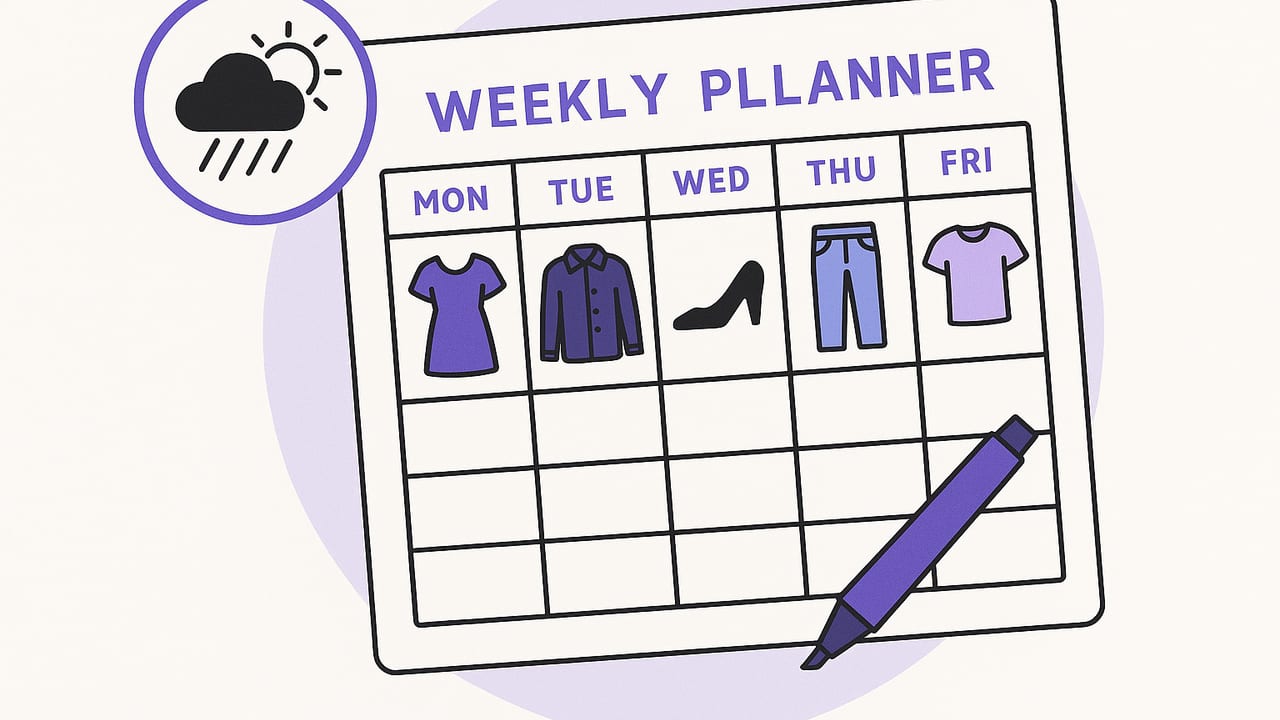
Use this table to outline your week. Fill it on Sunday in about 20 minutes.
| Day | Context | Forecast | Outfit formula | Backup |
|---|---|---|---|---|
| Monday | Office and client call | Cool, light rain | Blazer plus knit top plus tailored pant plus waterproof loafer | Swap blazer for cardigan |
| Tuesday | WFH plus gym | Mild | Button-down plus jeans plus white sneaker; pack gym set | Swap jeans for joggers after 4 pm |
| Wednesday | Team meeting and dinner | Warm | Silk shell plus midi skirt plus strappy flat plus light scarf | Replace skirt with tapered pants |
| Thursday | Focus day | Variable wind | Cotton tee plus cardigan plus chinos plus retro runner | Layer windbreaker |
| Friday | Casual office | Warm, chance of shower | Oxford shirt plus dark denim plus desert boot | Add packable rain shell |
| Saturday | Errands and brunch | Sunny | Breton stripe plus linen short plus sandal | Swap sandal for sneaker |
| Sunday | Family and reset | Mild | Soft knit plus relaxed trouser plus slip-on | Add overshirt for evening |
Keep one backup for every day. Bad weather or surprise meetings happen. A reliable backup prevents spirals.
Weather-Aware Outfit Planning
Weather is the most common spoiler of a weekly outfit planner. Make it part of your process:
- Check the 7-day forecast on Sunday and again each evening.
- Decide a threshold for changes: if wind exceeds 20 mph, swap to secure layers; if rain chance exceeds 60 percent, choose waterproof footwear.
- Use humidity to adjust fabrics. High humidity favors breathable cotton, linen, and tech fabrics.
If you like automations, here is a simple pseudo workflow using a weather API. It converts forecast data into planning tags you can use in your notes or digital wardrobe.
# pseudo Python for mapping forecast to outfit tags
def outfit_tags(day):
    high = day['high']
    rain = day['rain_prob']
    wind = day['wind']
    tags = []
    if high < 50: tags += ['heavy layer', 'insulated shoe']
    elif high < 65: tags += ['mid layer', 'sock required']
    else: tags += ['breathable fabrics']
    if rain >= 60: tags += ['waterproof shell', 'non-absorbent bag']
    if wind >= 20: tags += ['secure hat', 'zip layer']
    return tags
Translate tags to specific items in your closet, like navy trench, leather tote, or merino cardigan.
Color Programming That Simplifies Choices
A simple color rule keeps an outfit planner fast. Try the 3-2-1 ratio:
- 3 neutrals: your base set, like navy, black, gray, stone, tan.
- 2 accent colors: seasonal or signature hues that flatter your undertone.
- 1 pattern: stripes, micro check, or floral in your neutral or accent family.
Apply it daily: 2 neutrals plus 1 accent or pattern. This maintains coherence without being boring.
Fit and Proportion Quick Rules
To avoid guesswork when pairing tops and bottoms, use these guardrails:
- If the top is relaxed, the bottom is tapered; if the top is fitted, the bottom can be wide.
- Balance a long layer with a defined waist underlayer.
- Match shoe weight to silhouette: chunky shoe with wide leg, sleeker shoe with slim leg.
Write these rules into your outfit planner so they become automatic.
Your 20-Minute Sunday Routine
- Calendar scan: list events, commutes, and workouts.
- Forecast scan: log high, low, rain chance, wind for each day.
- Laundry check: confirm what is clean and ready.
- Pick 7 outfits with backups using your templates.
- Hang or fold outfits together with notes for accessories.
- Photograph the looks if you keep a digital wardrobe.
Do a 2-minute nightly check to adjust for new info and prepare the next outfit before bed.
Special Cases Your Outfit Planner Should Cover
Office heavy weeks
Lean on modular tailoring. Pair a blazer with knit tops, rotate trousers and skirts, and keep an extra pair of shoes at work for rain days.
WFH routines
Choose soft, structured knits and breathable pants that still look meeting-ready on camera. A light layer near your desk saves time.
Gym and commute
Plan gym sets as part of the week, not as an afterthought. Keep a small kit in your bag or car: socks, hair ties, deodorant, and a compact towel.
Travel
Use a mini outfit planner with 2 tops, 2 bottoms, 1 layer, 1 dress or jumpsuit, 2 shoes, and a scarf. Everything should mix. Pre-plan day-by-day looks and pack to the plan, not to the suitcase capacity.
Common Outfit Planner Mistakes and How to Fix Them
- Overplanning statement looks: save one statement piece per week; keep the rest modular.
- Ignoring shoes: start outfits with footwear on weather-sensitive days.
- Forgetting laundry cycles: include a midweek reset if needed; avoid planning all favorites early.
- Neglecting accessories: belts, bags, and scarves are low-effort upgrades. Pre-pair them with outfits on Sunday.
- Not tracking wins: note which combinations felt great and which did not; recycle what works.
Wardrobe KPIs to Improve Your Planner
Simple metrics help you refine choices over time. Track weekly in a note:
| Metric | How to measure | Use |
|---|---|---|
| Repeat rate | How often you wear the same formulas | Shows reliable go-tos worth duplicating |
| Comfort score | Rate each day 1 to 5 | Highlights fabrics or fits to prioritize |
| Weather fit | Were you too hot, cold, or wet | Improves gear and layering decisions |
| Cost per wear | Item price divided by wears | Guides future purchases toward value |
A few weeks of notes will reveal patterns that make your outfit planner smarter.
A Reusable Checklist for Every Week
- Calendar and forecast captured
- 7 outfits chosen with backups
- Shoes weather-ready and cleaned
- Accessories paired and staged
- Laundry and repairs scheduled
- Photos or notes saved for reference
Print this list or keep it in your phone. Consistency is the secret ingredient.
Example Formulas You Can Plug In
- Smart casual: knit polo plus pleated trouser plus suede loafer plus leather belt
- Creative office: patterned blouse plus wide-leg pant plus block-heel plus cropped jacket
- Minimalist: white tee plus black jean plus sleek sneaker plus trench
- Sporty: merino tee plus tech jogger plus retro runner plus coach jacket
- Evening: silk cami plus midi skirt plus strappy sandal plus satin clutch
These formulas operate like building blocks inside your outfit planner. Swap colors and fabrics for seasonality.
Sustainable Planning That Pays Off
An effective planner reduces impulse purchases. When you know the combinations you need, you buy with purpose. A short shopping list might read: waterproof loafer, breathable white shirt, and packable shell. Each item fills a proven gap, increasing the success rate of your weekly plan.
Pro Tips From Stylists
- Pre-hem trousers to your most-used shoe heights to avoid last-minute changes.
- Use a neutral outer layer as a unifier when mixing unusual colors or silhouettes.
- Keep a micro-sewing kit and stain stick in your bag for failsafe saves.
- Photograph best outfits in daylight; note why they worked: color echo, shoe balance, or proportion.
Small habits compound into a planner you trust.
Make It Digital or Keep It Analog
There is no single right tool. Some people love a whiteboard or a printed weekly template on the closet door. Others prefer a digital outfit planner that stores photos, tags weather, and lets you drag and drop pieces into looks. Choose the approach that you will actually use each week, then iterate.
Putting It All Together
To recap, an excellent weekly outfit planner is a loop you can run predictably:
- Define the week: context and climate.
- Use a compact grid of mixable pieces.
- Apply simple color and proportion rules.
- Draft seven looks with backups.
- Review nightly and record what worked.
After a month of consistent planning, you will know your best outfit formulas, you will spend less time choosing clothes, and your wardrobe will feel larger without buying more.
Looking for a mobile way to build and test outfits before committing to them If you prefer an iPhone outfit planner with realistic virtual try-ons and a digital closet, the app Outfit Maker can help you catalog pieces, generate combinations, and save weekly lineups.