Frequent travel can make getting dressed feel unnecessarily complicated. A short business trip, a weekend wedding, a multi-city holiday, and a work conference may all require different levels of formality, weather preparation, and comfort. Without a reliable system, it is easy to pack too much, forget key pieces, and arrive with a suitcase full of clothes that do not work together.
A wardrobe planner for frequent travelers helps solve this problem by turning individual clothing items into a small, practical outfit system. Instead of choosing random garments at the last minute, you plan around your itinerary, repeat versatile pieces intentionally, and create outfit combinations before your trip begins.
This guide explains how to build a travel wardrobe plan that is realistic, flexible, and easier to reuse for every future journey.
Why Frequent Travelers Need a Wardrobe Planning System
Travel wardrobes have different demands than everyday wardrobes. At home, you can change outfits, access your full closet, and adapt quickly if the weather changes. On a trip, every item needs to earn space in your bag.
A good travel wardrobe plan should help you:
- Pack fewer pieces without running out of outfit options.
- Dress appropriately for meetings, meals, activities, and travel days.
- Prepare for temperature shifts, rain, or unexpected schedule changes.
- Reduce time spent deciding what to wear in a hotel room.
- Identify which clothes you actually wear on repeated trips.
- Make laundry, unpacking, and repacking less stressful.
The goal is not to create a perfectly minimal suitcase at all costs. It is to create a wardrobe that gives you enough choice while avoiding clothing that only works with one other item.
Start With the Trip, Not the Clothes
One of the most common packing mistakes is opening the closet before looking at the itinerary. Start by understanding what the trip requires. Your destination, activities, transport, and expected weather determine the categories of outfits you need.
Create an itinerary clothing map
List each day and note the situations that require a distinct outfit. You do not need to assign every hour of the day, but you should identify the occasions that affect what you wear.
| Trip moment | Clothing need | Planning question |
|---|---|---|
| Travel day | Comfortable, polished layers | Can this outfit also work for a casual dinner? |
| Client meeting | Professional outfit | Can the blazer, trousers, or shoes be worn again? |
| City sightseeing | Walking comfort and weather protection | Will these shoes still be comfortable after several hours? |
| Evening event | Elevated or formal look | Can daytime basics be restyled for the evening? |
| Free time | Easy, relaxed outfit | Do I already have a versatile option packed? |
This approach prevents vague categories such as “a few tops” or “something nice.” It also highlights opportunities to use one item in multiple settings.
Build a Small Travel Outfit Formula
A travel outfit formula is a repeatable structure that makes combinations easier. It does not mean every outfit must look identical. Instead, it gives your suitcase a clear visual direction.
For example, a frequent traveler might use this formula:
- Two neutral bottoms that work with every top.
- Four to five tops in compatible colors.
- One structured layer, such as a blazer, overshirt, or cardigan.
- One weather layer, such as a lightweight jacket or coat.
- Two pairs of shoes with separate purposes.
- A small number of accessories that change the feel of an outfit.
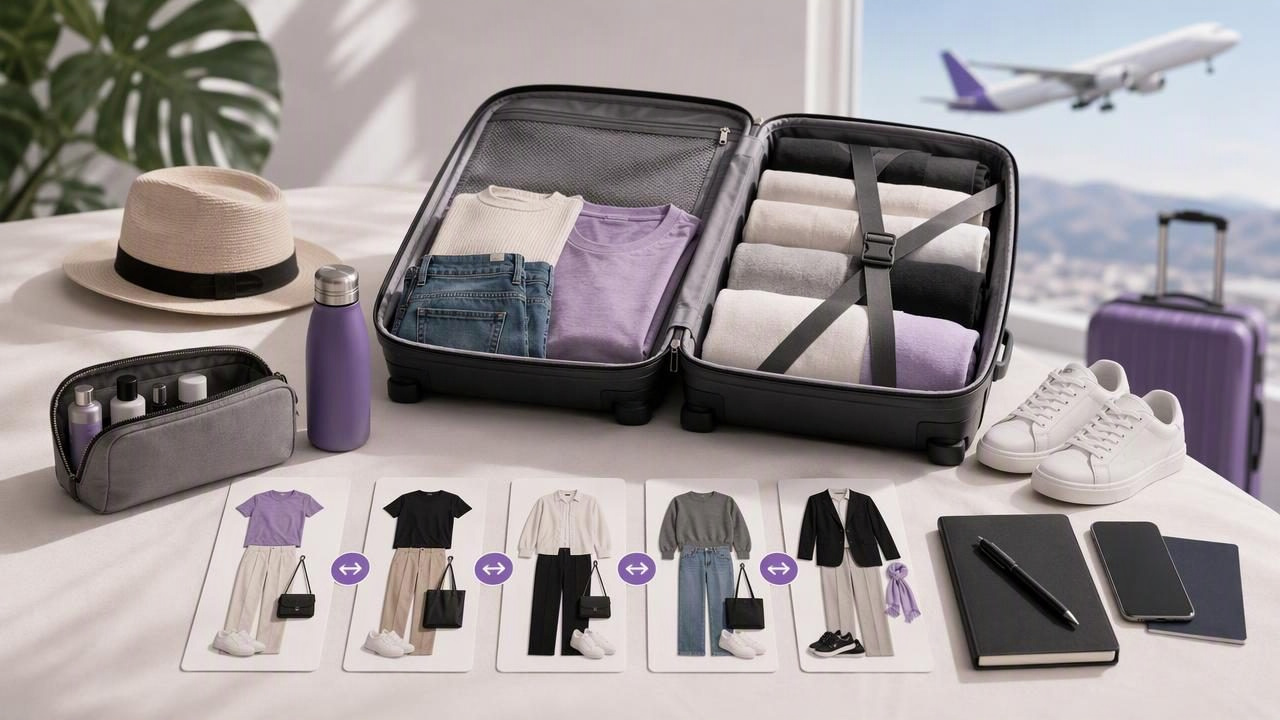
For a four-day work trip, this could mean navy trousers, dark jeans, a white shirt, a knit top, a striped top, a black tee, a neutral blazer, a rain-resistant jacket, loafers, and clean walking shoes. These pieces can create casual travel looks, business-ready outfits, and relaxed dinner combinations without requiring a separate outfit for every event.
Useful rule: Before packing an item, identify at least two outfits it can join. If it only works once, decide whether the occasion truly requires it.
Choose a Color Palette That Makes Packing Easier
A limited color palette is one of the simplest ways to improve a travel wardrobe. This does not require an all-neutral suitcase. It means selecting colors that coordinate naturally so you can mix garments without needing extra “matching” pieces.
A practical palette often includes:
- One main neutral: black, navy, charcoal, tan, cream, or olive.
- One supporting neutral: a second base color that works with the first.
- One or two accent colors: colors that add personality through tops, scarves, knitwear, or accessories.
For instance, navy and cream can form the foundation of a travel capsule, with rust or soft blue as accents. A traveler could wear navy trousers with a cream shirt for a meeting, then pair the same trousers with a rust knit for dinner. The clothes feel varied, but the planning remains simple.
Before finalizing your bag, lay out the selected tops and bottoms together. If several items look isolated from the rest, they may not belong in this specific travel wardrobe.
Plan Outfits Around Rewearing, Not One-Time Use
Frequent travelers often benefit from thinking in terms of wear cycles. Some items can be worn several times with little effort, while others may need washing after one use. Planning with this distinction helps you pack realistically.
| Item type | Typical travel role | Rewear planning note |
|---|---|---|
| Trousers or jeans | Core outfit foundation | Often suitable for multiple wears when kept clean. |
| Blazer, cardigan, or jacket | Layering and polish | Usually works across several days and occasions. |
| T-shirts and base layers | Comfort and freshness | Bring enough for your personal comfort and climate. |
| Shoes | Function and outfit balance | Prioritize pairs that serve clearly different needs. |
| Accessories | Outfit variation | Small items can refresh repeated clothing combinations. |
Rewearing works best when you plan intentionally. Wearing the same trousers twice is less noticeable when you change the top, layer, shoes, or accessory. More importantly, it reduces the temptation to pack backup items you will never use.
Create a Weather and Laundry Backup Plan
A strong wardrobe planner includes flexibility, not just ideal conditions. Check the forecast close to departure, but prepare for normal variation rather than packing for every imaginable scenario.
Use lightweight layers to handle changing temperatures. A breathable long-sleeve shirt, compact knit, or thin jacket can extend the usefulness of warm-weather pieces. For rainy locations, prioritize one reliable outer layer and shoes that can tolerate wet pavement instead of packing multiple bulky alternatives.
If your trip lasts longer than four or five days, consider where laundry fits into the plan. A hotel laundry service, a local laundromat, or quick-dry garments may allow you to pack fewer base layers. However, do not rely on laundry if your schedule is packed or if you do not know whether convenient facilities will be available.
Use a Digital Wardrobe to Test Travel Combinations
A digital wardrobe can make travel planning more visual. By cataloging clothing items and grouping them by category, color, season, or occasion, you can review potential outfits before opening your suitcase. This is especially useful for people who travel often and may forget what they packed successfully on a previous trip.
Try creating a simple trip collection containing only the garments you are considering. Then build looks for each major itinerary moment: travel day, workday, casual outing, dinner, and weather backup. If one top cannot pair with at least two bottoms, replace it with a more flexible option.
AI outfit visualization and virtual try-on tools can also help you compare styling ideas from photos. They are useful for seeing whether colors, proportions, and layers look cohesive together. Still, it is important to understand the limitation: a visual result is not a guarantee of exact fit, sizing, comfort, fabric drape, or how an item will perform in a particular climate.
A Concrete Example: Three Days in Chicago for Work
Imagine a traveler attending two business meetings, one client dinner, and one afternoon of sightseeing in Chicago. The forecast suggests mild temperatures with a chance of rain.
A practical wardrobe plan could include:
- Navy trousers and dark straight-leg jeans.
- A white button-down shirt, fine-gauge knit, striped top, and black tee.
- A navy blazer and lightweight rain jacket.
- Loafers for meetings and water-resistant walking shoes.
- A compact scarf and simple jewelry for evening variation.
On the travel day, the traveler wears jeans, the striped top, and walking shoes. For the first meeting, they switch to navy trousers, the white shirt, blazer, and loafers. The same trousers can be reused with the knit for the client dinner. For sightseeing, jeans, the black tee, rain jacket, and walking shoes provide comfort. This plan creates distinct looks while relying on a small set of coordinated pieces.
Review Every Trip to Improve Your Next Packing List
The best wardrobe planner becomes more useful over time. After returning home, take ten minutes to review what worked. Note which outfits felt comfortable, which items stayed unworn, and whether you had enough layers, shoes, or fresh basics.
- Which pieces did you wear more than once?
- What did you pack but never reach for?
- Did any outfit feel unsuitable for the weather or itinerary?
- Were your shoes appropriate for walking and the occasion?
- What would you pack differently for the same type of trip?
These notes turn each trip into useful data for the next one. Over time, you may discover that a particular blazer, dress, shoe pair, or lightweight layer is a dependable travel essential, while other items repeatedly take up space without being worn.
Make Travel Dressing More Predictable
A wardrobe planner guide for frequent travelers is ultimately about reducing friction. When you plan outfits around your real itinerary, use a coordinated palette, choose versatile layers, and review your past packing habits, travel dressing becomes faster and more dependable.
If you prefer planning visually, Outfit Maker’s guide to planning travel outfits offers a useful starting point for organizing garments into trip-ready combinations in a digital closet. The key is to treat any plan as flexible: check your final schedule and forecast, prioritize comfort, and leave room for the unexpected.