A great wardrobe organizer isn\u2019t just a tidy closet. It\u2019s a repeatable system that turns your clothes into a reliable tool\u2014one that saves time, stretches your budget, and makes getting dressed feel effortless. This blueprint shows how to build that system step by step, blending physical layouts with a digital catalog and simple decision rules. The result: fewer decisions, better outfits, and a closet that supports your real life.
What a Wardrobe Organizer Does (Beyond \u201cNeat Closets\u201d)
A wardrobe organizer optimizes three things: visibility, retrieval, and decisions. When you can see what you own, grab the right piece fast, and choose outfits with minimal friction, you unlock consistent style without constant effort.
- Time savings: Faster mornings and fewer re-tries.
- Cost control: Fewer duplicate purchases and smarter gaps to fill.
- Style consistency: Reliable formulas that work across weather and occasions.
- Sustainability: Higher wear-per-item and less waste.
The Three-Layer Wardrobe Organizer Framework
Think of your wardrobe as a system with three layers. Each layer reinforces the others and removes friction from daily outfit decisions.
Layer 1: Physical Layout (What you can reach)
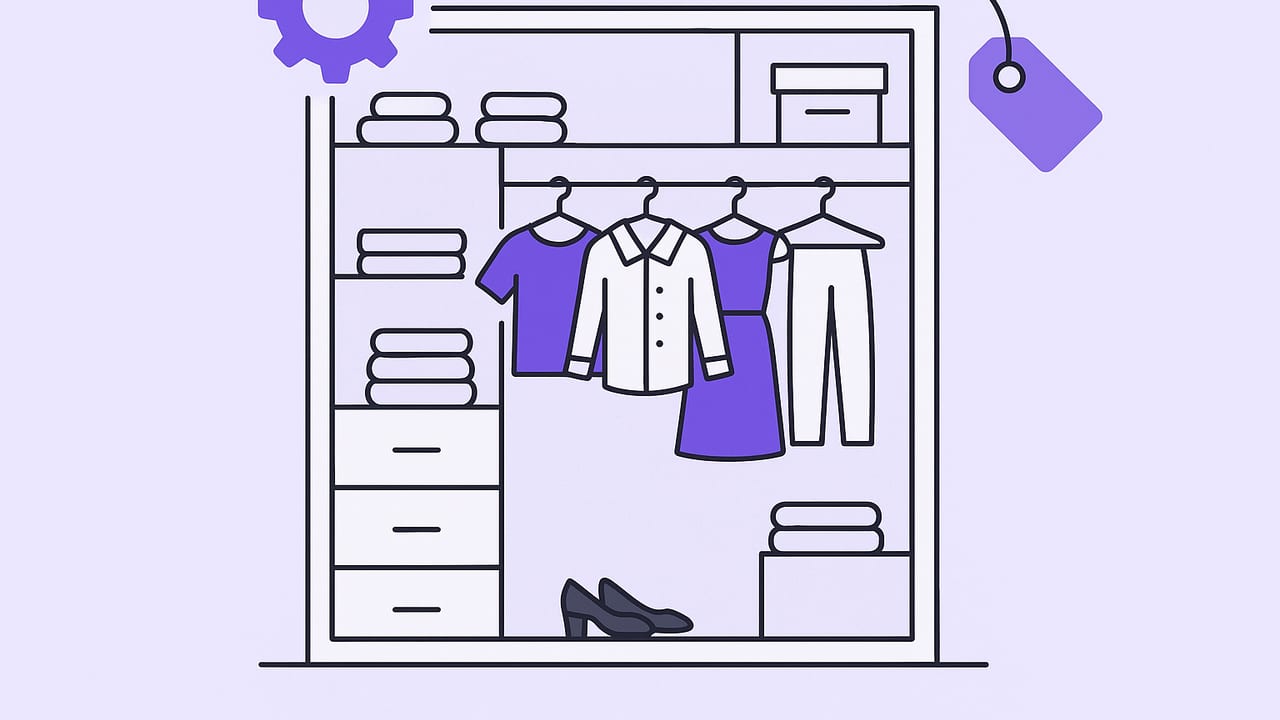
Design your space around use frequency and outfit categories. Put daily uniforms at eye level, occasional pieces higher, and archive items in bins. Use consistent hangers, shelf dividers, and labeled boxes to cut visual noise.
- Zones: Work, casual, workout, dressy, outerwear, accessories.
- Front-loading: Prioritize what you wear 80% of the time.
- Pre-assembled: Keep complete outfit bundles together (belt with trousers, scarf with coat).
Layer 2: Digital Catalog (What you can track)
Photograph garments on a clean background, then tag by type, color, season, formality, fit, and occasions. A digital catalog increases visibility, helps spot duplication, and powers automated outfit ideas.
- Photos: Front view, true color, no clutter.
- Tags: Clear, consistent labels (see table below).
- Notes: Fit quirks, alterations, and care instructions.
Layer 3: Decision Engine (How you choose)
Build simple formulas and routines that translate your catalog into reliable outfits. You\u2019ll use rules like \u201c1 hero + 2 basics\u201d or \u201c1 structured + 1 relaxed\u201d to engineer balance and keep style consistent.
- Formulas: Reusable patterns that fit your lifestyle.
- Shortlists: Pre-vetted item sets for work, weekend, travel.
- Routines: Weekly planning and seasonal swaps.
Step-by-Step Setup in One Weekend
- Empty and sort. Remove everything. Make four piles: Keep, Tailor, Donate/Sell, Archive. If it doesn\u2019t fit, flatter, or support your current life, it\u2019s a candidate to go.
Tip: If an item hasn\u2019t been worn in a year and you can\u2019t name the next occasion, let it go. - Define zones. Assign shelves and bars to categories (work, casual, sport, dressy). Put go-to items at chest-to-eye level. Use bins for accessories and labels for fast retrieval.
- Photograph and tag. Shoot items in good daylight. Keep backgrounds simple. Then add tags with a consistent taxonomy.
- Build your first formulas. Choose two daily formulas (e.g., \u201ctailored top + straight-leg bottom + neutral shoe\u201d) and one for dressy events. Save example outfits.
- Plan a week. Check weather and calendar. Create five outfits and one backup. Stage critical items on one \u201coutfit rail\u201d or shelf.
Tag Taxonomy You Can Copy
Use this simple schema to keep your catalog searchable and your wardrobe organizer consistent.
| Category | Examples | Notes |
|---|---|---|
| Type | shirt, tee, blouse, sweater, blazer, coat, jeans, trousers, skirt, dress, sneakers, loafers | Singular nouns; avoid synonyms |
| Color | black, navy, charcoal, white, beige, olive, burgundy | Stick to common names for filters |
| Season | all-season, warm, cold, rain | Helps automate weather picks |
| Formality | casual, smart-casual, business, dressy | Match to your calendar contexts |
| Fit/Cut | relaxed, regular, tailored, cropped, high-rise | Useful for balance in formulas |
| Occasion | work, weekend, travel, event, gym | Drives shortlists and packing |
| Care | machine-wash, delicate, dry-clean, hand-wash | Avoid last-minute surprises |
Outfit Formulas You Can Reuse
Formulas act like recipes: they limit choices while producing consistent results. Start with 2\u20133 that match your lifestyle and iterate.
- Smart-casual core: neutral knit top + straight-leg bottom + structured third layer + leather shoe.
- Office uniform: button-up + trousers + blazer + loafers + subtle accessory.
- Weekend on-the-go: relaxed tee + denim + lightweight jacket + clean sneaker.
- Evening simple: monochrome dress + minimal jewelry + heeled boot or pump.
Turn formulas into searchable rules in your digital catalog.
// Example query-style filtering for a weekday look
type:top AND color:neutral AND formality:(smart-casual OR business)
+
type:bottom AND fit:straight AND color:neutral
+
type:layer AND (blazer OR jacket) AND season:all-season
+
type:shoe AND (loafer OR ankle-boot) AND color:black
// Then add 1 accessory with metal:gold OR metal:silver
Color Capsules and Mix-and-Match Map
A capsule is a small set of items that all pair well. Build around neutrals, then add one or two accent colors you love. This increases outfit combinations without adding clutter.
| Capsule | Neutrals | Accents | Item Targets |
|---|---|---|---|
| Work capsule | black, white, charcoal | burgundy or forest | 2 tops, 2 bottoms, 1 blazer, 1 shoe |
| Weekend capsule | navy, beige, white | rust or olive | 2 tees, 1 denim, 1 knit, 1 sneaker |
| Seasonal capsule | camel, cream, black | berry or teal | 1 coat, 1 sweater, 1 scarf, 1 boot |
Test capsules by laying items on a bed or using a digital try-on to ensure every top pairs with each bottom and shoe.
Weekly and Seasonal Routines That Stick
Routines keep your wardrobe organizer humming long-term.
Sunday 20-Minute Reset
- Scan weather and calendar; note dress codes and travel.
- Pre-plan five outfits + one contingency (rain/cold).
- Stage items on a rail; ensure they\u2019re clean and pressed.
- Charge wearables, clean shoes, refill lint roller.
Monthly 30-Minute Audit
- Review \u201cnever worn\u201d items; decide keep, tailor, or out.
- Capture any new pieces in your catalog and tag properly.
- Identify gaps: e.g., waterproof boots, neutral belt.
Seasonal Switch
- Rotate capsules: move last season up high; front-load current season.
- Refresh basics: check tees, socks, tights, and underlayers.
- Deep clean: launder delicates, re-sole shoes, de-pill knits.
Advanced Moves: Data, Context, and Constraints
- Weather-aware picks: Map tags like rain or cold to auto-suggest outerwear and footwear.
- Calendar context: Meeting-heavy day? Nudge toward business tags and structured layers.
- Packing lists: Use a 10x10 travel capsule (10 items, 10 outfits) with verified pairings.
- Care cycle planning: Avoid \u201cdry-clean bottlenecks\u201d by spacing those pieces across the week.
\u201cConstraints are creative fuel. The tighter your rules, the easier your choices \u2014 and the better your outfits.\u201d
Troubleshooting Common Wardrobe Organizer Problems
- \u201cI still can\u2019t decide in the morning.\u201d Shrink options. Pick one weekday formula and limit colors to a core palette. Stage outfits the night before.
- \u201cMy closet looks full but I have nothing to wear.\u201d You likely lack connectors (neutral shoes, layering pieces, belts). Fill gaps before buying another statement item.
- \u201cPhotos look messy.\u201d Use natural light, a plain wall, and consistent distance. Crop tight and avoid shadows. Retake unclear images.
- \u201cTags are inconsistent.\u201d Standardize a list (see taxonomy) and batch-edit. Consistency beats detail.
- \u201cLaundry breaks my plan.\u201d Duplicate core basics you rely on (e.g., 2 white tees, 2 black socks sets). Schedule laundry mid-week.
Minimal Tool Stack Checklist
You can run a powerful wardrobe organizer with a lightweight toolkit:
- Analog: Matching hangers, shelf dividers, labeled bins, a valet hook or outfit rail, lint roller, cedar blocks.
- Digital: Smartphone camera, cloud notes for tags and formulas, a wardrobe catalog app for photos, tags, and outfit planning.
- Nice-to-have: Weather and calendar integrations, virtual try-on to validate pairings, sharing to get feedback from a friend.
Example Daily Workflow (Fast and Repeatable)
- Check context: Weather + calendar (5 seconds).
- Pick formula: Choose from your 2\u20133 rules (5 seconds).
- Filter catalog: Apply tags (e.g., smart-casual + cold) to shortlist (30 seconds).
- Assemble and adjust: Add a third layer or swap shoes for weather (1 minute).
- Snapshot: Save the outfit photo to build your proven library (10 seconds).
Maintenance Habits That Pay Off
- One-in, one-out: When a new piece enters, remove an underused or worn-out item.
- Micro-resets: Hang or fold right after wear; keep \u201crefresh\u201d sprays and a fabric shaver handy.
- End-of-day note: If something felt off (fit, comfort, color clash), add a quick catalog note to avoid repeats.
From Organizer to Style Engine
Once your system runs, it will quietly surface patterns: which cuts flatter you, which colors mix best, and which shoes earn their keep. Use that data when shopping. Buy into your formulas, duplicate high-frequency basics, and resist orphans that don\u2019t pair with your capsules.
As your wardrobe organizer matures, the goal isn\u2019t more clothes; it\u2019s more mileage per piece. That means more outfit combinations, higher comfort, and a signature look that doesn\u2019t need constant reinvention.
Bringing It Together
A sustainable wardrobe organizer blends physical order, a clean digital catalog, and simple decision rules. Start with zones, tag consistently, commit to two or three formulas, and schedule short weekly resets. In time, your closet will feel less like a storage room and more like a design system for your day. If you prefer an all-in-one tool to photograph items, tag, plan outfits, and even try looks on virtually, an iOS app like Outfit Maker can streamline the entire workflow while keeping your wardrobe data in one place.