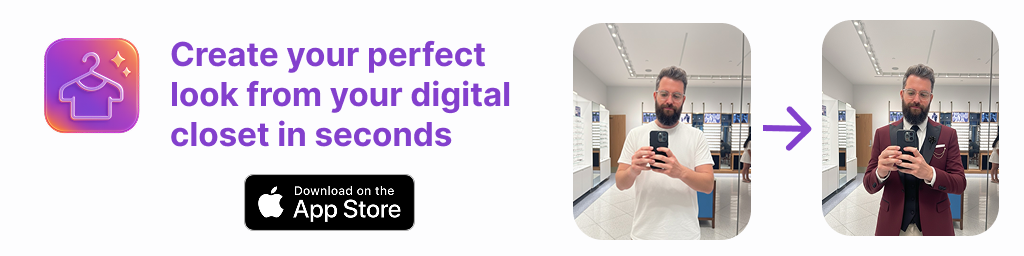
A well-organized closet starts with visibility. A wardrobe catalog app turns scattered garments into a searchable, filterable library you can use to plan outfits, track wear, and shop smarter. Instead of guessing what you own, you’ll see it—complete with tags, fit notes, and outfit ideas—so you wear more of what you already have.
This guide walks you through exactly how to build and maintain a digital wardrobe that works in real life: photography tips, a practical tagging taxonomy, daily workflows, analytics, and pro features like AI-assisted virtual try-on.
What is a Wardrobe Catalog App?
A wardrobe catalog app is a digital system for documenting your clothing and accessories with photos and searchable metadata. Think of it as your closet’s control center: part inventory, part lookbook, and part outfit planner. At minimum, you’ll add an item photo, name, category, and tags. From there, you can filter by season, color, fabric, occasion, and even fit data to assemble outfits effortlessly.
- Inventory: Store photos, purchase details, fabric care, and sizes.
- Search and filters: Find all “black trousers, office, winter, wool” in seconds.
- Outfit builder: Create looks and assign occasions, notes, and weather rules.
- Analytics: Track wears-per-item, cost-per-wear, and usage trends.
- Planning tools: Build packing lists, capsule wardrobes, and seasonal rotations.
Why Use a Wardrobe Catalog App?
- Reduce decision fatigue: Replace morning guesswork with quick filters and saved formulas.
- Wear more of what you own: Visibility curbs autopilot repeats and unlocks new combinations.
- Shop with intention: Spot gaps before buying; avoid duplicates.
- Save time and money: Track cost-per-wear and prioritize alterations or resale.
- Sustainability: Higher wears-per-item and smarter care extend garment life.
Set Up Your Digital Closet in 90 Minutes
Follow this simple workflow to build your catalog fast and keep it tidy.
- Audit what you’ll actually wear: Pull 20–40 most-used pieces first (you can add the rest later). Start with staples: jeans, trousers, knitwear, tees, outerwear, shoes.
- Stage your photo area: Neutral background, consistent daylight, and a phone tripod if possible. Use portrait mode and tap to focus.
- Shoot consistently: One full front shot per item is enough to start. Add back/close-ups for tricky details (texture, prints, embellishments).
- Standardize names: “Brand – Item – Color – Fit.” Example: “Uniqlo – Straight Jeans – Mid Blue – 32x30.”
- Tag the essentials: Category, color, season, occasion, fabric, silhouette, and care.
- Add fit and usage data: Size, alterations, comfort range, weather suitability, and wear notes.
- Outfit foundations: Create 3–5 go-to outfits immediately to see the value on day one.
Fast Photography Tips
- Lighting: Natural north-facing light, or two soft lights at 45° for even exposure.
- Background: Plain wall or door, or use automatic background removal for clean cutouts.
- Framing: Fill the frame; leave a small margin so cropping doesn’t clip edges.
- Consistency: Keep angle and distance the same for a tidy grid and easier visual comparisons.
A Practical Tagging Taxonomy
Tags power the search. Keep them simple and consistent. Start with a core set and avoid synonyms that fragment results (choose one of “blazer” vs. “suit jacket”).
| Attribute | Examples | Why it matters |
|---|---|---|
| Category | t-shirt, blouse, jeans, trousers, blazer, dress, skirt, coat, sneakers | Primary filter for outfit assembly |
| Color | black, navy, white, ecru, camel, olive, mid-blue | Build palettes, balance contrast, avoid dupes |
| Season | all-season, spring, summer, fall, winter | Rotate efficiently; plan capsules |
| Occasion | work, casual, smart-casual, evening, formal, travel | Instantly filter for the day’s context |
| Fabric | cotton, wool, linen, silk, viscose, denim, leather | Comfort, drape, care, and weather suitability |
| Silhouette/Fit | slim, straight, relaxed, wide-leg, cropped, oversized | Makes proportion formulas repeatable |
| Care | machine-cold, hand-wash, dry-clean, delicate | Plan laundry; avoid last-minute surprises |
| Status | new, in-rotation, needs-alteration, donate, sell | Keep the active closet truly active |
Sample Item Schema (you can adapt this)
{
  "id": "item_00231",
  "name": "Uniqlo – Straight Jeans – Mid Blue – 32x30",
  "category": "jeans",
  "color": ["mid-blue"],
  "season": ["fall", "winter", "spring"],
  "occasion": ["casual", "smart-casual", "travel"],
  "fabric": ["denim", "cotton"],
  "silhouette": ["straight"],
  "care": ["machine-cold"],
  "size": "32x30",
  "fit_notes": "TTS at waist, slightly relaxed thigh; works with low-profile sneakers.",
  "purchase_date": "2023-10-18",
  "price": 49.90,
  "wear_count": 36,
  "image_url": "https://example.com/img/uniqlo_straight_midblue.jpg",
  "status": "in-rotation"
}
Everyday Workflows That Deliver Value
1) Morning Quick Filter
Check the forecast, then filter: season → temperature band → occasion → color palette. Pull 2–3 saved outfit formulas (e.g., “structured top + straight-bottom + low-profile sneaker”) and swap pieces to fit the weather or vibe.
2) Outfit Builder and Lookbacks
Save outfits with notes like “great with navy coat” or “heels only for client meetings.” Each time you wear one, log it. After a month, you’ll see which pieces do the heavy lifting—and which need attention.
3) Packing Lists
Create a trip capsule by filtering for climate, occasion, and a base color (e.g., navy). Aim for 10–12 items yielding 20+ outfits via mix-and-match. Save and reuse the list for future trips.
4) Laundry and Care
Filter by “hand-wash” or “dry-clean” to batch care tasks. Add reminders for delicates or wool rest periods so your best pieces last longer.
5) Shopping With Guardrails
Before buying, search your catalog. Do you already own a camel coat? If yes, what gap does the new one fill—shorter length, lighter weight, or different silhouette? Add “wishlist” items to compare against your palette and existing outfits.
6) Resale and Donation
Tag items “sell” or “donate.” Export a list with photos to streamline listings. Include fit notes, fabric, and measurements from your catalog to reduce buyer questions.
What gets measured gets worn. When you track wear count and cost-per-wear, your best pieces naturally rise to the top—and your purchases get smarter.
Use Analytics to Make Better Style Decisions
- Wears-per-item: Set a target (e.g., 30). Prioritize items approaching the goal; rethink those stuck at 0–3 wears.
- Cost-per-wear: Divide price by wear count. Higher CPW might be justified for specialty items, but be honest about payback.
- Palette balance: See if your closet skews too dark or too neutral; deliberately add color or texture where needed.
- Silhouette spread: Identify overrepresented fits (e.g., all wide-leg) and round out with complementary tops and shoes.
- Seasonal rotation: Archive or unarchive with the season so your daily view stays focused.
Integrations, Automation, and AI Extras
- Calendar sync: Attach outfits to events so you never repeat the same look for the same client or occasion unless you want to.
- Weather rules: Flag items with temperature or precipitation thresholds (e.g., “no suede in rain”).
- Shortcuts and routines: Automate weekly tasks like “Archive summer,” “Create Monday-to-Friday outfits,” or “Generate travel capsule.”
- Virtual try-on: Use AI to simulate how items combine on your body. It’s not a perfect fit predictor for every garment, but it reduces guesswork and speeds up planning.
Privacy, Backups, and Data Hygiene
- Backups: Enable cloud backups and occasional exports (CSV/JSON) for peace of mind.
- Image quality vs. size: Keep photos optimized (e.g., 1200–1600 px on the long edge) to balance clarity with storage.
- Consistent tags: Create a master list. Merge duplicates like “grey” and “gray.”
- Archive, don’t delete: Keep history for analytics; archived pieces won’t clutter daily filters.
Troubleshooting Common Pain Points
- My tags are a mess: Consolidate to a single term per concept. Do a one-time cleanup, then lock your taxonomy.
- I forget to log wears: Add a daily reminder or log from the calendar event tied to your outfit.
- Too many items to photograph: Start with your top 30. Add five weekly; you’ll be done in a couple months.
- Colors don’t match on screen: Use consistent lighting. Add a color tag even if the photo’s tone is slightly off.
Capsule Wardrobes and Outfit Formulas
Use the app to codify repeatable formulas. A formula is a rule-of-thumb that balances proportions and color contrast. When you save formulas and attach items that fit each slot, you can assemble outfits quickly.
- Smart-casual: structured knit + straight-leg bottom + sleek sneaker/loafer
- Office: blazer + column dress or trouser + low-profile heel
- Weekend: relaxed tee + wide-leg pant + chunky sneaker
For a seasonal capsule, pick a base palette (e.g., navy, ecru, camel) and select 10–12 pieces that mix into 20+ outfits. Use filters to ensure fabric and care are realistic for your lifestyle.
A Quick Setup Checklist
- Choose a consistent naming convention
- Define your core tags (category, color, season, occasion, fabric, silhouette, care, status)
- Photograph top 20–40 items in consistent light
- Add fit notes and care instructions
- Create 3–5 go-to outfit templates
- Set reminders for logging wears and maintenance
- Export data monthly for backup
Final Thoughts
A wardrobe catalog app is more than digital storage—it’s a decision system. With clean photos, disciplined tags, and a few simple routines, you’ll spend less time standing in front of your closet and more time wearing outfits that feel like you. Start with your most-worn pieces, keep your tags tight, and let analytics nudge your next smart purchase—or help you realize you don’t need one. If you prefer an iOS-first tool that combines cataloging with virtual try-on and an outfit planner, consider trying Outfit Maker.