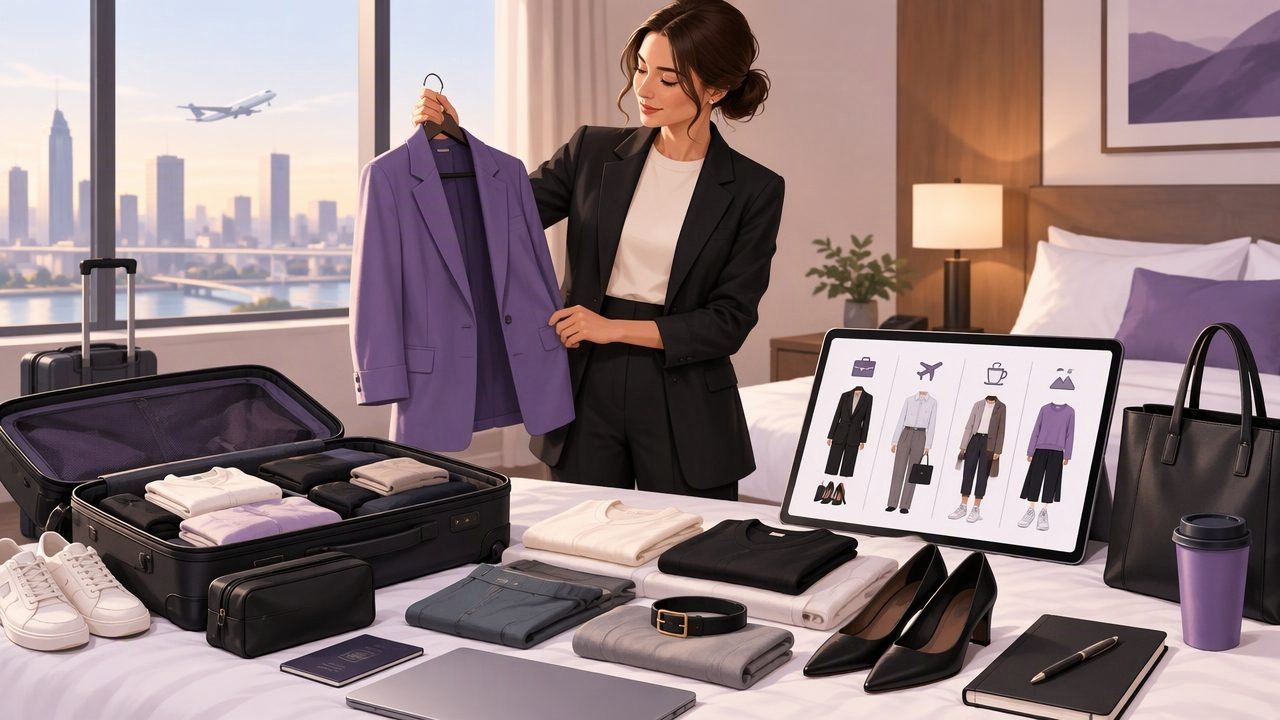
A business trip can involve an early flight, a client meeting, dinner, and a day of walking—all before you unpack. The challenge is not simply choosing professional clothes. It is building a small set of outfits that suits the itinerary, works with the weather, and fits in your luggage without packing for every possible scenario.
A wardrobe assistant for business travelers helps make those decisions more deliberate. Whether you use a digital closet, a notes app, or a paper checklist, the goal is the same: match clothes you already own to specific trip activities, check that the combinations work, and pack only what has a clear purpose.
What a wardrobe assistant should help you do
For travel, a wardrobe assistant is best understood as a planning method rather than a promise of perfect outfits. It can help you organize clothing choices, map outfit combinations to your schedule, and notice when several planned looks depend on the same item. That last detail matters: if one pair of shoes is doing too much work, you may need a backup or a different combination.
A digital wardrobe can make this process easier by giving you a visual record of garments you own. Instead of remembering what is at the back of your closet, you can review categories such as tops, trousers, jackets, dresses, and shoes. The assistant is only as useful as the information you put into it, so include pieces that are clean, comfortable, and suitable for the trip—not every item you own.
Start with the itinerary, not the suitcase
Before selecting clothes, list each day’s activities. Note travel periods, formal or client-facing meetings, presentations, meals, and personal time. Add practical conditions such as expected weather, walking distance, and whether you will have time to change between events. This turns a vague packing task into a set of outfit requirements.
Next, assign a dress level to each activity. For example, a video call from a hotel room may call for a polished top, while a client presentation may require a suit or another established professional outfit. A flight outfit should allow comfortable movement and suit the temperature you expect. Check any company, venue, or event dress expectations rather than assuming one standard of business attire applies everywhere.
Finally, identify garments that can serve more than one planned look. A neutral jacket might work over a meeting outfit and a smart-casual dinner combination. Versatile does not mean suitable for every setting; it means that an item has more than one specific, appropriate role on this trip.
A three-day example: turn the schedule into outfit combinations
Imagine a three-day trip with an office visit on the first day, a client presentation and dinner on the second, and a casual return journey on the third. The forecast is mild, with one chance of rain. A simple outfit plan could look like this:
| Trip moment | Outfit idea | Planning check |
|---|---|---|
| Day 1: travel and office visit | Comfortable trousers, a neat shirt or blouse, a light jacket, and walking-friendly shoes | Can the jacket be worn with the presentation outfit? |
| Day 2: client presentation | Suit or coordinated separates, a clean base layer, and formal shoes | Is the look appropriate for the client and venue? |
| Day 2: dinner | Reuse the trousers or skirt with a different top and the same jacket | Will the change feel suitable without requiring a full second outfit? |
| Day 3: return journey | Repeat the comfortable travel base with a clean top or layer | Is the clothing comfortable for the journey and still presentable? |
This plan does not assume that every item can be worn repeatedly. It makes the reuse explicit so you can judge whether it is realistic. If the presentation outfit needs to remain crisp, for instance, plan its storage and avoid relying on it for a long travel day beforehand.
Use outfit formulas to reduce decisions
Outfit formulas are repeatable structures, not rigid uniforms. They help you start with a workable combination and then adjust for the occasion. A few examples include:
- Client meeting: tailored trousers or a skirt, a polished top, a blazer, and occasion-appropriate shoes.
- Business-casual office: chinos or smart trousers, a knit or button-up shirt, and a lightweight layer.
- Travel day: comfortable trousers, a breathable top, a removable layer, and shoes suited to walking.
- Work dinner: a planned bottom with a different top or accessory, provided the setting supports a less formal combination.
Use the formula as a starting point, then check the actual garments together. Color, proportions, comfort, and dress expectations all affect whether an outfit feels coherent. A combination that looks balanced in a closet may not be right for a particular client or event, so use your own judgment and any relevant dress guidance.
Build a trip capsule from your own clothes
A travel capsule is a limited group of garments chosen to create the outfits on your schedule. It is not necessarily a particular number of pieces. Start with the items required for the most formal activity, then add complementary pieces for other events. Choose colors and layers that work together where possible, but do not force coordination at the expense of comfort or appropriateness.
For each garment, ask three questions: What planned outfit uses it? Is there another suitable combination? Does it meet a practical need, such as warmth or rain coverage? If you cannot name a use, consider leaving it at home. On the other hand, a backup shirt or a weather-appropriate outer layer may be worthwhile even if it appears in only one look.
When reviewing combinations, count complete outfits rather than individual items. Four tops and three bottoms do not automatically create twelve useful looks. Some pieces may clash, suit different dress levels, or require shoes you are not packing. Confirm the pairings you intend to wear instead of assuming every possible combination works.
Use a digital closet and virtual try-on thoughtfully
A smart closet organizer can help you see your available garments and save outfit combinations for particular occasions. When planning a trip, group or note looks by day and activity. A visual catalog can also help you spot repeated items and decide whether your planned combinations offer enough variety. If your closet is not fully cataloged, begin with the garments you are considering for the trip rather than trying to document everything at once.
AI outfit generation and virtual try-on can support visual planning when you upload photos of yourself and clothing items. They can help you preview how selected pieces might look together without physically changing clothes. Treat the result as a styling visualization, not a guarantee of how an item will fit or behave in real life.
Photos and generated previews cannot reliably establish exact fit, sizing, fabric weight, stretch, comfort, warmth, or how a garment will move after hours of wear. Lighting, image angles, and the quality of uploaded photos may also affect what you see. For fit and comfort, rely on your experience with the garment and check its actual condition before packing. A virtual preview can help answer, “Do these pieces appear to work together?” It cannot settle, “Will these shoes still feel comfortable after a full day?”
Make a packing checklist from the finished plan
Once the outfit plan is settled, turn it into a checklist. List garments by category, then mark which planned looks use each one. Include essentials that are easy to overlook, such as underwear, socks, sleepwear, and clothing care needs. Add work-specific items separately, since a laptop or presentation materials are not part of the outfit plan but may compete for luggage space.
- Confirm every meeting or event has an appropriate complete outfit.
- Check shoes against the activities and expected walking.
- Review the forecast and add suitable layers or rain protection.
- Separate items that need special care or should remain crisp.
- Pack one practical contingency item if the schedule or weather warrants it.
- Check that each planned repeat is comfortable and realistic for you.
Keep the list tied to this particular trip. A warm-weather client visit and a cold-weather conference will not call for the same capsule, even if the itinerary has similar events. Reusing a previous trip plan can provide a useful starting point, but review every garment against the new schedule, destination, and dress expectations.
Common planning mistakes to avoid
Packing for imagined events: Extra options can feel reassuring, but too many unassigned items make the bag heavier and the decision harder. Start with confirmed activities and add only sensible contingencies.
Planning outfits around a single item: If several looks depend on one jacket or pair of shoes, consider what happens if it gets wet, needs attention, or proves uncomfortable. Identify a workable alternative when the schedule makes that risk important.
Assuming a preview proves comfort: A virtual try-on may help you compare visual combinations, but it does not replace wearing clothes and walking in your shoes. Test unfamiliar pieces before departure when possible.
Ignoring the change between events: A smart-casual look may work for dinner but not a formal presentation. Plan for the actual setting, including whether you have time and space to change.
A repeatable routine for your next work trip
Use this sequence: map the itinerary, assign dress levels, select garments for the most demanding event, build complete combinations, check repeats and practical needs, then create the packing list. Save the final looks so you can review the plan later or use it as a reference for a similar trip. Over time, your notes can help you remember which combinations suited your work and travel routines, without assuming every destination or event is identical.
For a visual approach to coordinating garments around a trip, see Outfit Maker’s guide to planning travel outfits. The useful principle is simple: let your itinerary set the requirements, use your own wardrobe to build the combinations, and treat digital previews as one planning aid—not a substitute for real-world fit and comfort.