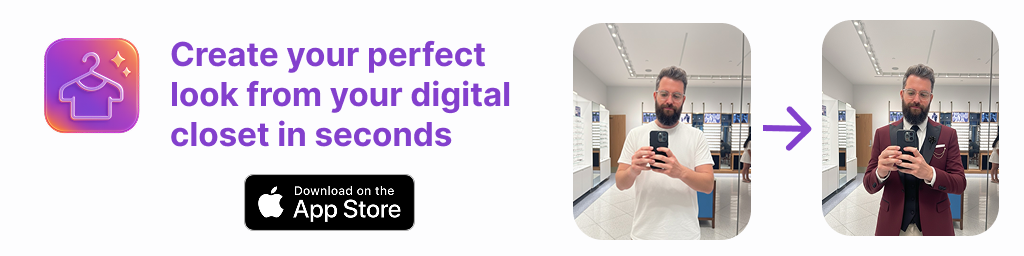
Choosing an outfit can take far longer than it should. You may have a closet full of clothes, yet still wonder whether a new top works with your favorite trousers, whether an old jacket suits a planned event, or whether an online purchase will fit your personal style. A virtual try on with your photo offers a practical way to answer those questions before getting dressed, shopping, or packing.
Using AI-powered visualization, virtual try-on technology lets you upload a photo of yourself and preview clothing combinations digitally. Rather than relying only on product photos, imagination, or a rushed fitting-room session, you can compare potential looks in one place. When used alongside a digital wardrobe, it can make everyday fashion planning more efficient, more intentional, and less stressful.
What Is Virtual Try-On With Your Photo?
Virtual try-on with your photo is a technology that uses an image of you to create a visual preview of how selected garments may look when styled together. Depending on the platform, you can upload photos of clothing from your existing closet, choose items from a catalog, or add product images from retailers.
The system uses artificial intelligence to position and render the clothing on your image. It considers visible elements such as your body position, proportions, and the outline of the garment to create a realistic styling preview. The purpose is not to replace professional tailoring or in-person fit checks. Instead, it is a helpful decision-making tool for evaluating overall outfit harmony.
For example, you could upload a clear full-body photo, add a blazer, white T-shirt, straight-leg jeans, and sneakers, then compare that casual look with a version using tailored trousers and loafers. Seeing the options side by side makes it easier to identify the outfit that best fits your plans.
How Virtual Try-On Helps With Everyday Fashion Planning
The value of virtual try-on goes beyond novelty. It solves several common wardrobe challenges that lead to wasted time, duplicate purchases, and unworn clothing.
See combinations before changing clothes
Trying on multiple outfits physically can be inconvenient, especially when you are getting ready for work, a dinner, a trip, or a special occasion. A digital preview lets you test color pairings, layers, and silhouettes before pulling every possible item from your closet.
Use more of the clothes you already own
Many people repeatedly wear the same familiar combinations because they cannot quickly picture alternatives. Virtual styling encourages experimentation with pieces that may otherwise be forgotten. That printed shirt, statement skirt, or blazer at the back of the closet may become useful once you see it paired with simpler wardrobe staples.
Make more considered shopping choices
Before buying a new item, test it against clothing you already own. If a sweater only works with one pair of jeans, it may not be as versatile as it first appears. If it creates five strong looks with your current wardrobe, it could be a more useful purchase. This approach supports a wardrobe built around wearability rather than impulse.
Prepare for specific occasions
Dress codes are often open to interpretation. “Smart casual,” “cocktail,” and “business casual” can mean different things depending on the venue and group. A virtual preview helps you compare outfit options in advance and choose one that feels appropriate without last-minute uncertainty.
What a Virtual Try-On Can—and Cannot—Tell You
A realistic preview is useful, but it is important to understand its role. Virtual try-on is strongest when you use it to assess visual styling decisions rather than exact garment performance.
| Virtual Try-On Can Help You Assess | It Cannot Fully Confirm |
|---|---|
| Color combinations and contrast | Exact size or measurements |
| Overall silhouette and proportions | Fabric feel, weight, and comfort |
| Layering ideas and outfit balance | Precise drape in every movement |
| Whether an item matches your style | Tailoring needs or construction quality |
| How outfits compare for an occasion | How a garment will wear after washing |
Think of the preview as a visual planning stage. For online purchases, always review the retailer’s size chart, material details, return policy, and customer feedback. For clothing already in your closet, use the preview to narrow down your best options, then try on the final one in person if time allows.
How to Get Better Results From Your Photo
The quality of your starting image affects the usefulness of your virtual outfit preview. You do not need studio photography, but a thoughtful photo can improve the result significantly.
- Use a clear, recent full-body image. Choose a photo where your full outfit area is visible from head to toe or at least from shoulders to below the knees.
- Stand in natural lighting. Even daylight or soft indoor light makes your outline and coloring easier to interpret. Avoid heavy shadows or intense backlighting.
- Face forward in a relaxed pose. A neutral standing position, with arms slightly away from your sides, usually provides a cleaner base for clothing visualization.
- Choose a simple background. Plain walls and uncluttered spaces reduce distractions and help the garment stand out.
- Wear fitted, simple clothing in the source image. Extremely oversized layers can obscure body lines and make some previews less clear.
- Use accurate clothing photos. Lay garments flat in good light, photograph them against a contrasting background, and include the whole item.
If an output looks slightly off, do not treat it as a final verdict on the outfit. Try a different source photo, update the garment image, or test the item with another layer. Small changes in image quality can produce a much more useful visualization.
A Simple Workflow for Planning Outfits Digitally
A digital wardrobe becomes most helpful when it supports a repeatable routine. The following process turns virtual try-on from a one-time experiment into a practical fashion-planning habit.
1. Build a focused digital wardrobe
Start with the items you wear most often: everyday tops, bottoms, shoes, outerwear, and occasion pieces. Add basic information such as color, category, season, and formality. You do not need to catalog every item in one afternoon. Begin with 20 to 30 pieces that represent your core wardrobe.
2. Create outfit formulas
An outfit formula is a dependable structure you can repeat with different pieces. Examples include:
- Fitted knit + wide-leg trousers + structured jacket
- T-shirt + relaxed jeans + overshirt + sneakers
- Midi dress + light blazer + ankle boots
- Button-down shirt + tailored shorts + loafers
Use virtual try-on to test several versions of the same formula. This makes it easier to see which colors, proportions, and accessories feel most like you.
3. Plan around your calendar
Review your week and identify moments when outfit decisions matter: office days, workouts, dinner reservations, presentations, travel days, or family events. Build looks for those situations ahead of time. Saving the final combinations prevents the familiar morning scramble of trying to recreate an outfit from memory.
4. Compare options side by side
When deciding between two looks, compare them using specific criteria instead of a vague feeling. Ask: Which one suits the weather? Which one fits the venue? Which one uses items I have not worn recently? Which one feels comfortable enough for the length of the event? A side-by-side visual comparison makes these questions easier to answer.
5. Review what you actually wear
Over time, note the outfits you choose repeatedly and the pieces you keep skipping. This reveals patterns in your style. You may discover that you prefer certain shapes, avoid a particular color, or need more versatile shoes rather than another statement top. These insights make future shopping more purposeful.
Common Mistakes to Avoid
Virtual outfit planning works best when it complements your real-life preferences. Avoid these common mistakes:
- Chasing trends instead of personal usefulness. An outfit can look current online but still feel unlike you. Prioritize combinations you would genuinely wear.
- Ignoring fabric and movement. A visual preview cannot tell you whether trousers feel restrictive or whether a top wrinkles easily.
- Testing too many options at once. Limit each session to a clear purpose, such as planning three work outfits or evaluating one new jacket.
- Forgetting practical details. Consider temperature, walking distance, weather, undergarments, and the activities on your schedule. \li>
- Assuming every preview is exact. AI images are visual guides, not guarantees of fit, color accuracy, or material behavior.
Use Virtual Try-On to Build a More Intentional Wardrobe
The best wardrobe is not necessarily the largest one. It is the one that gives you enough reliable options for the life you actually live. Virtual try-on can support that goal by making outfit experimentation easier, helping you identify gaps, and encouraging you to rewear pieces in fresh ways.
Try a monthly review: choose five underused items from your closet and create two outfit ideas for each. If you still cannot imagine wearing an item after testing it with your existing pieces, it may be time to alter, donate, sell, or store it. This creates space for clothing that better supports your style.
Good fashion planning is not about owning more. It is about seeing more possibilities in what you already have.
Whether you are getting dressed for an ordinary weekday or preparing for a major event, virtual try on with your photo gives you a clearer starting point. Tools such as Outfit Maker can bring digital wardrobe organization, outfit planning, and visual comparison together so you can spend less time second-guessing and more time feeling ready.