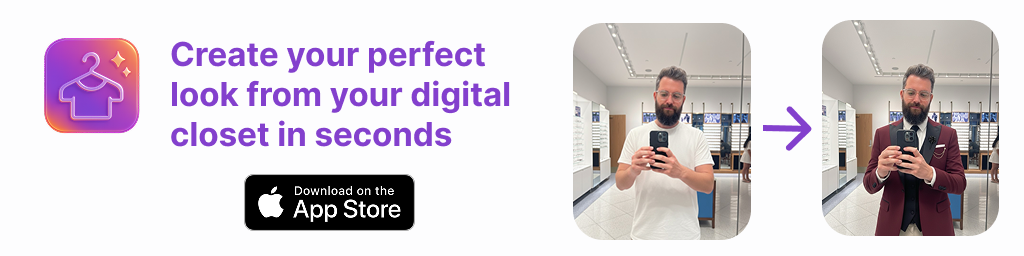
Planning vacation outfits is easier when you start with your itinerary and wardrobe rather than a last-minute pile of clothes. A virtual try-on app can help you preview combinations from garments you already own, spot gaps in your plan, and save looks for reference. It can show how an outfit comes together visually, but it cannot guarantee exact fit, comfort, or how a fabric will behave in real life.
Use this checklist to build a practical set of vacation outfits, test combinations in a digital closet, and pack with a clear purpose. The example below uses a four-day city break, but the same steps work for a beach trip, family visit, or longer holiday.
Start with the trip, not the suitcase
Before choosing clothes, write down what you will actually do. A sightseeing day, a restaurant reservation, and a swim call for different outfit needs. The more specific your plan, the less likely you are to pack clothes that do not suit any activity.
- Check the forecast: Note expected temperatures, rain, wind, and changes between daytime and evening. Recheck close to departure because forecasts can shift.
- List activities: Include walking, outdoor excursions, dinners, events, and downtime. Add any dress codes or practical requirements.
- Consider the setting: Think about local customs, terrain, air-conditioned spaces, and whether you will need comfortable shoes for long days.
- Set a packing limit: Decide how much space you have and whether laundry will be available. Treat the limit as a guide, not a reason to leave necessary layers behind.
Turn your itinerary into outfit occasions. For example: two walking days, one museum day, one nicer dinner, and travel to and from the destination. If you have several activities in one day, plan a look that can handle the main activity and note any item you might change later.
Vacation outfit checklist: choose versatile pieces
Use your itinerary to decide what belongs in the digital wardrobe shortlist. Start with clothes you know you wear and feel comfortable in. Then look for pieces that can work in more than one planned outfit.
- Choose a small color palette. Pick a few colors that coordinate, then add a favorite accent if you like. A simple palette can make it easier to reuse bottoms, layers, and shoes.
- Select a base for each day. Choose the main clothing pieces for each activity, such as trousers and a top for sightseeing or a dress for dinner. Avoid packing an outfit for an imaginary occasion.
- Add useful layers. A cardigan, overshirt, or light jacket may help with cooler evenings or indoor air conditioning. Check the forecast and the item’s actual warmth before relying on it.
- Plan shoes around your activities. Include footwear suitable for the terrain and amount of walking. If you plan a dressier look, make sure the shoes are comfortable enough for the occasion.
- Finish with accessories and essentials. Consider a bag, belt, hat, sunglasses, sleepwear, underwear, socks, and any clothing needed for swimming or exercise.
- Leave room for practical needs. Account for laundry, a spare layer, and weather changes. Do not count a garment as versatile if it is uncomfortable or unsuitable for the activity.
Once you have a shortlist, check each item against the itinerary. Ask: What outfit will this piece be part of? If you cannot name a use for it, reconsider whether it needs to go. This is a planning prompt, not a rule that every item must be worn multiple times.
Use virtual try-on to test outfit combinations
A virtual try-on app can make outfit planning more visual than a written packing list. Add photos of clothing to a digital closet, then combine your own garments to preview possible looks. This is especially helpful when you are unsure whether a top works with a particular pair of trousers, or which layer fits the overall outfit.
For each activity on your itinerary:
- Choose the garments you expect to wear together.
- Preview the combination and check its overall colors, proportions, and style.
- Try a second option using a different layer, shoe, or accessory.
- Save the look with a clear label, such as “Day 2—museum and walking.”
- Review all saved looks together to find repeated items and any unplanned gaps.
For instance, on a four-day city break, you might plan comfortable trousers and a breathable top for a walking day, then reuse the trousers with a different top for a museum visit. A light jacket could appear in both looks if the forecast suggests cooler mornings. A separate outfit might be reserved for dinner. Previewing these combinations helps you assess whether the pieces coordinate; it does not tell you whether the trousers will feel comfortable after hours of walking.
Example: a four-day city-break outfit plan
This sample is a starting point, not a universal packing list. Adjust it for the forecast, your plans, and the clothes you already own.
| Day or occasion | Outfit idea | Check before packing |
|---|---|---|
| Travel day | Comfortable trousers, breathable top, and a removable layer | Is the outfit comfortable for your journey and easy to layer? |
| Walking and sightseeing | Everyday bottoms, a simple top, walking shoes, and a weather-appropriate layer | Have you worn the shoes for a similar amount of walking? |
| Museum and café | Reuse a compatible bottom with another top and a different accessory | Does the combination suit the setting and expected temperature? |
| Dinner | A dress or a polished top-and-bottom combination with suitable shoes | Does it meet any dress code, and can you travel comfortably in it? |
In a virtual try-on, save each look and note which pieces repeat. Then make a separate packing list for the actual garments and essentials. The saved outfits are a visual plan; they are not a substitute for checking what is clean, weather-ready, and suitable to wear.
Review the plan before you pack
Do a final pass through your saved looks and the physical items you intend to bring. A digital closet helps you see combinations, but the real garments still need a practical check.
- Confirm every item has a purpose: Match clothes to an activity, a planned outfit, or a genuine backup need.
- Check outfit coverage: Make sure the itinerary has a suitable look for each day and any special occasion.
- Test repeat combinations: Verify that the pieces you plan to rewear are appropriate for the schedule and can be cleaned or aired out as needed.
- Check condition and care: Look for missing buttons, stains, wrinkles, and care requirements. Pack items that are ready to wear.
- Consider comfort in person: Try on important outfits, especially shoes and anything you have not worn recently. Sit, walk, and move as you expect to on the trip.
- Make a separate essentials list: Add underwear, sleepwear, weather protection, and activity-specific items so they do not get lost among outfit photos.
If your plans change, keep one flexible option where practical—for example, a layer that works with more than one outfit. Avoid adding several “just in case” pieces without considering their weight, space, and likely use.
Know what virtual try-on can—and cannot—show
Virtual try-on is useful for style visualization: seeing clothing combinations from your wardrobe, comparing color pairings, and keeping outfit ideas organized. It can support decisions about what looks coordinated on screen before you pack.
It should not be treated as a reliable prediction of exact fit, sizing, drape, texture, or comfort. A photo-based preview may not reproduce how a fabric moves, how a garment fits your body, or how it feels in heat and humidity. Results can also depend on the photos and the way garments are represented. For important outfits, check the actual clothes and use your own experience with their fit and comfort.
Likewise, a digital closet cannot tell you that a planned outfit suits every local condition. Use current weather information, activity details, and any relevant dress guidance alongside the visual preview.
A simpler way to prepare vacation outfits
A dependable vacation outfit checklist connects each planned look to a real activity, uses clothing you are comfortable wearing, and leaves space for practical needs. A virtual try-on app can help you compare combinations and save a visual plan, while a final in-person check confirms that the clothes work for you.
If you want to organize your own garments and plan trip looks in a digital closet, Outfit Maker’s guide to planning travel outfits offers a related starting point. Use any app as a planning aid, then let your itinerary, the forecast, and real-world comfort guide what goes in the suitcase.