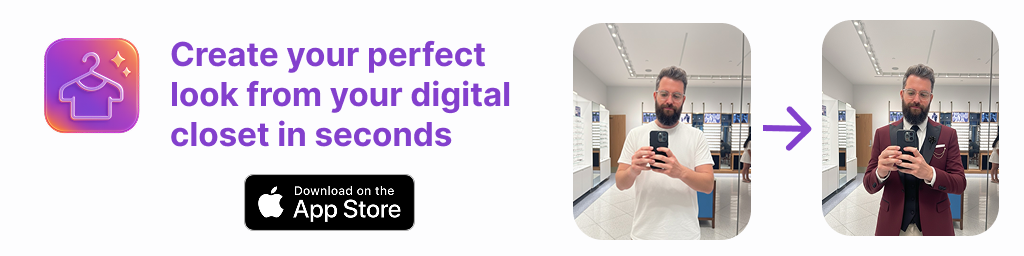
A crowded closet does not always mean you need more storage—or more clothes. Sometimes the problem is that useful pieces are hard to see, remember, or combine. A virtual try-on app for less closet clutter can help you visualize outfits from garments you already own, making overlooked items easier to put back into rotation.
The key is to treat virtual try-on as a tool for style visualization, not a verdict on whether a garment fits perfectly or belongs in your wardrobe. When you use it to test real outfit ideas before deciding what to keep, donate, repair, or store, your digital closet can support more thoughtful decluttering.
Why a full closet can still feel like it has nothing to wear
Clutter is not only about how many items you own. It can also come from clothes that are difficult to find, pieces you forget you have, and outfits that feel repetitive because you rely on the same familiar combinations. If you cannot quickly picture how a less-used shirt works with your trousers, it may seem less useful than it really is.
A digital wardrobe creates a visual record of your garments. An AI outfit generator or virtual try-on tool can then help you explore combinations on screen instead of pulling several options off hangers and changing repeatedly. That makes it easier to notice possibilities while keeping the physical closet undisturbed.
This does not make every item worth keeping. It simply gives you more information before making a decision. A garment that works in several outfits may deserve a place in your regular rotation; one that remains difficult to wear may need mending, a different styling approach, or a place outside your everyday closet.
What virtual try-on can—and cannot—tell you
Virtual try-on is most useful for asking visual questions: Do these colors work together? Does this jacket make the outfit feel more polished? Can I style this skirt with shoes I already own? Seeing your own garments together can help you answer those questions without trying every combination on in front of a mirror.
But a rendered outfit is not the same as wearing the clothes. An image may help you assess the overall look, but it cannot reliably confirm exact fit, comfort, garment measurements, fabric weight, stretch, drape, or how an item moves throughout the day. Lighting, photo angles, image quality, and the way a garment is represented can also affect what you see.
Use the visualization to shortlist promising combinations, then check the real garments when fit or comfort matters. If you are deciding whether to keep a piece, consider how it feels on your body and whether it suits your actual activities—not just how it appears in an app.
A practical example: rediscovering a neglected shirt
Imagine that you own a blue button-down shirt you rarely wear. It is clean and in good condition, but it usually stays on its hanger because you only picture it with one pair of dark trousers. Before donating it, add or find the shirt in your digital closet and compare it with garments already in your wardrobe.
You might visualize it with straight-leg jeans, a neutral skirt, or an open cardigan. Perhaps one combination looks suitable for work, while another feels relaxed enough for a weekend. The point is not to invent a fantasy wardrobe; it is to see whether a few realistic pairings make the shirt more useful in your life.
Then test the most promising look in person. Check that the pieces are comfortable together, the shirt is in good condition, and you have the right shoes or layers for the occasion. If the combination works, save it as a repeatable outfit. If the shirt still feels uncomfortable or does not suit your routine, the visualization has helped you make a more informed decision rather than forcing you to keep it.
Use a digital closet to declutter in stages
Trying to make a keep-or-remove decision about every garment in one afternoon can be tiring. A more manageable approach is to work by category or a small group of items, using your digital wardrobe to check whether clothes have practical outfit options.
- Start with one category. Choose a manageable group, such as shirts, work trousers, or lightweight layers. Avoid emptying the entire closet if that will leave you overwhelmed.
- Record pieces you actually wear. Add clear photos of the garments you want to consider. A digital closet is more useful when its images help you recognize the real item; consistency in photo background and framing can make browsing easier.
- Look for combinations with your existing clothes. Test a few plausible pairings rather than every possible combination. Prioritize garments that are underused but still suit your taste, schedule, and needs.
- Save outfits you would genuinely wear. A saved look is useful evidence of a practical combination, not a promise that you will wear it. Keep the outfit only if it makes sense for your weather, activities, and comfort.
- Make a separate decision about the garment. Keep it in rotation, repair it, store it seasonally, or consider passing it on. Do not confuse a promising image with proof that the item fits well or deserves permanent closet space.
This process turns decluttering into a series of small choices. It also creates a record of combinations you can revisit when getting dressed, which may help reduce the feeling that you need to replace clothes simply because you cannot think of an outfit.
Use outfit evidence, not just item counts
Counting garments can be a useful starting point, but a number alone does not show whether your wardrobe serves you. A better question is whether the clothes you own can support the situations you dress for. A digital outfit planner can make those connections easier to inspect.
| What you notice | What to check next |
|---|---|
| A garment appears in several promising looks | Confirm that the combinations are comfortable and suitable for your routine. |
| An item has no obvious pairings | Try a small number of alternatives, then assess whether it is still your style. |
| You have many similar items | Compare their condition, comfort, and actual use before choosing which to keep accessible. |
| A saved outfit depends on an item you rarely wear | Try the whole outfit in real life before counting it as a dependable combination. |
The table is a decision aid, not a scoring system. An item can be valuable even if it appears in only one outfit—for example, a formal garment for a specific event. Likewise, a versatile-looking basic is not automatically useful if you dislike wearing it.
Make the results useful in everyday life
After identifying a few combinations, save the ones that solve real dressing situations. You could group looks by work, casual plans, or weather, or simply keep a short list of outfits you know you enjoy. If your app supports sharing, showing a look to a trusted friend may help you get another perspective, but the final decision should reflect your comfort and preferences.
Revisit your saved outfits as seasons and routines change. A lightweight top may be useful in warm weather but irrelevant during colder months. A digital closet can help you distinguish clothes that are temporarily out of season from items you no longer want, rather than treating everything outside your current rotation as clutter.
It also helps to keep digital cataloging proportional. You do not need to photograph every sock or accessory before you can make progress. Start with the pieces that create the most confusion—perhaps workwear, frequently worn basics, or garments you keep meaning to style—and expand only if the system is genuinely helpful.
Common mistakes to avoid
- Decluttering based only on a screen. Check the real garment for fit, comfort, condition, and fabric before making a final choice.
- Keeping something because an outfit looks attractive in a render. Ask whether you would wear the complete look in your actual day-to-day life.
- Trying to catalog everything immediately. A small, useful digital wardrobe is better than an unfinished catalog that feels like another chore.
- Assuming more outfit combinations always mean less clutter. Keep items that serve your needs, not merely those that can be paired in many images.
- Using the app to shop by default. First explore combinations from your own garments. Virtual styling can support use of what you own; it does not require buying anything.
A clearer closet starts with better visibility
A virtual try-on app can help reduce closet clutter by making your existing wardrobe easier to see and combine. Its strongest role is to surface realistic outfit ideas, reveal overlooked pieces, and give you a calmer way to consider what belongs in your everyday rotation. It cannot replace trying clothes on or guarantee that a digital image reflects exact fit, sizing, or fabric behavior.
Begin with one small category, explore combinations using your own garments, and test promising looks in real life. For a closer look at how to organize those garments digitally, see Outfit Maker’s guide to building a digital closet.