Planning travel outfits can be surprisingly time-consuming. Even when you have a clear destination, you still need to consider weather, activities, laundry access, luggage limits, dress codes, comfort, and how often you are willing to repeat pieces. A simple packing list helps, but it does not always show whether the clothes on that list actually work together.
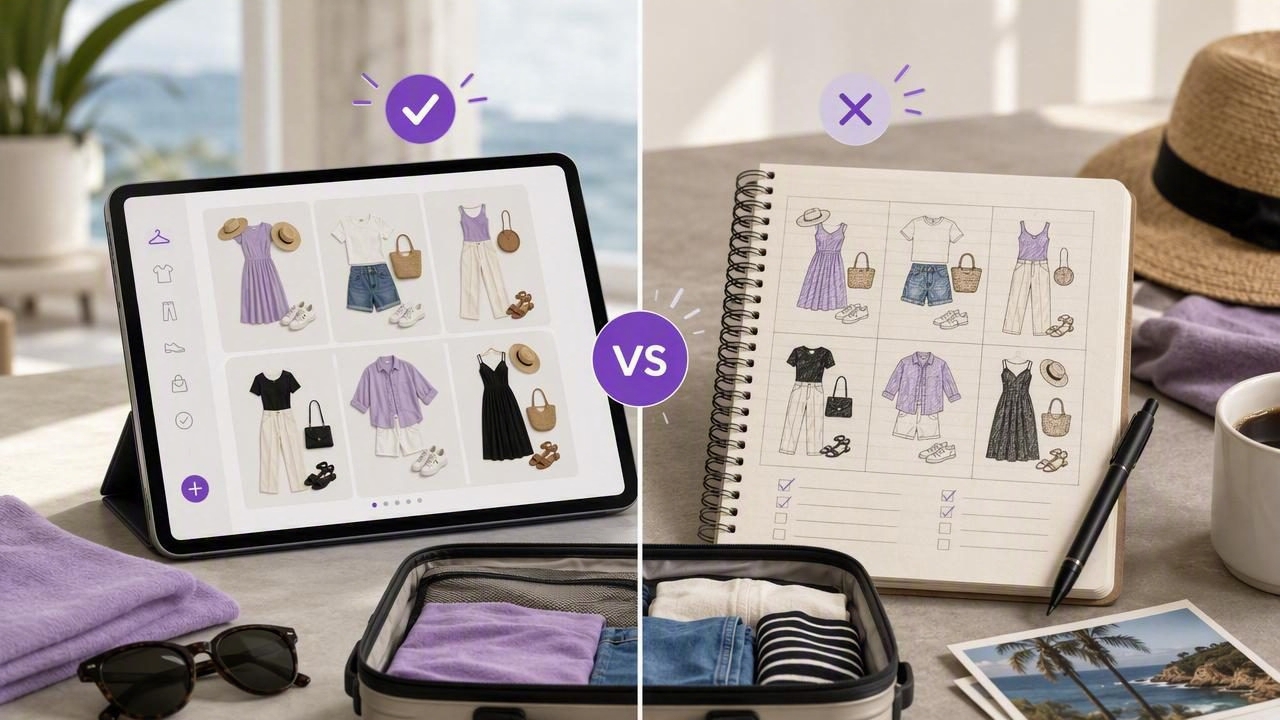
This is where the comparison between a trip outfit planner vs paper outfit planning becomes useful. Both methods can help you avoid overpacking and reduce last-minute decisions. The difference is how easily each system lets you visualize combinations, revise plans, and keep track of the clothing you already own.
Paper planning is tactile, affordable, and familiar. A digital trip outfit planner can be more visual, flexible, and convenient when you want to compare multiple looks. The better option depends on your travel style, wardrobe habits, and the complexity of your trip.
What Is Paper Outfit Planning?
Paper outfit planning means using a notebook, printed packing checklist, calendar, index cards, or handwritten outfit list to organize what you will wear. You might write entries such as “Saturday: black trousers, striped shirt, white sneakers” or draw small sketches of planned looks.
This method is especially useful for travelers who like to think slowly and make decisions away from their phone. It can also be enough for a short weekend trip with a predictable itinerary.
Typical paper planning tools
- A packing checklist divided into tops, bottoms, shoes, layers, and accessories
- A day-by-day itinerary with an outfit written beside each activity
- Sticky notes representing individual garments or complete looks
- A printed weather forecast stored with travel documents
- A simple capsule wardrobe grid drawn in a notebook
Paper has one major advantage: it makes you pause. Writing down every item can reveal when you are packing five tops that serve the same purpose or bringing shoes that only work with one outfit.
What Is a Digital Trip Outfit Planner?
A digital trip outfit planner is a visual system for organizing clothing, building outfit combinations, and matching those looks to travel days or activities. Rather than relying only on written descriptions, you can use garment photos to see how items work together before putting them into a suitcase.
Depending on the tool, your digital wardrobe may include clothing images, categories, color details, saved outfits, and planning notes. Some systems also use AI outfit generation or virtual try-on images to help you explore the appearance of an outfit from your own garment photos.
The goal is not to predict exact fit, fabric behavior, or comfort in every travel condition. A visual planner is best used for style visualization and wardrobe coordination. You should still check practical details such as shoe support, outerwear warmth, wrinkle resistance, and whether a garment needs special care.
Trip Outfit Planner vs Paper Outfit Planning at a Glance
| Planning factor | Paper outfit planning | Digital trip outfit planner |
|---|---|---|
| Getting started | Fast if you already use notebooks and lists | Requires taking or uploading garment photos first |
| Seeing outfit combinations | Relies on memory, written notes, or sketches | Lets you view garments and saved looks together |
| Editing a plan | Cross-outs, rewritten lists, and new pages | Usually easier to swap one item or duplicate a look |
| Sharing plans | Requires photos, scans, or copying notes | Can make it simpler to share outfit images or plans |
| Battery and access | Works anywhere without a device | Depends on your phone and available battery |
| Best for | Simple trips and people who prefer handwriting | Multi-stop trips, visual thinkers, and wardrobe reuse |
Where Paper Planning Works Best
Paper remains a strong choice when your trip is simple and your wardrobe decisions are already clear. For example, a two-night countryside weekend may only require one casual daytime outfit, one dinner look, sleepwear, a rain layer, and comfortable shoes. In that case, a handwritten list can be quicker than photographing every item in your closet.
It also works well when you want to plan with physical travel materials. You can keep a paper list beside your passport, reservation details, and luggage while packing. Some people find that checking off items by hand makes the process feel more complete.
Use paper planning when:
- Your trip lasts one to three days.
- You already know your go-to outfit formulas.
- You are packing mostly basics in a limited color palette.
- You do not need to compare many alternate looks.
- You prefer a screen-free planning routine.
The limitation is that paper descriptions can hide mismatches. “Cream sweater + blue jeans + loafers” sounds straightforward, but it may not remind you that the sweater is bulky, the jeans need a belt you forgot to list, or the loafers are not suitable for the walking-heavy itinerary.
Where a Digital Outfit Planner Has an Advantage
A digital planner becomes more helpful as your travel plans become more detailed. This includes trips with changing climates, formal events, multiple cities, long travel days, or limited luggage space. Seeing garments visually makes it easier to identify whether a blazer works with three different bottoms or whether you have accidentally planned the same shoes for every occasion.
Digital fashion planning can also support a more intentional packing approach. Instead of choosing clothes one by one, you build outfits first, then pack only the pieces needed to create those looks. This can reduce the number of “just in case” items that never leave the suitcase.
Useful digital planning advantages
- Visual coordination: Compare colors, proportions, and layers before packing.
- Faster substitutions: Replace a jacket or shoe when the forecast changes.
- Repeat tracking: Plan ways to rewear trousers, skirts, knitwear, or bags.
- Saved outfit ideas: Keep travel looks separate from everyday outfit combinations.
- Easy reference: Check your planned look during the trip without unfolding a paper list.
However, digital planning is not automatically better. A wardrobe catalog takes time to build, especially at the beginning. Photos should be clear enough to recognize the garment, and you still need to verify that items are clean, available, and appropriate for the destination.
A Concrete Example: Five Days in Lisbon With a Carry-On
Imagine a five-day city break in Lisbon. The itinerary includes a travel day, walking tours, a museum visit, a casual dinner, a nicer restaurant, and potentially cool evenings. You want to use a carry-on suitcase and avoid packing an entirely separate outfit for every day.
A paper plan could look like this:
Travel: trousers, T-shirt, cardigan, sneakers.
Day 2: jeans, blouse, sneakers.
Day 3: dress, jacket, sandals.
Dinner: black trousers, top, loafers.
This provides a useful outline, but it does not immediately show how many pieces repeat, whether the sandals work with the dress and the dinner outfit, or whether the cardigan layers over the blouse and dress.
With a digital trip outfit planner, you could create a small capsule of ten pieces: two bottoms, one dress, three tops, one cardigan, one light jacket, one pair of sneakers, and one pair of loafers. Then you could save combinations such as:
- Black trousers + white T-shirt + cardigan + sneakers for the flight.
- Jeans + striped top + light jacket + sneakers for a walking day.
- Dress + cardigan + loafers for dinner.
- Black trousers + blouse + light jacket + loafers for the nicer restaurant.
- Jeans + white T-shirt + cardigan + sneakers for the return journey.
The visual review may reveal that every outfit depends on the cardigan. That is useful information: perhaps you should pack a second layer, or choose a jacket that works indoors as well. It may also reveal that the loafers appear in only one look, making them a poor use of carry-on space if sneakers are acceptable for dinner.
How to Choose the Right Method for Your Trip
Ask yourself three questions before choosing a planning system.
1. How complex is the itinerary?
A beach weekend has different planning needs than a ten-day trip involving work meetings, sightseeing, and evening reservations. The more occasions and weather changes you need to cover, the more valuable visual outfit planning becomes.
2. How well do you know your wardrobe?
If you regularly wear the same reliable combinations, paper may be enough. If you often forget what you own, struggle to imagine layers together, or want to use less-worn pieces, a digital closet can provide a clearer overview.
3. How important is luggage efficiency?
For checked luggage, a few extra items may not matter. For a backpack or carry-on, every garment should ideally serve more than one purpose. A visual outfit plan makes it easier to spot single-use pieces before they take up space.
A Practical Hybrid Approach
You do not have to choose only one method. Many travelers get the best result by using a digital wardrobe to create outfit combinations and a short paper checklist to pack and unpack.
Try this workflow:
- Review the destination forecast, itinerary, laundry access, and dress codes.
- Choose a small color palette, such as navy, white, tan, and one accent color.
- Create complete looks before selecting individual garments.
- Make sure each shoe, outer layer, and bag works with at least two outfits.
- Write a final paper packing checklist organized by suitcase section.
- Keep your visual outfit plan available as a reference during the trip.
This combination keeps the practical simplicity of paper while using visual planning for the decisions that are hardest to make from a written list alone.
Final Thoughts
In the debate of trip outfit planner vs paper outfit planning, neither option is universally right. Paper planning is excellent for straightforward trips, quick lists, and travelers who enjoy handwriting. A digital planner is more useful when outfit repetition, visual coordination, limited luggage, or changing plans need extra attention.
For travelers who want to organize garment photos, test outfit combinations from their own wardrobe, and keep travel looks in one place, Outfit Maker’s guide to planning travel outfits offers a helpful starting point for building a more visual packing routine.