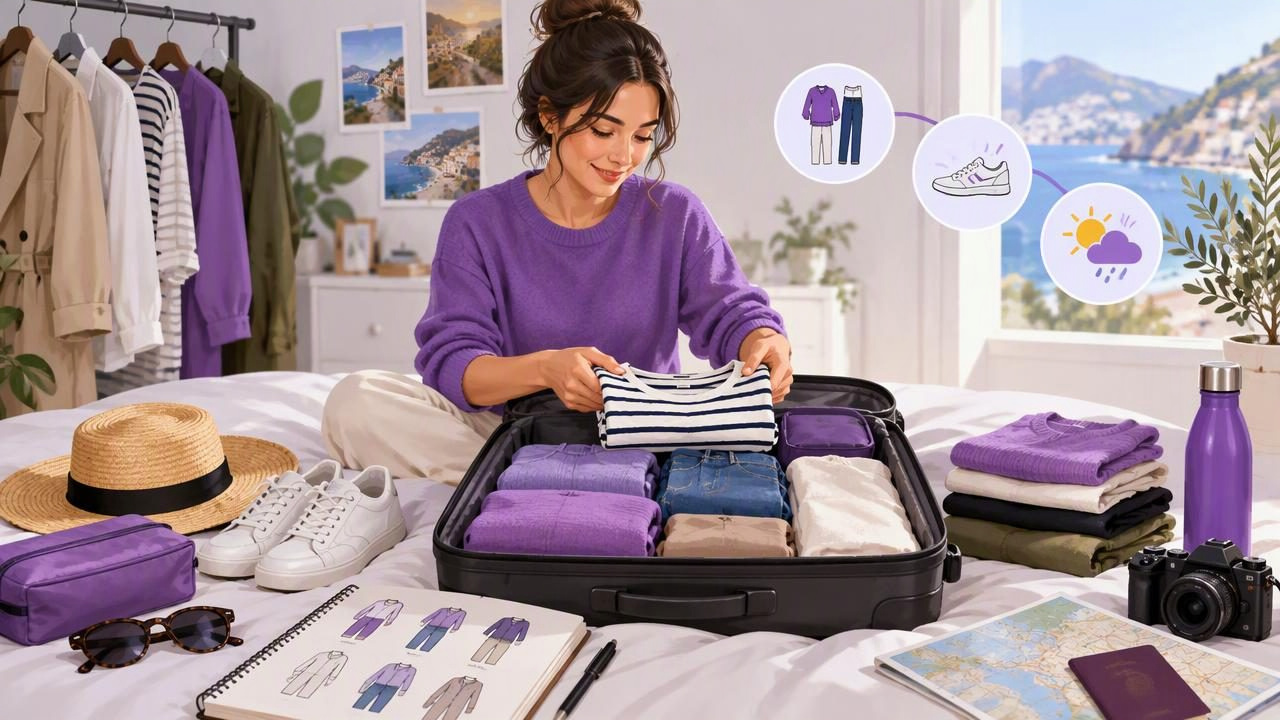
Planning outfits for a trip can feel like solving a puzzle: every look needs to suit the day’s activities, the weather, and the space in your bag. A simple trip outfit planner helps you see how clothes work together before you leave, so you can pack with intention instead of bringing several “just in case” options.
You do not need a complicated app or a perfectly coordinated travel wardrobe to get started. Begin with your itinerary, choose a small group of clothes you already enjoy wearing, and map each item to a few realistic outfits. The goal is not to predict every moment of a trip. It is to have comfortable options for the plans you know about, plus a little flexibility when conditions change.
1. Start with the itinerary, not the suitcase
Write down what you expect to do each day. Include the main activity, how much walking it involves, and whether you need a particular level of formality. “Museum and city walk” gives you more useful information than simply writing “Tuesday.” A beach day, a business dinner, and a long travel day call for different clothes, even if they happen in the same destination.
Check expected temperatures and rain for your dates, but treat a forecast as a guide rather than a guarantee. If the trip is still far away, use typical seasonal conditions and leave room for adjustment closer to departure. Note any dress requirements, such as covered shoulders at a place of worship or smart-casual clothing for an evening reservation.
- Activities: walking, swimming, sightseeing, meetings, or dining out.
- Conditions: heat, cool evenings, rain, wind, or strong sun.
- Practical needs: laundry access, a dress code, or a change of clothes during the day.
2. Choose a small, flexible color palette
For a beginner-friendly plan, choose two or three base colors that already appear in your wardrobe, then add one accent color if you want variety. A palette is useful because it makes it easier to combine tops, bottoms, and layers. It is not a rule that every item must match every other item. Prioritize clothes you like and feel comfortable wearing.
For example, imagine a four-day city break with mild days and cooler evenings. You might choose navy and cream as base colors, with green as an accent. A navy trouser, a pair of jeans, two tops, a light sweater, and a jacket can form several combinations without requiring a different outfit for every day. If you dislike wearing the same bottom twice, build that preference into your plan rather than forcing a formula that does not suit you.
3. Build outfits around repeatable pieces
Instead of choosing one separate outfit for every itinerary entry, find a few items that can serve more than one purpose. A comfortable pair of trousers might work for sightseeing with sneakers and for dinner with a different top and shoes. A shirt can be worn on its own or open over a T-shirt. A layer may be useful on a plane, in an air-conditioned museum, and during a cool evening.
Lay out complete combinations and check that each one makes sense for its activity. An outfit that looks good on a bed but requires uncomfortable shoes for a full day of walking is not a practical travel look. Consider the whole day, including transit time and temperature changes between indoors and outdoors.
A sample four-day outfit map
| Day | Plan | Possible outfit | Planning note |
|---|---|---|---|
| 1 | Travel and easy dinner | Stretchy trousers, breathable top, light layer | Keep the layer accessible in your personal bag. |
| 2 | Museum and city walking | Jeans, comfortable top, walking shoes, jacket | Choose shoes you have already worn for long walks. |
| 3 | Park and casual meal | Repeat the trousers with a different top and sneakers | Check the forecast and add a rain layer if needed. |
| 4 | Shopping and return travel | Jeans, a clean top, and the travel layer | Leave room for a comfortable journey home. |
This is a starting point, not a universal packing list. A warm-weather trip, a formal event, or a destination with laundry access will change what makes sense. The useful habit is matching clothes to actual plans and noticing where one item can cover more than one occasion.
4. Plan shoes and layers with extra care
Shoes take up space and can affect whether an outfit works in real life. Choose them based on the trip’s activities and the surfaces you expect to walk on. For a walking-heavy itinerary, a reliable everyday pair may be more useful than several dressier options. If you need shoes for a special event, make sure they are comfortable enough for the time you will spend wearing them.
Layers help outfits adapt when the temperature shifts. A light cardigan, overshirt, or packable outer layer can change the feel of a combination and add warmth without requiring another complete look. For rain or wind, plan protection suited to the forecast; a stylish outfit is less helpful if it leaves you unprepared for the conditions.
Before packing, try the shoes with the outfits you have assigned them to. Confirm that the colors and level of formality work, but also ask whether you would genuinely wear them for the planned distance. If not, revise the outfit map now rather than discovering the problem mid-trip.
5. Add a realistic backup plan
Flexibility does not mean packing a second wardrobe. It means identifying the most likely disruptions and deciding how to respond. If rain is possible, choose one suitable layer or footwear option. If evenings may be colder, make sure a warm layer works with more than one outfit. If you have a reservation with a dress code, set aside a combination that meets it.
Consider what can be repeated, aired out, or washed. This depends on the fabric, your comfort, the climate, and whether laundry is available. Do not assume an item will feel fresh after multiple wears, especially in hot or humid weather. A realistic plan leaves space for personal preferences and practical needs rather than treating rewearing as mandatory.
6. Use a visual planner to check combinations
A written list can tell you what you intend to pack, but a visual plan makes it easier to spot gaps. You can lay clothes out and photograph possible combinations, create a simple outfit calendar, or use a digital wardrobe to keep images of your garments together. Seeing the pieces side by side can reveal that a top has no suitable bottom, that you have packed similar items for the same purpose, or that an outfit needs a layer.
An AI outfit generator or virtual try-on tool can also help you visualize combinations from photos of your own clothes. Treat the result as a styling preview: it may help you compare colors and see a proposed look together, but it cannot reliably tell you how a garment will fit, feel, drape, or perform in particular weather. Photo angles, lighting, and the way an item is represented can affect what you see. Try on important outfits in person when possible, especially shoes and clothes for a long or formal day.
7. Make your plan easy to use while traveling
A trip outfit plan should be simple enough to check when you are tired or getting ready in a small hotel room. Keep the daily outfit notes short. You might save a phone note with each day’s main activity and the clothes assigned to it, or keep garment photos organized by category. Include a reminder for an item that is easy to overlook, such as a belt, swimsuit, or light layer.
It can also help to mark which pieces are packed and which are being worn during travel. Keep essential items accessible, and avoid burying the clothes you need first at the bottom of your bag. If plans change, use your outfit map as a menu of options, not a strict schedule you must follow.
8. Avoid common beginner planning mistakes
- Packing for an imagined version of the trip: Choose clothes for the activities and conditions you actually expect, not every possible scenario.
- Planning outfits without trying them together: Check complete combinations, including shoes and layers, before packing.
- Bringing untested footwear: A new pair may not be comfortable for a full day. Use shoes you know are suitable for the planned walking.
- Ignoring personal comfort: A versatile garment is only useful if you like wearing it and it suits the setting.
- Expecting a visual tool to predict fit: Image-based outfit previews are for styling ideas, not dependable sizing or fabric-performance assessments.
A simple first-trip checklist
Before you close your suitcase, take a few minutes to review the plan:
- Does every planned activity have a suitable outfit?
- Can you combine some pieces in more than one way?
- Are your shoes appropriate for the amount and type of walking?
- Have you accounted for likely weather changes and any dress requirements?
- Are repeats and laundry plans realistic for you?
- Have you checked important outfits in person, rather than relying only on a visual preview?
These trip outfit planner tips for beginners are meant to make decisions easier, not to create a perfect packing system. Start with a real itinerary, build a few comfortable combinations from clothes you own, and leave room for conditions or plans to change. With each trip, you will learn which pieces earn their place in your bag.
If you want to organize clothing photos and explore outfit combinations for a trip, Outfit Maker offers an AI outfit generator and digital wardrobe; its guide to planning travel outfits explains the travel-planning approach in more detail.