When your closet is full but your outfit ideas are scarce, the solution isn’t more clothes—it’s a better system. The art of mix and match clothing turns a small set of pieces into dozens of looks by focusing on color, proportion, texture, and a few repeatable formulas. Whether you’re building a capsule from scratch or simply want more mileage from what you own, this guide gives you a practical, step-by-step method to multiply outfits without multiplying clutter.
What Mix and Match Clothing Actually Means
Mix and match clothing is about interchangeability. Instead of isolated outfits that only work one way, you curate a collection where tops, bottoms, layers, and shoes play well together across occasions. The goals are simple:
- Maximize outfit combinations per item
- Lower decision fatigue and get dressed faster
- Reduce impulse shopping and cost-per-wear
- Maintain a consistent personal style across seasons
Think of your wardrobe like a modular toolkit: fewer, better tools that fit together in more ways.
Start With a Palette That Multiplies Outfits
Color is the backbone of mix and match clothing. A cohesive palette ensures your pieces connect automatically. Use this simple palette structure:
| Category | How Many | Role | Examples |
|---|---|---|---|
| Core Neutrals | 1–2 | Anchor items; high interchangeability | Black, navy, charcoal, chocolate |
| Secondary Neutrals | 1–2 | Soften or add variety to cores | Ecru, taupe, grey, olive |
| Accents | 2 | Energy and personality; used sparingly | Terracotta, cobalt, forest, blush |
| Metal | 1 | Unifies hardware and accessories | Gold, silver, gunmetal |
Step-by-Step Palette Builder
- Pick one dark neutral (e.g., navy) and one light neutral (e.g., ecru). These should appear in most tops and bottoms.
- Add one cool accent and one warm accent to keep options open (e.g., cobalt and terracotta).
- Choose a metal and stick to it for belts, jewelry, zips, and buckles. Consistent hardware looks polished.
- Match color value (lightness/darkness) more than hue when in doubt. Two mid-value pieces often blend better than a mid with a very light or very dark piece.
Pro tip for undertones: if your skin leans warm, try earthy neutrals (olive, camel). If you’re cool, lean into grey, navy, and blue-leaning tones. Neutral undertones can flex both ways.
Outfit Formulas That Always Work
Formulas remove guesswork and ensure each piece pulls its weight. Use these templates as your daily starting point.
Casual Essentials
- Relaxed top + structured bottom + casual layer + low-top sneaker
- Fitted tee + straight denim + lightweight overshirt + leather belt
- Knit polo + chino short + canvas shoe + matching cap
Smart Casual
- Fine-gauge knit + tailored trouser + unstructured blazer + loafer
- Silk blouse + dark denim + trench + ankle boot
- Button-down + pleated skirt + cardigan + block heel
Business/Professional
- Blazer + matching trouser + shell top + oxford/heel
- Knit top + pencil skirt + longline vest + pointed flats
- Monochrome set (top+bottom) + contrasting shoe + minimal jewelry
Evening/Special
- Statement top + column skirt + sleek heel + metallic clutch
- Slip dress + cropped jacket + strappy sandal
- Dark monochrome + one high-shine accessory
Make formulas mix-and-match friendly by ensuring at least three tops pair with each bottom and at least two shoes work with each outfit category.
Patterns, Textures, and Proportions: The Style Triad
Color is only one lever. To keep combinations interesting without clashing, follow these three rules.
Pattern Scale Rule
- Combine one hero pattern (large) with one supporting pattern (small), or hero pattern with solids.
- Keep patterns in the same color family to avoid visual noise.
Texture Triad
- Aim for three textures max per outfit: e.g., matte cotton, soft knit, smooth leather.
- High-shine is best as an accent (shoes, bag, jewelry) rather than a large garment.
Proportion Balance
| If You Wear | Balance With | Why It Works |
|---|---|---|
| Oversized top | Straight or slim bottom | Prevents bulk-on-bulk |
| Wide-leg trousers | Cropped or fitted top | Highlights waist and leg line |
| Long layer (coat) | Defined shoe and visible ankle | Adds structure and lightness |
| High neckline | Hair up/earrings or sleek collar | Opens the face area |
The 5×5 Cluster: Small Set, Big Payoff
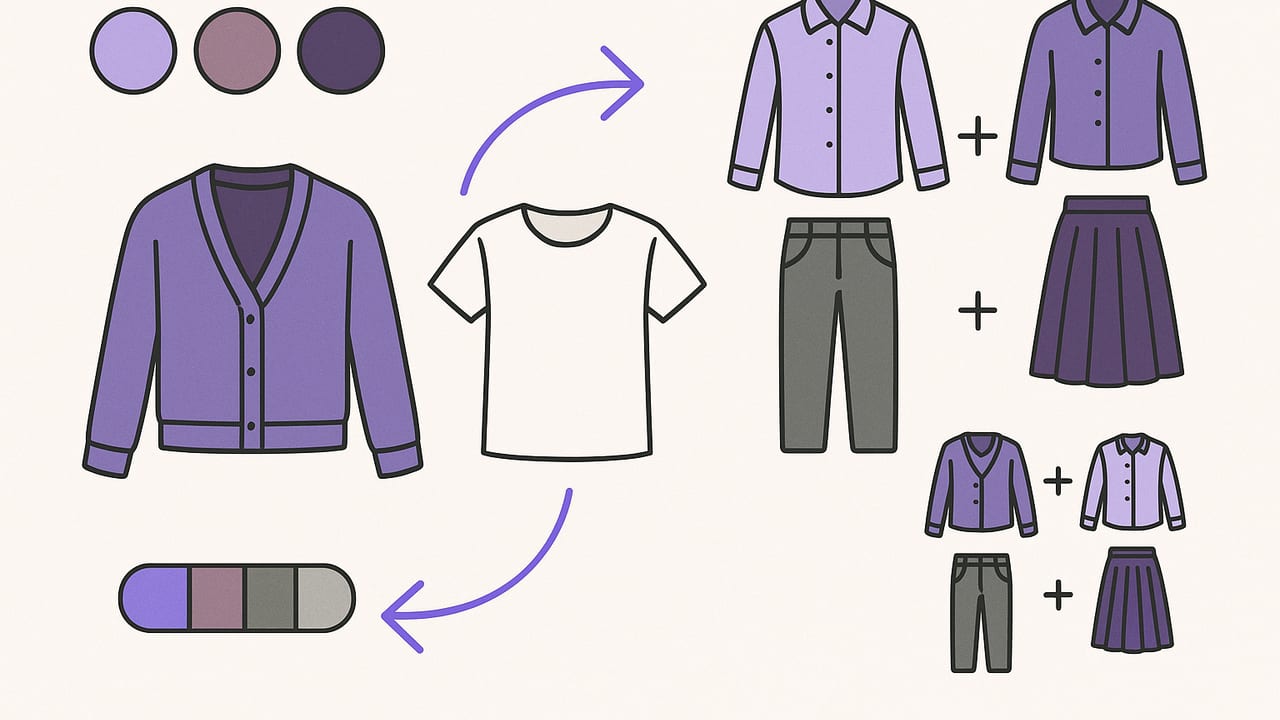
Clusters make mix and match clothing feel effortless. A 5×5 cluster is five tops and five bottoms chosen to combine freely within one palette and silhouette family. Targets:
- 5 tops: 2 casual, 2 smart casual, 1 statement
- 5 bottoms: 2 denim/chino, 2 tailored, 1 skirt/short
Even if only 70% of pairings are great, you still get 17–20 solid outfits from 10 items. Add two layers and two shoe options, and your combinations can easily exceed 40, all within a cohesive look.
How to Build a Cluster
- Choose silhouettes that harmonize (e.g., straight and wide legs; fitted and relaxed tops).
- Lock colors to your palette; keep patterns in the same value range.
- Audit shoes first. If the footwear you actually wear doesn’t suit a bottom’s length or width, swap the bottom.
- Pressure test: can each top go with at least three bottoms? Can each bottom work with at least three tops?
Seasonal Swaps Without Starting Over
Preserve your palette year-round by changing fabric weight and value, not hue families.
- Warm weather: linen, cotton poplin, open knits, lighter value accents (ecru, sky blue).
- Cold weather: flannel, merino, ponte, heavier textures, deeper value accents (charcoal, burgundy).
- Keep core neutrals constant; rotate layers and accessories to signal the season.
Layering ladder for weather swings: base layer (breathable) → mid layer (insulating) → outer layer (wind/water resistance). Restrict to three visible layers for clean lines.
Value Contrast: The Secret to Sharp Outfits
Value contrast is the difference in lightness between pieces. It’s a quick lever for visual interest when mixing and matching:
- Low contrast (ecru top + beige trouser): soft, minimal, lengthening.
- Medium contrast (grey top + navy trouser): balanced, versatile, office-friendly.
- High contrast (white top + black trouser): crisp, formal, attention-grabbing.
Pick one contrast level per outfit and echo it in accessories. For example, high-contrast look? Choose high-contrast shoes or a belt to repeat the theme.
A Weekly Outfit Grid You Can Reuse
Use this Monday–Friday template to streamline planning. Swap pieces within your palette to refresh weekly.
| Day | Formula | Example |
|---|---|---|
| Mon | Relaxed top + structured bottom | Knit tee (navy) + pleated trouser (ecru) + loafer |
| Tue | Hero pattern + solid basics | Striped shirt + dark denim + minimal sneaker |
| Wed | Monochrome + contrasting shoe | Olive top + olive chino + tan boot |
| Thu | Blazer set + tee | Charcoal blazer + matching trouser + white tee + derby |
| Fri | Texture mix | Silk blouse + straight jean + suede jacket + leather belt |
Rotate accents (a cobalt scarf on Monday, terracotta bag on Thursday) to refresh looks without breaking cohesion.
Shopping and Closet Audit Checklist
Before you buy, audit. After you audit, buy with intention.
Audit
- Color: Do 80% of items fit your palette? Remove outliers or relegate to accents.
- Fit: Prioritize tailoring for workhorse items (jeans, trousers, blazers).
- Condition: Replace basics that are faded, pilled, or stretched out.
- Use rate: If an item hasn’t been worn in 90 days (season-adjusted), ask why: color, fit, comfort, or context?
Shop
- Fill gaps identified in formulas: missing neutral trouser, versatile shoe, seasonally appropriate layer.
- Test compatibility: It must pair with three items you already own.
- Fabric first: Prefer breathable natural fibers for tops; durable blends for bottoms.
- Footwear reality check: If the shoe that completes multiple outfits isn’t comfortable, fix that first.
Common Mix-and-Match Mistakes (and Fixes)
- Too many statement pieces: Keep heroes to 20% of your closet. Fix by adding solid basics that match them.
- Color drift over time: Reconfirm your palette each season and align new purchases.
- Ignoring shoe harmony: Heel height and pant length must match. Hem or swap.
- Texture overload: Cap visible textures at three per outfit.
- Over-layering: Use a two-and-through rule—two layers for movement, the third only if needed for weather.
FAQ: Quick Answers to Keep You Moving
How many colors should a mix-and-match wardrobe have?
About five to seven: two core neutrals, one to two secondary neutrals, two accents, plus one metal. This keeps decisions simple without feeling repetitive.
Can I mix black and navy?
Yes—especially if you vary textures (e.g., navy wool trouser with black leather shoe) and repeat one color elsewhere to make it intentional.
How do I mix prints without clashing?
Keep prints in the same palette and vary their scale. One bold stripe with a micro-dot works; two bold patterns typically compete.
What’s the easiest way to look put-together fast?
Monochrome base (top+bottom) + third piece (blazer, cardigan, overshirt) + coordinated shoe and belt. Add one piece of jewelry in your chosen metal.
How many shoes do I need for versatility?
Four often cover most needs: white/neutral sneaker, sleek loafer/flat, ankle boot, simple heel or dress shoe. Match each to at least three outfits.
A Repeatable Dressing Algorithm
Use this five-step checklist when you’re stuck:
- Pick a base: top + bottom in the same neutral family.
- Add contrast: light vs dark or smooth vs textured.
- Choose a third piece: jacket, vest, or statement knit.
- Echo color twice: repeat an accent in accessory or shoe.
- Edit to three textures max and one hero pattern.
Run this algorithm with your cluster and you’ll consistently land on balanced, interesting outfits.
Care and Longevity: Keep Your Palette Looking New
- Wash by fabric: cold for cottons, delicate for knits/silk, inside-out for dark denim to prevent fading.
- Steam vs iron: steaming is gentler for drape; press only where structure matters (collars, plackets).
- Rotate wear: avoid back-to-back days for shoes and knitwear to extend life.
- Tailor early: a perfect hem and waist tweak can 2x the combinations that truly work.
Bring It All Together
Mix and match clothing isn’t about strict minimalism; it’s about intentional overlap. Build a tight palette, rely on proven formulas, balance pattern/texture/proportion, and test each piece’s compatibility. Do this, and even a modest wardrobe will unlock more outfits than an overstuffed closet ever could.
If you want to quickly visualize combinations from your real closet, Outfit Maker—an AI outfit generator and digital wardrobe planner for iOS—lets you upload pieces, try looks virtually, and plan outfits for any occasion.