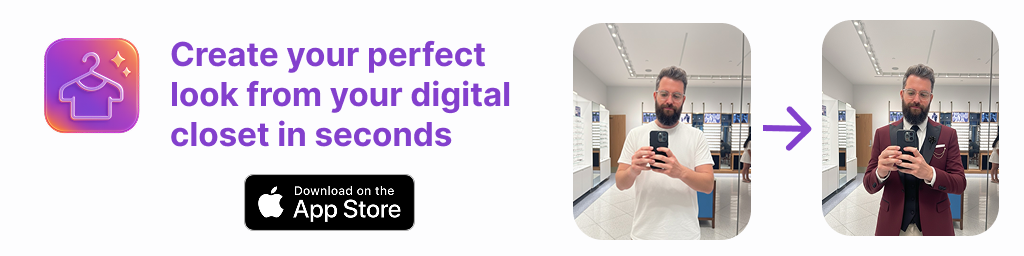
A seasonal wardrobe change is more useful when it starts with what you own—not with a shopping list. A digital closet app can help you review garments, spot outfit combinations, and plan a practical rotation before the weather changes. The key is to treat your digital wardrobe as a working record, not a perfect inventory project.
Use this checklist to switch seasons in manageable steps. You will decide what to keep accessible, what to store, and which outfits are ready for real-life plans. A virtual try-on can help you visualize combinations from photos, but it cannot confirm exact fit, fabric feel, warmth, or comfort. Keep those checks in the process, too.
Before You Start: Set a Useful Scope
Choose a short window for the changeover, such as a weekend afternoon, and focus on the clothes you actually wear. You do not have to catalogue every sock or make a permanent decision about every item. Begin with one category—like jackets, knitwear, or shoes—and add more only if you have time.
Check the forecast and your calendar before moving clothes. Seasonal transitions are rarely immediate: a warm week may follow a cold snap, and work, school, or social plans may call for layers. Keep a small group of flexible pieces accessible so your wardrobe can respond to changing conditions.
Seasonal Wardrobe Change Checklist
- Review the current digital closet. Look through the items recorded in your app. Correct categories, colors, or photos that no longer help you identify a garment. Add frequently worn pieces that are missing, but do not pause the whole process to catalogue everything. A useful digital closet is accurate enough to support decisions.
- Sort by season and real use. Make three groups: wear now, store for later, and review. A lightweight coat may work across several seasons, while a heavy sweater may be less useful in warm weather. Base the choice on your local climate, daily routine, and the garment’s condition—not on a rigid rule about when a season begins.
- Check condition before storing. Look for stains, loose buttons, worn soles, missing fasteners, and items that need cleaning or repair. Deal with care tasks before storage when appropriate, following the garment label. Put repair items in a visible, limited review group rather than letting them disappear into a box.
- Choose a practical active rotation. Keep the clothes you can wear in the coming weeks easy to reach. Store clearly out-of-season items only after considering unpredictable weather and upcoming occasions. If space is tight, rotate just bulky or rarely used pieces instead of trying to empty an entire section of your closet.
- Build outfits around likely days. Use your digital closet to combine garments you already own. Plan a few looks for work, errands, weekends, or events on your calendar. Include shoes and an outer layer; these can change whether an outfit is practical for the day.
- Test combinations before relying on them. If your app offers AI outfit generation or virtual try-on from photos, use it to preview how colors and silhouettes might work together. Then check the physical garments for fit, comfort, warmth, and movement. A visual preview is a styling aid, not a guarantee of exact sizing or fabric behavior.
- Save useful looks and note gaps. Save combinations you would genuinely wear, and label them in a way you can find later, such as “rainy commute” or “mild weekend.” If a look seems to need another item, first see whether a different piece in your closet can fill the role. Record only a genuine, repeated gap as a possible future need.
- Store and update the record. Put clean, dry seasonal items away in a place that protects them from dust and moisture. Make a brief note in your digital closet about what was stored and anything that needs attention before next season. This makes the next rotation easier without requiring a detailed archive.
A Digital Closet Checklist at a Glance
| Task | What to check | Decision |
|---|---|---|
| Catalog review | Missing items, unclear photos, inaccurate categories | Update only what helps you plan |
| Seasonal sort | Weather, routine, upcoming occasions | Wear now, store, or review |
| Condition check | Cleaning, repairs, damage, comfort | Ready to wear or needs attention |
| Outfit planning | Complete combinations, including shoes and layers | Save realistic looks for likely days |
| Storage | Cleanliness, dryness, access to transitional pieces | Store selectively and leave flexible layers out |
Example: Switching From Summer to Fall
Imagine your summer rotation includes a white shirt, dark jeans, a lightweight cardigan, sandals, and a rain jacket. As cooler days arrive, you might move sandals and very light tops into storage, but keep the cardigan and rain jacket accessible. They can still work on mild or wet days.
In your digital closet, try the white shirt with dark jeans, ankle boots, and the cardigan. Save it as a mild-day outfit. Then preview the same base with the rain jacket for a wet commute. The app can help you see the combination together, but you should still try the clothes on to confirm the layers feel comfortable and that the shoes suit your route. This is a practical seasonal rotation: a few changes, outfits based on existing garments, and no assumption that one date marks an instant weather shift.
How to Make the Checklist Work for Your Life
Use your own season, not a fashion calendar
Climate and daily routines vary. Someone who walks to work in a rainy area may need accessible outerwear longer than someone who drives in a dry climate. Keep transition pieces where you can reach them, and let the forecast and your plans guide the rotation.
Plan for repeat wear
A seasonal wardrobe does not need a different outfit for every day. Start with combinations you can repeat in different ways: one pair of trousers with several tops, or a dress styled with different layers and shoes. Saving these options in a digital closet can make it easier to remember what works, especially when you are deciding quickly.
Keep uncertain items in a review group
If you are unsure whether you will wear something, avoid forcing a final decision during the changeover. Set a reminder to review it after a few weeks of the new season. A short, time-limited review is more useful than storing an unexamined pile indefinitely.
What a Digital Closet Can—and Cannot—Tell You
A digital wardrobe can make clothes easier to browse and help you explore outfit combinations without pulling every item out at once. AI outfit generator features and virtual try-on can support style visualization from uploaded photos. They may help you consider color pairings, layers, or alternate combinations using garments you have recorded.
However, a photo-based preview is not the same as trying on clothing in person. It cannot reliably establish exact fit, sizing, fabric texture, stretch, weight, warmth, or how a garment moves on your body. Lighting, camera angle, and image quality can also affect how an item appears. Use digital previews to narrow styling options, then check the actual clothes for comfort and suitability. For purchases, consult the seller’s measurements and return information rather than treating a visualization as a sizing recommendation.
It is also fine to keep your catalog selective. Photographing every item may take more effort than it saves. Start with the pieces you wear often, seasonal layers, and garments that are difficult to combine. Add other items gradually when they become relevant to outfit planning.
Keep the Next Seasonal Change Simple
At the end of the rotation, leave yourself a short note: what you wore most, what stayed unused, and what needs cleaning or repair before it returns. That record can help you make more informed choices next time. Avoid treating unused clothing as automatic proof that it should be discarded; circumstances, weather, and personal preferences change.
For a step-by-step approach to organizing the catalog behind this routine, see Outfit Maker’s guide to building a digital closet. Outfit Maker is an iOS AI outfit generator and digital wardrobe planner that lets users visualize outfit combinations from photos. Whether you use an app or a simple list, the most useful seasonal wardrobe change is one that reflects your actual clothes, local weather, and everyday life.