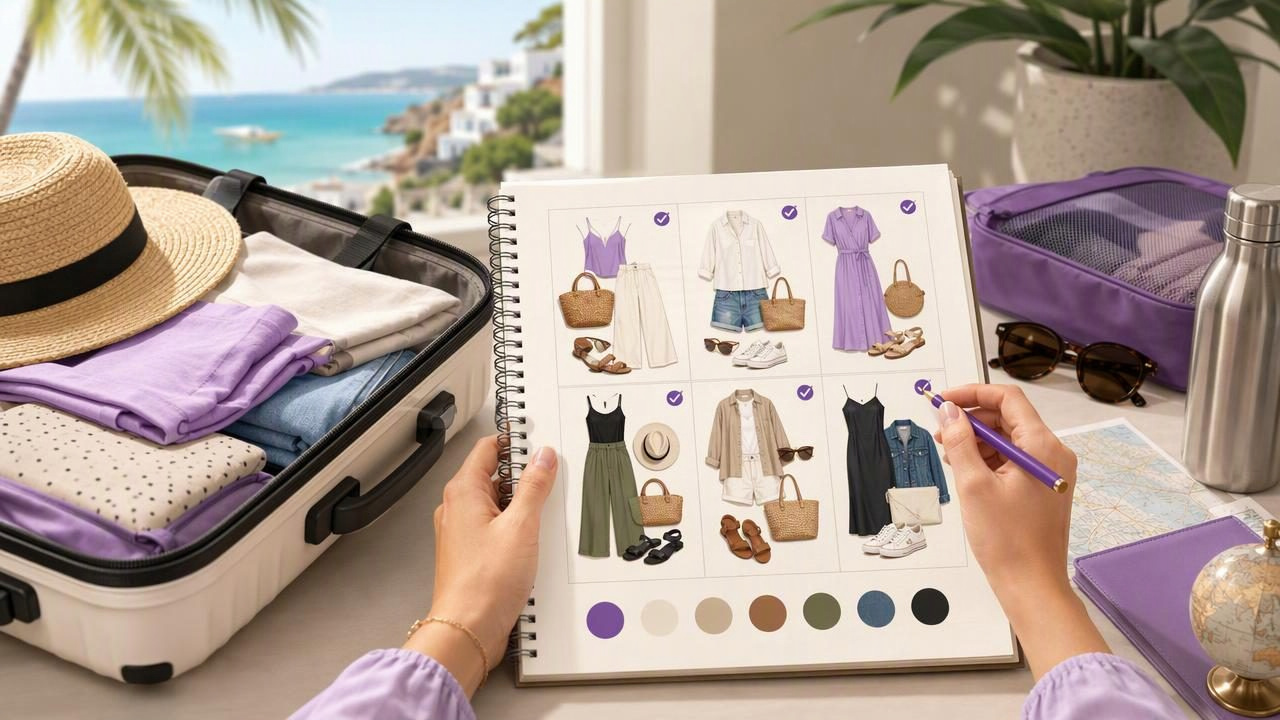
Knowing how to prepare vacation outfits can make packing feel far less stressful. Instead of filling a suitcase with individual items and hoping they work together, plan complete looks around your itinerary, weather, laundry access, and personal style. A practical trip outfit planner turns vague packing decisions into a clear list of outfits you can actually wear.
The goal is not to bring a new outfit for every hour of a trip. It is to pack a small, flexible wardrobe that gives you comfortable choices for travel days, daytime activities, dinners, unexpected weather, and photos. This guide provides a vacation outfits checklist, a step-by-step planning process, and a concrete example for a seven-day trip.
Why Plan Vacation Outfits Before You Pack?
Most overpacking happens when clothing is chosen item by item. You may pack three tops because you like them, two pairs of shoes “just in case,” and a dress that has no suitable layer or bag. The suitcase fills quickly, yet you may still feel like you have nothing to wear.
A trip outfit planner changes the question from “Should I bring this?” to “Which planned outfit needs this?” This approach helps you identify clothing that serves more than one purpose and remove pieces that do not connect with the rest of your travel wardrobe.
- Fewer duplicates: You can see when two items serve the same role.
- More outfit combinations: Coordinated colors and layers create variety.
- Better comfort: Each activity gets appropriate shoes, outerwear, and fabrics.
- Faster mornings: Looks are decided before you leave home.
- Less forgotten clothing: Accessories, sleepwear, and travel-day layers are included.
Start With the Trip Details, Not Your Closet
Before choosing clothes, write down the practical conditions of your vacation. A beach destination, city break, business trip, road trip, and outdoor holiday require different clothing systems. Even the same destination can call for different outfits depending on the season and planned activities.
Build a Simple Itinerary Map
Create a list of each day, including travel times and evening plans. You do not need a rigid hour-by-hour schedule; broad categories are enough. For example:
- Travel day and airport temperature changes
- Walking, sightseeing, museums, or shopping
- Beach, pool, hiking, cycling, or other active plans
- Restaurant reservations or special events
- Long drives, trains, or flights
- Rain, cold evenings, wind, or strong sun
Then check the forecast close to departure. Look at daytime highs, overnight lows, rain probability, humidity, and wind rather than relying on one temperature number. A warm destination can still need a light layer for air-conditioned transport or cooler evenings.
Choose a Practical Color Direction
A limited color palette makes vacation outfit planning easier because more garments can be worn together. Start with two or three neutrals, such as black, navy, cream, tan, olive, gray, or denim. Add one or two accent colors or prints that you enjoy wearing.
For example, a traveler planning a coastal city break might use navy, white, denim, and tan as core colors, with a coral top as an accent. A navy overshirt, white tee, denim, tan trousers, and neutral sneakers can create multiple looks without requiring a large suitcase.
The Essential Vacation Outfits Checklist
Use this checklist as a starting point, then adjust quantities for your destination, trip length, laundry access, and activities. It is a planning checklist, not a rule that every traveler must follow.
| Category | What to Plan | Questions to Ask |
|---|---|---|
| Travel outfit | One comfortable, layered look | Can you sit, walk, and handle temperature changes in it? |
| Tops | Versatile shirts, tees, blouses, or knits | Does each top work with at least two bottoms? |
| Bottoms | Comfortable pants, shorts, skirts, or jeans | Can each pair work for day and evening plans? |
| Layers | Cardigan, overshirt, jacket, or rain layer | Will it cover the coolest or wettest conditions? |
| One-piece options | Dress, jumpsuit, matching set, or tailored outfit | Does it suit a dinner, event, or easy daytime look? |
| Shoes | Walking pair, alternate pair, occasion-specific pair | Are they broken in and appropriate for planned terrain? |
| Accessories | Bag, belt, jewelry, hat, sunglasses, scarf | Do they improve several outfits rather than just one? |
| Special items | Swimwear, activewear, sleepwear, underwear | Have you packed for the activities you actually booked? |
How to Use a Trip Outfit Planner Step by Step
- List your occasions. Assign a clothing need to each travel day, activity, and evening plan. Include travel days because they often need their own practical outfit.
- Pick your anchor pieces. Choose the bottoms, outer layer, and shoes you are most likely to wear repeatedly. These items determine how much the rest of your wardrobe can mix.
- Create complete looks. Combine a top, bottom or one-piece, layer, shoes, bag, and relevant accessories. Do not stop at “black trousers”; decide what goes with them.
- Repeat strategically. Rewear bottoms, layers, bags, and shoes where appropriate. Repeat a favorite top only if you expect to wash it or it suits the climate.
- Fill real gaps. Add an item only when a planned outfit is incomplete, such as rain protection, a dinner shoe, or a sun hat.
- Do a suitcase edit. Remove orphan items: garments that only work with one look, are uncomfortable, or duplicate a stronger option.
Concrete Example: Seven Days in a Mild City Destination
Imagine a seven-day vacation with sightseeing, one nicer dinner, a day trip, and a chance of rain. The forecast is mild during the day and cooler at night. The traveler has access to laundry once and wants to use a carry-on suitcase.
Rather than packing seven completely separate outfits, the traveler plans this compact set:
- Two pairs of trousers or jeans: dark straight-leg jeans and lightweight tan trousers
- One casual bottom: tailored shorts or a comfortable midi skirt
- Four tops: two neutral tees, one striped shirt, and one polished blouse or knit
- One dress or matching set for dinner and daytime use
- Two layers: a denim jacket and a lightweight rain jacket
- Three shoes: supportive sneakers, comfortable loafers or flats, and sandals if the weather supports them
- One crossbody bag, one tote or day bag, sunglasses, and a compact umbrella
The travel outfit could be dark jeans, a white tee, denim jacket, and sneakers. For sightseeing, the traveler can pair tan trousers with the striped shirt and loafers. The same trousers work with the polished top and simple jewelry for dinner. A dress works with sneakers during the day, then with flats and the denim jacket in the evening. On the rainy day, the rain jacket replaces the denim jacket without changing the basic outfit.
This is not a promise that the exact list will work for everyone. Someone visiting a humid climate may need more tops and fewer layers, while a hiking trip requires activity-specific shoes and technical clothing. The useful lesson is the planning structure: every piece has a role, and multiple pieces can work together.
Pack by Outfit, Then Organize by Category
Once your vacation outfits are planned, packing becomes more reliable. It can help to place each complete look on a bed or clothing rack before putting anything in the suitcase. This makes missing items obvious: perhaps the dinner outfit needs the right bra, the rain layer needs a compact bag, or a dress needs a shoe you have not yet chosen.
After checking each look, pack in categories for easier access. Keep travel essentials, medication, documents, a light layer, and a change of clothes in your personal item when possible. Place shoes in bags or separate compartments, and use small pouches for underwear, chargers, swimwear, and accessories.
Pack for the plans you have, the weather you are likely to encounter, and one realistic change of plan—not every possible version of your trip.
Common Trip Outfit Planning Mistakes
Bringing Clothes You Have Not Worn Recently
Vacation is usually not the ideal time to test uncomfortable shoes, a difficult-to-style jacket, or a top that needs constant adjustment. Prioritize familiar items that fit your current routine and feel good for the type of movement your trip requires.
Packing for an Imaginary Version of the Trip
It is easy to pack for a fancy dinner that is unlikely to happen or multiple workouts you have not planned. Include one flexible elevated outfit if it makes sense, but let your itinerary—not wishful thinking—set the quantities.
Ignoring Laundry and Drying Time
Laundry can reduce the number of garments you need, but only if clothes can dry in time. Lightweight fabrics may be more practical than heavy denim or thick knits for trips with sink washing or limited drying space.
Assuming Visual Planning Solves Fit Questions
Planning outfit combinations visually can clarify color, proportion, and layering, but it does not replace trying on your clothes. A virtual outfit view cannot reliably predict exact fit, sizing changes, fabric feel, warmth, stretch, or comfort during a long walking day. Try on important outfits before departure, especially new shoes and special-event looks.
Make Future Vacation Planning Easier
After your trip, note which outfits you actually wore, which pieces stayed in the suitcase, and what you wished you had brought. These observations are more useful than a generic packing list because they reflect your destination, preferences, and travel habits. Save successful outfit formulas such as “wide-leg trousers + fitted tee + light jacket + sneakers” for future trips.
A digital wardrobe can also make this process simpler by helping you view your own garments together before packing. If you want a visual way to organize clothing and map combinations, Outfit Maker’s guide to planning travel outfits explains how a digital closet can support trip planning from your existing wardrobe.
With a clear checklist and a trip outfit planner, packing becomes a practical styling exercise rather than a last-minute guessing game. Plan complete looks, build in flexibility, and leave room in your suitcase for the trip itself.