Wedding invitations are exciting, but deciding what to wear can quickly become complicated. A single celebration may involve a welcome dinner, ceremony, cocktail hour, reception, brunch, and travel days. Add a dress code, changing weather, venue logistics, photos, and the desire to avoid buying something you will only wear once, and planning becomes a real project.
This guide will help you plan wedding guest outfits checklist with AI outfit generator tools and a digital wardrobe approach. Instead of trying on the same clothes repeatedly or relying on memory, you can map every event, build complete looks from your closet, identify gaps early, and feel confident before you pack.
Why Wedding Guest Outfit Planning Needs More Than One Dress
The right wedding guest outfit depends on much more than whether an item looks good on its own. You need to consider formality, comfort, location, the time of day, transportation, and how an outfit works with shoes, outerwear, and accessories. A beautiful cocktail dress can be impractical for a grassy ceremony, while a polished daytime look may feel too casual for a black-tie evening reception.
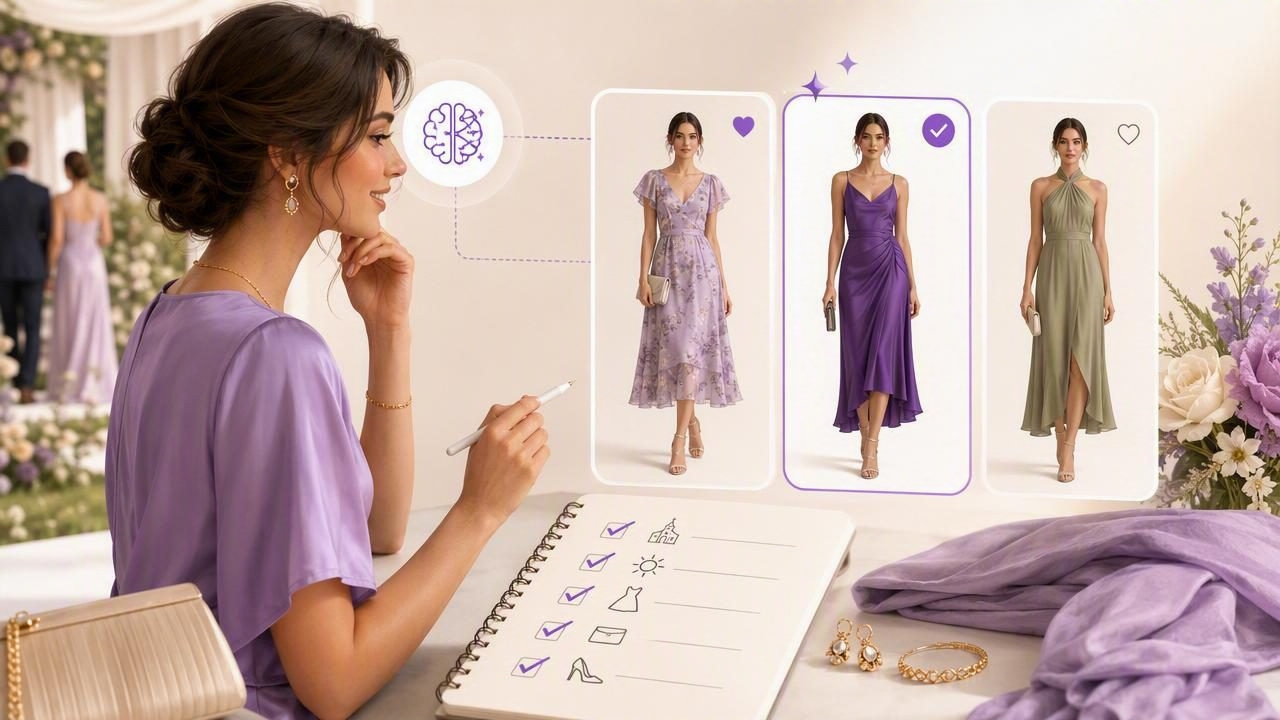
A digital wardrobe makes the decision process clearer because it lets you see your options as complete outfits. An AI outfit generator can also suggest combinations you may overlook, such as pairing a familiar dress with a different jacket, shoe color, or bag. This can reduce unnecessary shopping while helping you create looks that feel intentional.
Start With the Wedding Details
Before selecting clothes, gather the information that determines what is appropriate. Save screenshots of the invitation, wedding website, schedule, and venue information in one place. Details that seem minor can make a major difference in your outfit choice.
- Dress code: White tie, black tie, formal, cocktail, semi-formal, dressy casual, casual, or a themed request.
- Venue: Ballroom, vineyard, beach, garden, barn, restaurant, museum, city rooftop, or private home.
- Season and forecast: Check typical temperatures as well as the likely weather on the day.
- Ceremony timing: Daytime events often call for lighter colors and fabrics, while evening events may suit richer textures and deeper tones.
- Event schedule: Note every occasion you are attending, not only the ceremony and reception.
- Travel requirements: Consider luggage space, walking distances, flights, and whether you will have access to an iron or steamer.
Be mindful of any couple-specific requests. For example, a beach wedding may ask guests to avoid stilettos, while a cultural ceremony may have modesty expectations. Unless explicitly encouraged by the couple, avoid looks that could read as bridal, such as a solid white, ivory, cream, or very pale champagne dress.
Wedding Guest Outfit Checklist: What to Plan
Use this checklist for each wedding weekend. If you are only attending the main event, simply complete the ceremony and reception sections.
| Event or Need | What to Choose | What to Check |
|---|---|---|
| Travel day | Comfortable polished layers and versatile shoes | Wrinkle resistance, temperature changes, luggage comfort |
| Welcome dinner | Dressy casual or cocktail look based on the venue | Whether it is outdoors, seated, or photo-heavy |
| Ceremony | Dress-code-appropriate outfit with venue-ready footwear | Sun, wind, grass, stairs, religious requirements |
| Reception | Comfortable formalwear, a second shoe option, light layer | Danceability, indoor temperature, late-night comfort |
| Post-wedding brunch | Relaxed but polished separates or an easy dress | Morning weather and checkout or travel timing |
Core Outfit Components
- Primary outfit: dress, suit, jumpsuit, skirt set, or tailored separates
- Appropriate underwear or shapewear tested with the outfit
- Comfortable ceremony shoes and optional reception shoes
- Bag that fits essentials without distracting from the look
- Outer layer, wrap, blazer, coat, or rain option
- Jewelry and hair accessories
- Weather protection, such as blister patches, umbrella, sunscreen, or a stain-removal pen
How to Use an AI Outfit Generator for Wedding Events
An AI outfit generator works best when you give it organized, accurate wardrobe information. Photograph or upload the pieces you are genuinely willing to wear, including dresses, suits, trousers, tops, shoes, bags, jackets, and accessories. Clear photos against a simple background make it easier to review colors and proportions.
Tag items in your digital wardrobe by useful categories, including:
- Color and print
- Formality level
- Season and fabric weight
- Occasion, such as cocktail, formal, beach, or garden
- Comfort rating
- Whether an item works for walking, dancing, or outdoor wear
Then create a separate outfit collection for each event. Rather than requesting a vague “wedding outfit,” use specific prompts or filters. For example:
Event: Outdoor September ceremony and evening reception
Dress code: Cocktail attire
Venue: Garden with gravel paths
Preferences: Jewel tones, midi length, no stilettos
Available pieces: Navy satin midi dress, berry wrap dress,
black block heels, gold sandals, cropped blazer, metallic clutch
This level of detail helps you compare realistic options rather than receiving ideas that do not match your wardrobe or the event conditions.
Build Three Complete Looks, Not One
For the main wedding event, create three complete options: a first choice, a comfortable alternative, and a weather backup. A complete look includes everything from earrings to outerwear. This prevents last-minute problems, such as realizing your favorite shoes are painful after 20 minutes or that your only jacket clashes with the dress.
- Primary look: Your preferred outfit that best matches the dress code and personal style.
- Comfort look: A similarly appropriate option with easier movement, flatter shoes, or a more forgiving fabric.
- Weather look: A warm, rain-ready, or wind-friendly alternative that still photographs well.
Use virtual try-on features to see how the full combinations read at a glance. While digital previews do not replace checking fit in person, they are especially useful for evaluating balance. You may notice that a long coat overwhelms a midi dress, a bag is too casual, or a bold shoe competes with a patterned outfit.
Match Your Outfit to the Dress Code
Dress-code language can be broad, so focus on the formality of the entire look rather than one item alone.
- Black tie: Choose a floor-length gown, refined formal dress, elevated jumpsuit, tuxedo, or formal dark suit. Prioritize elegant fabrics and polished accessories.
- Formal: Long dresses, sophisticated midi dresses, dressy suits, and tailored jumpsuits are often suitable. The venue helps determine how glamorous to go.
- Cocktail: Aim for festive, polished looks such as midi dresses, sleek jumpsuits, dressy separates, suits, or blazers with tailored trousers.
- Semi-formal: A refined day-to-evening look works well. Consider a knee-length or midi dress, coordinated separates, or a smart suit.
- Casual: Casual does not mean everyday errand clothes. Choose clean, intentional outfits such as a sundress, tailored trousers, a collared shirt, or elevated flats.
Helpful rule: If you are unsure between two levels of formality, choose the more polished option and adjust with accessories or layers.
Plan for Comfort, Photos, and Real Life
A successful wedding guest outfit should survive more than a mirror check. Sit, walk, reach, eat, dance, use the restroom, and move through the expected weather. Test the outfit at home for at least 20 to 30 minutes, including the exact shoes and undergarments you plan to wear.
Take photos in natural light and indoor light. Some pale shades photograph almost white, while certain fabrics show wrinkles or flash photography differently than expected. If you are traveling with friends, sharing saved outfit combinations can be a useful way to get feedback without sending a confusing stream of separate clothing photos.
A Simple Timeline for Stress-Free Planning
Three to Four Weeks Before
Review all event details, catalog candidate items, and create your first outfit combinations. Identify missing essentials, such as a wrap, dress shoes, or garment bag, before shopping.
One to Two Weeks Before
Try on your top options, check alterations, and finalize accessories. Save each completed look in your digital wardrobe so you do not accidentally wear a planned item to another event first.
Two Days Before
Check the forecast, select your weather backup, steam or press clothing, and pack each outfit together. Keep accessories in labeled pouches and place shoes in protective bags.
Make Wedding Guest Dressing Easier Every Time
Once you have planned a wedding weekend, save the combinations that worked. Record notes such as “great for outdoor cocktail events,” “needed different shoes for dancing,” or “excellent in humid weather.” Over time, your smart closet organizer becomes a personal reference for future celebrations, vacations, work events, and date nights.
The goal is not to own a different outfit for every invitation. It is to understand what you already have, see it in fresh combinations, and make choices that suit the occasion. A digital wardrobe and virtual try-on workflow can turn wedding guest dressing from a last-minute scramble into a practical, creative planning routine. Tools such as Outfit Maker can help you visualize and save those combinations before the big day.