Hiring a personal stylist can transform your wardrobe, but you don’t have to wait for an appointment—or a big budget—to get professional-level results. With a clear process, a few measurements, and the right tools, you can create a personal stylist system at home that delivers better outfits, smarter shopping, and less decision fatigue. This guide breaks down what stylists actually do, how to replicate their best methods, and when it makes sense to bring in expert help or use AI-powered tools.
What a Personal Stylist Actually Does (and Why It Works)
Behind the scenes, a personal stylist isn’t just “picking outfits.” They’re running a repeatable process that aligns clothes with your life, body, and goals. At a high level, a stylist provides:
- Clarity: A defined style direction and color palette that keeps your closet cohesive.
- Fit strategy: Silhouettes and tailoring notes that flatter your proportions.
- Outfit formulas: Reusable templates for everyday looks, events, and travel.
- Wardrobe edits: What to keep, tailor, donate, or replace—plus a targeted shopping list.
- Decision support: Validation that reduces overbuying and speeds up daily dressing.
The good news: each of these outcomes can be achieved at home with a structured workflow. Let’s build yours.
Step 1: Set Your Style Goals
Great wardrobes start with constraints. Define the boundaries so your closet works for your life—not a mood board’s.
Map Your Lifestyle
Allocate rough percentages to your weekly needs:
- Work/professional: 40%
- Casual/off-duty: 35%
- Fitness/outdoor: 10%
- Evening/events: 10%
- Specialized (travel, hobbies): 5%
These percentages inform how much of each category you actually need. If 60% of your life is casual, your closet should reflect that reality.
Set a Budget and Values
- Budget envelope: Choose a monthly or quarterly number you can sustain.
- Value filters: Quality, sustainability, comfort, performance—rank what matters.
- Cost-per-wear: Divide price by estimated wears. High-use basics often justify upgrades.
Pick Three Identity Words
Choose three adjectives that capture your desired vibe (e.g., “minimal, relaxed, refined”). Use them to evaluate every purchase and outfit.
Style is a system. When your closet decisions align with your lifestyle, budget, and identity words, you stop guessing and start repeating wins.
Step 2: Fit Is the Foundation
Personal stylists obsess over fit—because it’s the fastest way to elevate any outfit. Capture these measurements and keep them in your phone:
- Shoulder width (across back)
- Chest/bust, waist, hip
- Inseam (pants), rise (front, back)
- Sleeve length, neck (for shirts), thigh
- Preferred garment lengths: top, skirt, dress hem, coat
Then add a few fit notes you discover by trial:
- Best jacket length for your torso
- Most flattering pant rise and leg opening
- Ideal necklines and shoulder fit
Commit to tailoring key items. Shorten sleeves, hem pants, taper waists. A 10–20% tailoring investment can double perceived quality and comfort.
Step 3: Build a Color Palette That Works
A personal stylist simplifies color to make mixing effortless. Start with:
- Two core neutrals: e.g., black + charcoal, navy + stone, or cocoa + ivory.
- One secondary neutral: denim, olive, camel, or grey that plays nicely with the cores.
- Two accent colors: pick tones that flatter your skin and work with both core neutrals.
- Metal: choose gold, silver, or mixed—consistency makes accessories cohesive.
Audit your closet for outliers that don’t link to this palette. Either style them within a micro-capsule or let them go.
Step 4: Create Outfit Formulas (Your Daily Shortcut)
Stylists reduce decision-making with repeatable formulas. Pick 4–6 you love and vary the pieces, not the structure. Examples:
- Smart casual: Relaxed blazer + knit tee + straight jeans + loafers.
- Office-polished: Fine-gauge turtleneck + pleated trousers + belt + block heels.
- Weekend: Overshirt + crewneck tee + joggers + retro sneakers.
- Evening simple: Slip dress + cropped cardigan + minimal heels.
- Layered winter: Long coat + chunky knit + tapered chinos + chelsea boots.
- Summer cool: Linen shirt + tailored shorts + woven belt + sandals.
Document your favorites with photos. Small tweaks (necklace vs. scarf, sneakers vs. loafers) keep looks fresh while the formula does the heavy lifting.
Step 5: Run a Data-Driven Wardrobe Audit
A personal stylist edit isn’t just “keep or toss.” It’s a system to increase outfit yield.
- Pull and sort: Tops, bottoms, layers, dresses, footwear, accessories.
- Tag for status: Keep, tailor, sell/donate, test (undecided).
- Rate fit and condition: Excellent, good, needs repair, unwearable.
- Link to formulas: For each item, note which outfit formulas it supports.
- Identify gaps: Essentials missing? Duplication? Orphans that need a partner?
Track wears for 30 days. Anything unworn but seasonally appropriate becomes a deliberate test: style it three ways or let it go. You’ll free space and reveal high-value gaps.
Step 6: Plan and Test Outfits Digitally
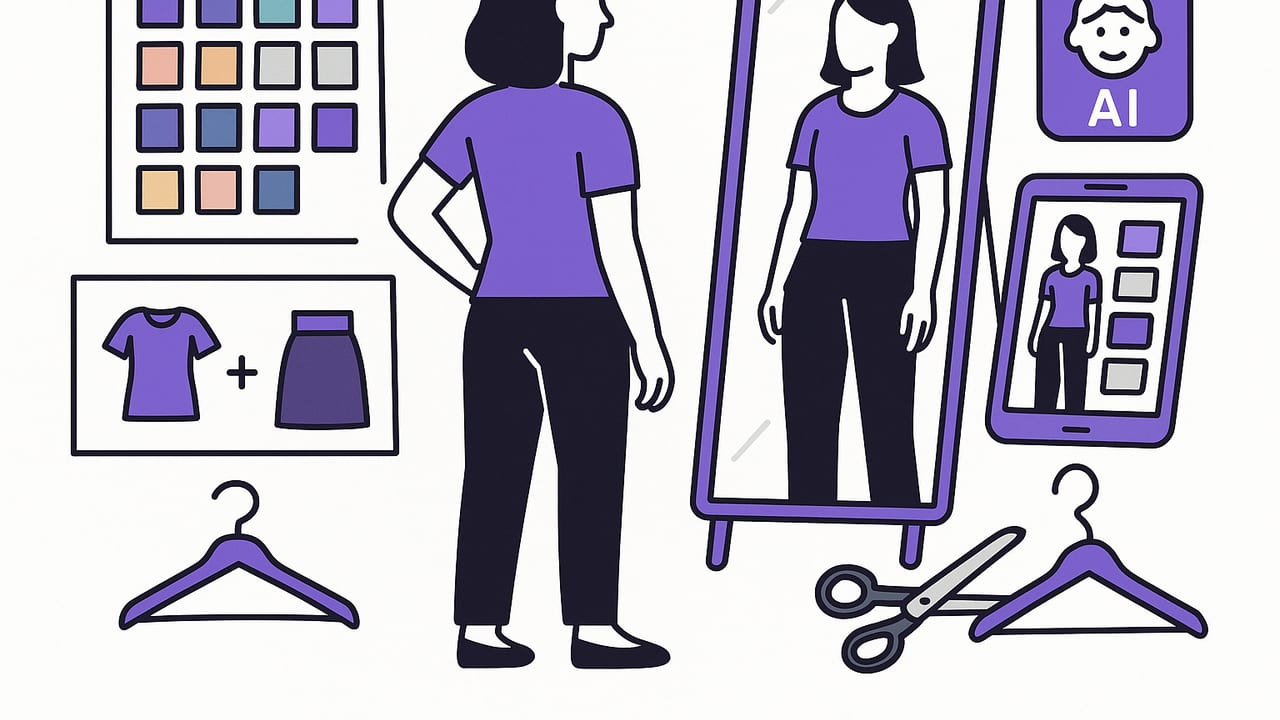
Virtual planning replicates the personal stylist try-on without the mess. Photograph your items against a clean background, tag color, category, season, and occasion, and assemble looks on your phone. Use virtual try-on or collage-style outfit boards to preview proportions, color balance, and footwear pairings before you commit.
Benefits:
- Faster mornings: rotate proven looks from a saved library.
- Packing mastery: simulate a 10-piece travel capsule and pre-plan outfits.
- Smarter shopping: test whether a potential buy completes multiple formulas.
Step 7: Build a Smart Shopping List
Turn your audit into a precise list that improves every outfit formula—not just random “nice-to-haves.” Capture the spec, not just the category:
- Category (e.g., trouser)
- Fit and rise
- Color/material
- Ideal length
- Budget range
- Outfit formulas it unlocks
Example entries: “Full-length, high-rise, straight trouser in charcoal, lined, hem to top of shoe, unlocks Office-polished + Evening simple.”
DIY vs. Traditional Personal Stylist vs. AI: Which Fits You?
Use this quick comparison to decide the right path for your needs and budget.
| Option | What You Get | When It Wins | Typical Cost | Time Required |
|---|---|---|---|---|
| DIY System | Self-led audit, formulas, palette, shopping list | Budget-friendly, hands-on learners | Low (tailoring + selective buys) | Medium–High upfront, low maintenance |
| Traditional Personal Stylist | Expert fit/edits, in-person or virtual sessions | Major life change, tight deadlines, events | Medium–High (session fees + purchases) | Low personal time, scheduled sessions |
| AI-Powered Wardrobe App | Digital catalog, virtual try-on, outfit suggestions | Daily planning, experiment risk-free, data | Low–Medium (app + buys as needed) | Low daily, moderate setup |
When to Hire a Human Personal Stylist
A seasoned professional is worth it when:
- Your body or lifestyle changed (new role, postpartum, new climate) and you need a fast reset.
- You have an event deadline and want guaranteed fit and coordination.
- You dislike shopping and want curated racks or linked carts.
- Your closet is overwhelming and you need accountability and a confident editor.
Tip: Bring measurements, your three identity words, and a rough lifestyle map. You’ll get better results and fewer returns.
Style Maintenance: A 7-Day Personal Stylist Sprint
Use this one-week plan to reboot your closet without burnout:
- Day 1: Define lifestyle percentages, budget, and identity words.
- Day 2: Take measurements; create a fit notes doc; pull 5 items for tailoring.
- Day 3: Choose palette; remove obvious outliers; set aside maybes.
- Day 4: Build 4 outfit formulas; create one look per formula from current items.
- Day 5: Photograph items; start your digital catalog; tag categories and colors.
- Day 6: Complete audit; label Keep/Tailor/Donate/Test; draft shopping list with specs.
- Day 7: Virtually test 10 outfits; finalize 5 weekday looks; prep for the week.
Repeat quarterly or at the start of each season to stay aligned with your real life.
Advanced Tips from a Stylist’s Playbook
- Texture stacking: Mix matte (cotton), sheen (silk), and nubby (tweed) for depth in a monochrome look.
- Rule of three: Add a third piece—blazer, overshirt, or vest—to elevate basics instantly.
- Proportions: Balance volume with structure (wide-leg pants + fitted top; oversized top + slim bottom).
- Footwear first: Choose shoes for the day’s terrain and formality. Build the outfit around them.
- Accessory lane: Pick one statement—earrings or scarf or belt—not all three.
Frequently Asked Questions
How many items do I need for a functional wardrobe?
It depends on your lifestyle, laundry rhythm, and climate. A lean, high-function closet often includes ~30–45 core items per season, not counting occasion-specific pieces, workout gear, or accessories.
How often should I audit my closet?
Seasonally is ideal. Do a micro-audit monthly: remove one item that isn’t serving you and add one outfit photo you love.
Is a capsule wardrobe the only answer?
No. Capsules are great for simplicity, but many people prefer modular micro-capsules (work, weekend, travel) that share a palette so pieces still mix across contexts.
What if I love variety?
Keep variety within a controlled palette and a few silhouette families. You’ll express creativity without creating orphans.
How do I stop impulse buying?
Shop your list, not your mood. Require every new item to work in three outfit formulas you already wear. If it fails the test, it’s a no.
The Takeaway: Make Your Closet Work Like a Personal Stylist
A strong personal stylist system is less about having “perfect taste” and more about working a repeatable process: define goals, lock fit and color, choose formulas, audit with data, and plan outfits digitally. Whether you go fully DIY, hire a pro for key moments, or blend in technology, the result is the same—you get dressed faster, feel more confident, and buy with intention.
If you want an easy way to catalog your wardrobe, test combinations, and virtually try on looks as you refine your formulas, an AI outfit generator and digital wardrobe app like Outfit Maker can help you put this system into daily practice.