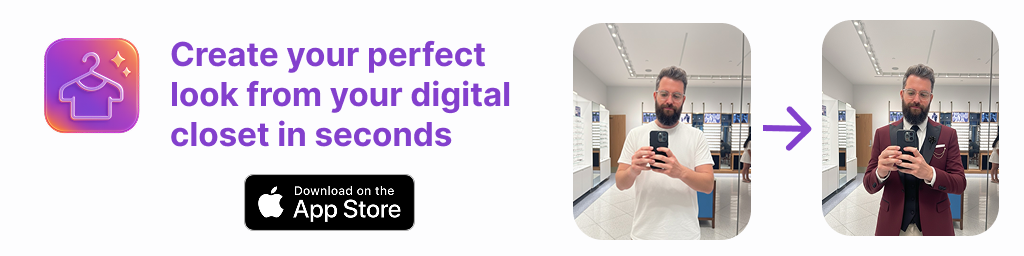
For working parents, deciding what to wear is rarely the only decision waiting in the morning. There may be a school drop-off, a commute, a meeting, a weather change, and a child who has just spilled breakfast on a sleeve. A personal styling app can help reduce one part of that morning rush by making it easier to see wearable outfit options before you get dressed.
This personal styling app guide for working parents focuses on practical planning, not building a picture-perfect wardrobe. The goal is to make useful combinations from clothes you already own, keep work and family-life needs in view, and leave room for real-world surprises. An app can help visualize a look, but it cannot guarantee that a garment fits comfortably or works for every task.
What a personal styling app can do for a busy parent
A personal styling app may include a digital wardrobe, outfit suggestions, virtual try-on, or tools for saving combinations. These features are most useful when they support decisions you already make: which trousers work with a particular top, what layers suit the forecast, or which shoes can handle a walk to school and an office day.
A digital closet is a catalog of clothing you add to an app, often using item photos. Instead of relying on memory, you can browse the pieces you have and consider new combinations. An AI outfit generator can suggest pairings based on those items, while virtual try-on can help you visualize how a combination might look on a photo of you. These are styling aids—not replacements for checking the garment on your body.
- Outfit planning: Save combinations for workdays, school events, errands, or evenings.
- Wardrobe visibility: Find pieces you may have forgotten or overlooked.
- Visual comparison: Consider two or more combinations without changing clothes repeatedly.
- Shared decisions: Where supported, share a look with a friend or partner for feedback.
Choose an app around your actual routine
Before adding every item in your closet, identify the decisions that cause the most friction. Is it choosing office clothes after a late night? Finding outfits that work for a daycare drop-off and a client call? Remembering what is clean? A personal styling app is more helpful when its role is specific.
Use these questions to assess whether an app suits your needs:
- Can you use your own garments? A wardrobe planner should help you work with your existing clothes, not assume you need a new shopping list.
- Can you save combinations? Reusing a known outfit can be easier than starting from scratch every morning.
- Does the visual output make sense to you? Check whether item photos and outfit previews are clear enough for your decisions.
- Is it manageable to maintain? Consider how much time you are willing to spend photographing and updating your wardrobe.
- Are privacy settings clear? If you upload photos, read the app’s current privacy information and decide what you are comfortable sharing.
There is no need to digitize every item at once. Start with a small group of clothes you regularly wear to work or on school-run days. Add more only if cataloging is proving useful. A smart closet organizer should make your routine simpler, not become another household task to maintain.
Build a small, realistic digital wardrobe
Begin with pieces that are clean, comfortable, and appropriate for your usual week. For example, include a few work-appropriate tops, two or three bottoms, a layer, everyday shoes, and any clothing that bridges work and family activities. Use clear item photos where possible, and label pieces in a way you can recognize, such as “navy ankle trousers” or “washable striped shirt.”
As you add clothes, note practical details that affect your choices. A top that wrinkles easily may not be your first pick for a long commute. Shoes that feel fine at a desk may not suit a school pickup on foot. The app may help you see combinations, but your knowledge of comfort, care, dress codes, and your day’s demands remains essential.
Keep the catalog current enough to be useful. If a garment is in the laundry, packed away, or no longer fits, remember that when reviewing suggested outfits. You do not need to keep a perfect inventory: even a partial digital wardrobe can help you spot combinations among frequently worn pieces.
Plan outfits around the shape of the day
Working-parent schedules often combine several settings. Instead of planning only by weekday, sort outfits by what the day requires. A home-working day, an office presentation, and a school event may call for different levels of formality, movement, and layering.
Try a simple planning table for the week:
| Day type | Practical outfit question | Planning note |
|---|---|---|
| Office and drop-off | Can I move comfortably and meet the dress code? | Choose a layer that works indoors and outdoors. |
| Work from home | Will I be on camera or going out later? | Save a comfortable look that still feels presentable. |
| Meeting-heavy day | Which familiar combination feels appropriate? | Use a saved outfit rather than experimenting in a rush. |
| Errands after work | Can the shoes and layers handle extra walking? | Consider the full day, not only the office. |
This is a planning aid, not a rigid uniform. If a child gets sick, the weather changes, or a meeting moves, swap the plan. Save a few flexible combinations rather than assigning every garment to a single day.
A concrete example: planning a mixed week
Imagine a parent with an office day on Monday, remote work on Tuesday, a client meeting on Wednesday, and school pickup followed by errands on Thursday. Their digital wardrobe includes black trousers, dark jeans, a striped shirt, a soft knit top, a blazer, a cardigan, and comfortable flat shoes.
- Monday: Pair the black trousers and striped shirt with the blazer. Check that the shoes are comfortable enough for the commute and drop-off route.
- Tuesday: Save the knit top with dark jeans as a relaxed option. If there is a video call, decide whether to add a more structured layer.
- Wednesday: Reuse the black trousers with the knit top and blazer, or compare it with the striped shirt combination. Select the version that suits the meeting and feels comfortable.
- Thursday: Choose the dark jeans, striped shirt, and cardigan for a day that includes pickup and errands. Keep a weather-appropriate outer layer near the door.
The benefit is not that the app has solved the week automatically. The parent has made a few decisions in advance, noticed that the trousers can support more than one outfit, and kept movement and comfort in mind. If the forecast changes, the saved combinations are starting points rather than obligations.
Use virtual try-on as a styling preview
Virtual try-on can help you compare how clothing combinations look together on a photo, which may be useful when you are choosing between two saved outfits. It can support visual decisions such as color balance, layering, or whether a combination feels more relaxed or more polished.
However, a preview is not the same as putting on the clothes. Image-based visualization should not be treated as a reliable prediction of exact fit, sizing, fabric texture, stretch, drape, or comfort. Lighting, the source photos, garment shape, and image rendering can all affect what you see. Before wearing an outfit, check the real garments for fit, movement, warmth, and suitability for the day.
For example, a preview may show a blazer over a top, but it cannot confirm that the sleeves feel comfortable when you lift a child or carry a bag. It may suggest that two colors work together, but it cannot tell you whether a fabric will stay cool during a long commute. Use the visualization to narrow choices, then rely on the clothes themselves for practical checks.
Make the plan resilient, not perfect
Parents need plans that survive interruptions. Keep one or two dependable combinations saved for days when there is no time to decide. Favor garments that are available, comfortable, and appropriate for the setting. If laundry timing often changes your choices, make a quick check before the start of the week rather than assuming every planned item will be ready.
It can also help to keep a short list of outfit formulas: trousers plus a knit top and layer; jeans plus a shirt and cardigan; or a simple dress with comfortable shoes. A formula is not a rule about what you should wear. It is a reminder of combinations that have worked for your routine.
Common mistakes to avoid
- Trying to catalog everything immediately: Begin with frequently worn pieces and expand gradually.
- Planning without checking availability: A saved look is less useful if its key item is in the wash.
- Choosing only by appearance: Consider movement, comfort, weather, and dress code as well.
- Treating AI suggestions as instructions: Keep, change, or ignore a recommendation based on your preferences.
- Expecting fit certainty from a preview: Visual try-on supports style decisions, not exact sizing or fabric predictions.
Make outfit planning one small weekly habit
Set aside a short moment to review the coming week, identify the days with special requirements, and save a few combinations from clothes you already own. Update the plan when life changes. If a personal styling app helps you see your wardrobe more clearly, use it as a flexible visual assistant—not another standard you must meet.
For a practical starting point, Outfit Maker’s guide to building a digital closet explains how a catalog of your own garments can support outfit planning. The most useful system is ultimately the one that fits your household’s real schedule, comfort needs, and available time.