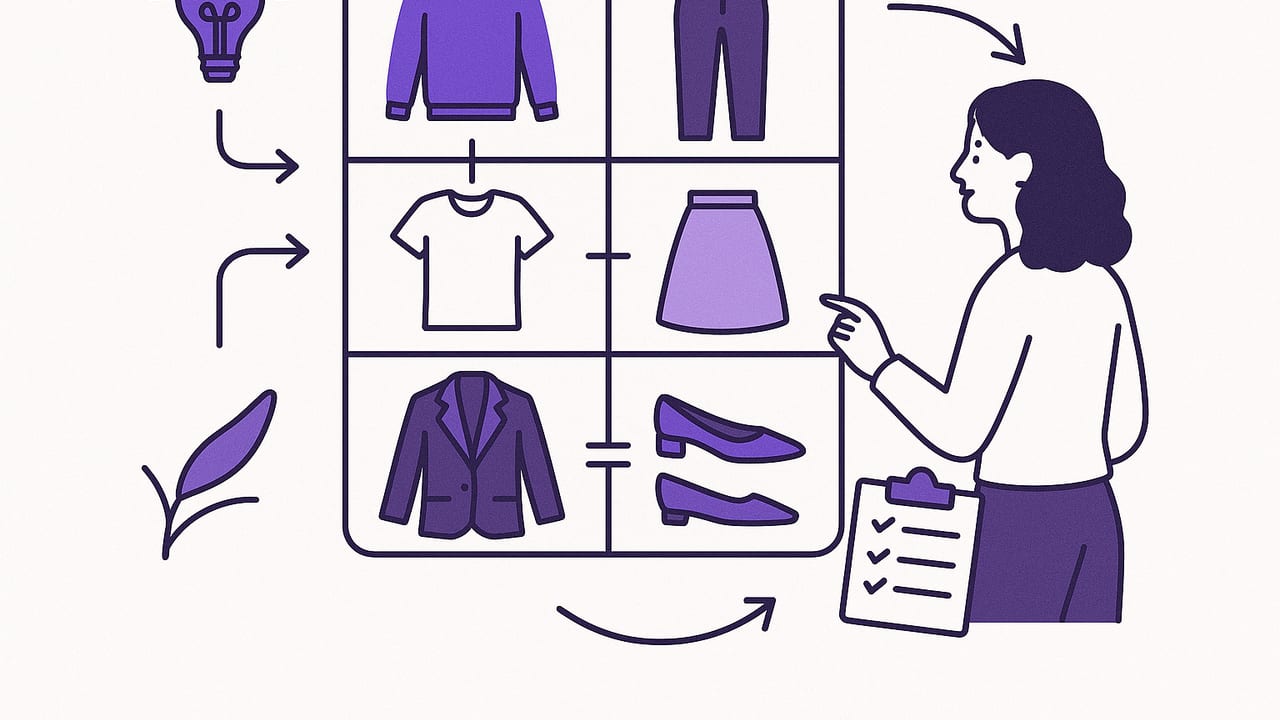
When your closet is full but nothing feels wearable, the solution is structure. Mastering outfit combinations isn’t about buying more—it’s about pairing smarter. With a few repeatable formulas, a simple color system, and a planning workflow you can actually maintain, you’ll unlock dozens (often hundreds) of polished looks from the clothes you already own.
“A good outfit is a decision you made yesterday.”
The 80/20 of Great Outfit Combinations
If you focus on these core levers, most pairings fall into place:
- Silhouette balance: Pair fitted with relaxed (e.g., slim top + wide-leg pants) to keep proportions intentional.
- Color harmony: Keep a neutral base; add accents strategically (one pop is usually enough).
- Texture contrast: Mix smooth (silk, poplin) with textured (knit, boucle, suede) for depth without clutter.
- Rule of thirds: Visually aim for a 1/3 to 2/3 split—crop a top, tuck it, or layer to avoid a 50/50 cut.
- Focal point: Let one thing lead (color, silhouette, or statement accessory). Everything else supports.
The Math Behind Outfit Combinations
At a high level, possible looks multiply fast: tops × bottoms × shoes × outer layers (plus one-piece outfits). But you’ll get the best results by counting potential looks, then filtering with sensible constraints like weather, dress code, and color compatibility.
| Category | Count | Notes |
|---|---|---|
| Tops | 6 | 2 tees, 2 shirts, 2 knits (mixed weights) |
| Bottoms | 4 | 2 jeans, 1 tailored trouser, 1 skirt |
| Layers | 3 | Blazer, cardigan, trench/coat |
| Shoes | 3 | Sneakers, loafers, ankle boots |
| One-pieces | 2 | Slip dress, jumpsuit |
| Accessories | 5 | Belt, scarf, watch, tote, crossbody |
Raw potential from separates: 6 × 4 × 3 × 3 = 216. One-pieces with layers and shoes: 2 × 3 × 3 = 18. Base potential: 234+ looks, before weather, color, and dress-code filtering. Realistically, you’ll get 40–80 strong ensembles, which is more than enough for rotation without repetition fatigue.
A Simple Way to Filter Combinations (Optional)
Use a quick compatibility pass to remove clashing colors, mismatched formality, or off-season fabrics. If you like a technical angle, here’s a tiny snippet to conceptualize the filter step:
# Pseudo-Python to filter outfit combinations
tops = [...]       # each item: {color, formality, temp}
bottoms = [...]
layers = [...]
shoes = [...]

def compatible(a, b):
    color_ok = (a['color'] == b['color']) or (a['color'] in b.get('neutrals_ok', [])) or (b['color'] in a.get('neutrals_ok', []))
    formality_ok = abs(a['formality'] - b['formality']) <= 1
    temp_ok = (a['temp'] == b['temp']) or (a['temp'] == 'transitional') or (b['temp'] == 'transitional')
    return color_ok and formality_ok and temp_ok

looks = []
for t in tops:
    for b in bottoms:
        if not compatible(t, b):
            continue
        for s in shoes:
            if not compatible(b, s):
                continue
            for l in layers:
                if compatible(t, l) and compatible(l, s):
                    looks.append((t, b, s, l))
print(len(looks))
You don’t need code to plan outfits—but thinking in constraints helps you work faster and more confidently.
Color and Texture Pairings That Always Work
- Monochrome with tonal depth: One color family, multiple shades (stone, beige, camel) plus a contrasting texture (suede belt).
- Analogous neighbors: Navy + teal; olive + moss; rust + terracotta create calm, cohesive looks.
- Complementary pops: Blue base, rust accessory; forest base, fuchsia scarf. Keep the pop to 10–20% of the outfit.
- Neutral base + one accent: Black/gray/navy with a single bright piece or accessory.
- Texture balance: Matte jeans + silk shirt; crisp poplin + ribbed knit; leather jacket + jersey tee.
Quick Neutral-to-Accent Synergy
| Neutral Base | Cobalt | Rust | Fuchsia | Forest |
|---|---|---|---|---|
| Black | High | High | High | High |
| Navy | High | Medium | Medium | High |
| Gray | High | High | Medium | High |
| Beige | Medium | High | High | Medium |
| White | High | High | High | High |
When in doubt, pair an accent with black, white, or gray and add a texture shift to keep it intentional.
Layering Formulas You Can Plug In
Use these repeatable frameworks to generate reliable outfit combinations without reinventing the wheel:
- Tee + blazer + jeans + loafers (add belt for shape)
- Silk shirt + tailored trouser + ankle boots (roll sleeves, add watch)
- Knit polo + midi skirt + sneakers (crossbody bag for proportion)
- Button-down + wide-leg pants + trench + sneakers (half-tuck to fix thirds)
- Turtleneck + slip dress + leather jacket + boots (texture contrast)
- Fine knit + denim + cardigan + ballet flats (soft + structured)
- Tank + linen trousers + oversized shirt + sandals (heat-ready)
- Chambray shirt + black jeans + Chelsea boots (two-tone base)
- Graphic tee + pleated skirt + blazer + sneakers (casual-meets-tailored)
- Jumpsuit + belt + blazer + heels (instant polish)
Occasion-Specific Outfit Combinations
Office/Business-Casual
- Blazer + knit shell + tailored trousers + loafers
- Silk blouse + midi skirt + ankle boots
Smart Casual
- Button-down + dark jeans + belt + loafers
- Knit dress + trench + sneakers
Weekend
- Relaxed tee + light-wash jeans + cardigan + sneakers
- Tank + pull-on pants + denim jacket + slides
Date or Evening
- Slip dress + leather jacket + heeled boots
- Statement blouse + black trousers + heels
Travel
- Breathable tee + stretch trouser + cardigan + sneakers
- Monochrome base + scarf (temperature and polish)
Outdoor or Event
- Sun dress + light jacket + low block heels
- Chinos + linen shirt + loafers
Plan a Week of Outfits in 15 Minutes
- Scan your week: Weather, meetings, dinners, errands. Note formality and walking demands.
- Choose anchor bottoms (3): E.g., dark jeans, tailored trouser, midi skirt.
- Pick tops (5–7): Mix of shirts/knits in a tight palette (2–3 neutrals, 1–2 accents).
- Select shoe families (2): One casual (sneakers), one polished (loafers/boots).
- Assign formulas to days: Use the layering list above; avoid repeating the same silhouette two days in a row.
- Pre-stage accessories: Belt, watch, bag, scarf. Keep them visible so you don’t skip the final 10%.
| Day | Base | Top | Layer | Shoes | Accent |
|---|---|---|---|---|---|
| Mon | Tailored trouser | Silk shirt | Blazer | Loafers | Belt |
| Tue | Dark jeans | Knit | Trench | Sneakers | Scarf |
| Wed | Midi skirt | Button-down | Cardigan | Ankle boots | Watch |
| Thu | Dark jeans | Tee | Blazer | Loafers | Crossbody |
| Fri | Tailored trouser | Knit polo | None | Sneakers | Belt |
Avoid These Common Mistakes
- Too many focal points: If you have a loud print, skip exaggerated silhouettes or neon shoes. Anchor the look.
- Shoe weight mismatch: Chunky boots with whisper-thin fabrics can topple balance. Match shoe visual weight to fabrics.
- Mixed formalities: Gym sneakers with satin trousers rarely work; swap in a minimal leather sneaker or loafer.
- Clashing undertones: Cool gray with warm camel can look off unless you bridge with white or denim.
- Ignoring thirds: A long untucked top over mid-rise pants cuts you in half. Tuck, crop, or layer.
- Seasonal fabric clash: Linen with heavy wool feels confused; use transitional pieces (denim, cotton twill) as a bridge.
Quick-Reference Outfit Combinations Matrix
| Base Piece | Best Top Types | Go-To Shoes | Notes |
|---|---|---|---|
| Dark jeans (straight) | Silk shirt, tee, knit | Loafers, boots, minimal sneakers | Dress up with blazer; tuck for thirds |
| Light jeans (relaxed) | Fitted tee, cropped knit | Sneakers, sandals, ballet flats | Keep tops neater for contrast |
| Tailored trousers | Button-down, silk shell, fine knit | Loafers, heels | Watch the break; avoid overpowering sneakers |
| Midi skirt (A-line) | Knit polo, tee, blouse | Ankle boots, sneakers | Balance volume with a defined waist |
| Shorts (tailored) | Button-down, knit tee | Sandals, loafers | Half-tuck, add belt for structure |
| Slip dress | Turtleneck or tee layered | Boots, strappy heels | Leather jacket or blazer for edge |
FAQs: Making Smarter Outfit Combinations
How many outfits should a small capsule create?
Even a lean 6 tops × 4 bottoms × 3 shoes × 2 layers yields over 100 theoretical pairings. After filtering for season and dress code, aim for 30–60 reliable looks.
Can I mix prints?
Yes—keep one print dominant and the other subtle, share a color, and vary scale (micro stripe with larger floral). Ground with solid neutrals.
How do I repeat pieces without looking the same?
Rotate the focal point. If Monday’s hero is color, let Wednesday’s be silhouette, Friday’s texture. Swap shoes and bags to change the vibe instantly.
What’s the fastest way to remember what works?
Photograph your best looks and tag by occasion and weather. Build a small library you can skim in 30 seconds.
Put It All Together
Start with a neutral base, add one accent, balance silhouette, and choose a single focal point. Use formulas to speed decisions, then pre-plan a week at once. Repeat this rhythm for a few cycles and you’ll feel the compounding effect—less friction, more polish, and far more reliable outfit combinations from the pieces you already own.
If you prefer a visual, phone-friendly workflow, you can photograph your clothes, test pairings, and log your best outfits in an app like Outfit Maker, which lets you virtually try combinations and plan looks without changing clothes.