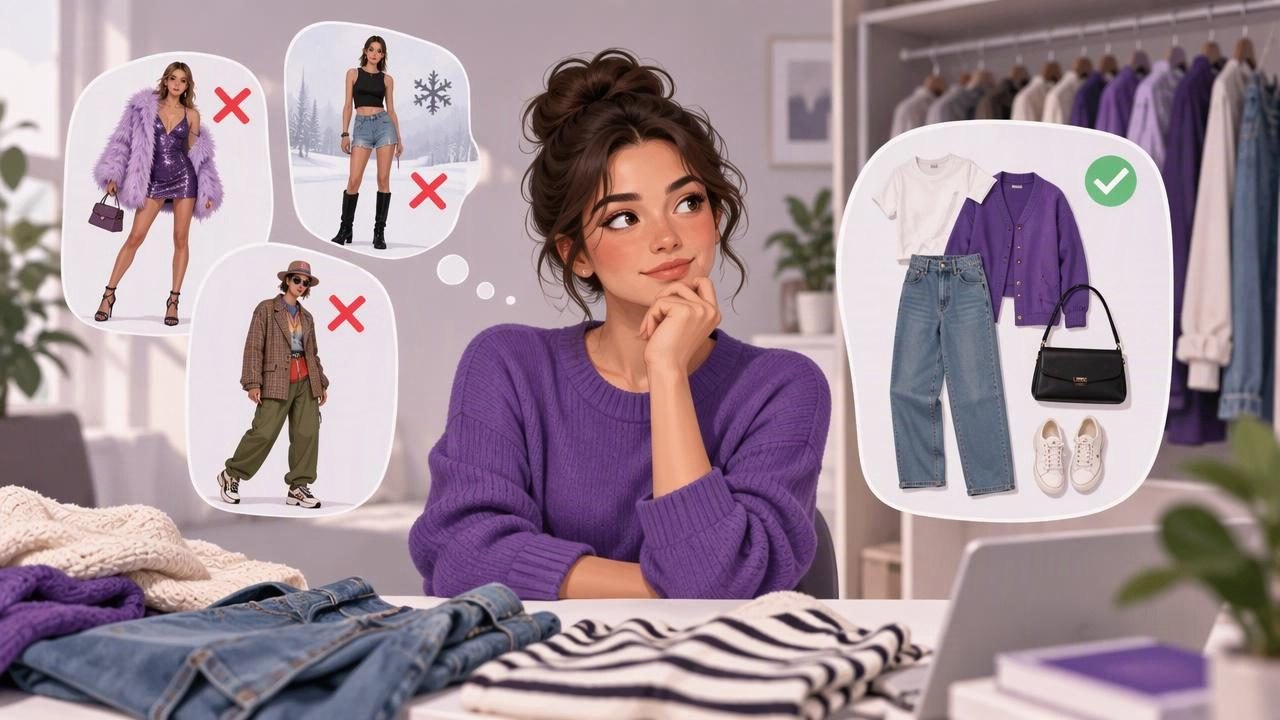
An outfit combination maker can help you explore new ways to wear clothes you already own. But more combinations do not automatically mean better outfits. A look may appear coordinated on a screen and still feel impractical, uncomfortable, or wrong for the occasion.
The key is to use outfit suggestions as starting points, then check them against your real wardrobe, plans, and preferences. Avoiding a few common mistakes can make digital outfit planning more useful—and help you create looks you will actually choose to wear.
1. Starting with random combinations instead of a real need
It is tempting to combine every top with every pair of trousers just to see what happens. That can be fun, but it often produces a long list of options without solving the question you started with. Are you planning work outfits, choosing something for dinner, or trying to wear a neglected jacket more often? The answer should guide the combinations you explore.
Begin with a specific occasion or wardrobe challenge. For example, if you need a relaxed outfit for a mild Saturday, choose a practical base such as jeans and a comfortable top, then test a layer and shoes. This gives an outfit combination maker useful boundaries and makes it easier to judge which results are relevant.
2. Using clothes you do not actually own or wear
A combination is only useful if it reflects your available wardrobe. Adding imagined pieces—a perfect coat you have not bought, shoes you never wear, or a dress that is still at the tailor—can make a digital plan look complete while leaving you without a real outfit.
Keep your digital wardrobe grounded in garments you own and can reasonably wear. Include the items you reach for regularly first; you do not have to catalog everything at once. If a garment is seasonal, damaged, or unavailable, note that before planning around it. A smart closet organizer works best when its catalog represents reality rather than an idealized version of your closet.
3. Choosing too many statement pieces at once
Bright colors, bold prints, unusual shapes, and eye-catching accessories can all add personality. The mistake is assuming that every interesting item needs to appear in the same look. Several competing focal points can make an outfit feel busy, especially if there is no quieter piece to give the eye a place to rest.
Try choosing one main feature, then supporting it with simpler pieces. A patterned skirt, for instance, might work with a solid-colored top and understated shoes. This is a guideline, not a strict rule: a coordinated print mix can work when the colors or scale connect. Compare the result in a mirror or a virtual try-on view, then ask whether the pieces feel intentional together.
4. Ignoring the occasion, weather, and practical details
Color and style are not the only tests an outfit needs to pass. A combination that suits a casual lunch may not fit a formal event. A light outfit might look polished but leave you cold outdoors, while delicate shoes may be a poor choice for a day spent walking.
Before saving a look, check the setting, expected activity, forecast, and dress expectations. Think about the whole day, including travel between locations and indoor temperatures. For a long walk, comfort and suitable footwear may matter more than a visually striking combination. An outfit planner should help you make a workable choice, not just an attractive collage.
5. Treating color rules as absolute
Color advice can be a helpful prompt, but fixed rules such as never mixing certain shades can limit your options unnecessarily. The same colors can look different depending on their tone, proportion, texture, and the other pieces around them. A navy layer and black trousers, for example, may look deliberate when the shapes and materials are clearly distinct.
Instead of rejecting a pairing by rule, compare it with alternatives. Look for a shared undertone, repeat a color in a small accessory, or add a neutral piece to connect the palette. Use the combination maker to test possibilities, but trust your own preference and how the outfit reads as a whole. The goal is a look that feels coherent to you, not one that obeys every style formula.
6. Forgetting proportion and how you like clothes to sit
Two garments can share a color palette and still feel unbalanced together. A very loose top with wide trousers may create more volume than you want; a cropped jacket may change the visual line of a long dress. These effects depend on personal taste, body proportions, garment cut, and how you style each piece.
When comparing combinations, consider where hems fall, whether layers bunch, and whether the outfit has the shape you prefer. Try a simple adjustment before discarding the look: tuck or untuck the top, open the jacket, change the shoe height, or add a belt you already own. A digital preview can help you compare styling ideas, but it cannot replace seeing how the actual clothes sit on your body.
7. Confusing virtual try-on with a fit or fabric guarantee
AI outfit generation and virtual try-on can make it easier to visualize clothing combinations from photos. That visualization is useful for exploring color, layering, and overall styling. It should not be treated as proof that an item will fit, feel comfortable, or behave exactly as shown.
A generated image may not capture precise measurements, fabric weight, stretch, drape, transparency, or movement. The result can also depend on the quality and angle of the source photos. Use the image to consider the general look, then check garment labels, measurements, and the actual item when fit or fabric matters. Do not make a sizing decision based only on a visual preview.
8. Saving every idea instead of editing your options
Saving combinations can make it easier to revisit a good idea, but a digital wardrobe filled with near-identical looks can become harder to use. If every small variation is saved, you may spend more time sorting than choosing. Keep combinations that serve a purpose: a dependable work outfit, a useful layering idea, or a new way to style a piece you want to wear more often.
Give saved looks clear names, such as the occasion or key garment, and remove options that no longer work for your plans. If you are deciding between two versions, compare them side by side and keep the one that feels more comfortable and practical. Sharing a look with a friend can provide another perspective, but your needs and preferences should remain the deciding factors.
A concrete example: make one blazer work in two ways
Imagine your wardrobe includes a navy blazer, a white T-shirt, straight-leg blue jeans, black trousers, and clean sneakers. A rushed combination maker might pair the blazer with each item and stop at the first visually coordinated result. A more useful approach starts with the occasion.
For a casual coffee, try the blazer, T-shirt, jeans, and sneakers. Check whether the blazer feels too formal for the setting, and consider rolling the sleeves if that matches your style. For a smart-casual meeting, compare the blazer and T-shirt with black trousers. The base pieces are similar, but the trousers make the outfit read differently. If you will be outdoors in cool weather, consider whether another layer is needed and whether it fits under or over the blazer.
These are visual and styling comparisons, not promises about comfort or fit. Try the actual clothes if you need to confirm how the jacket moves or how the layers feel. The example shows why occasion and practical checks matter as much as color matching.
A better way to use an outfit combination maker
- Set a purpose. Choose an event, daily activity, weather condition, or garment you want to style.
- Start with real pieces. Select clothes and shoes that are clean, available, and appropriate for the plan.
- Compare a few useful options. Change one element at a time, such as the trousers or outer layer, so you can see what changes.
- Check the complete look. Consider color, proportion, comfort needs, dress expectations, and the practical demands of the day.
- Save only the strongest combinations. Keep the options you would genuinely wear and add a useful label for later.
This process keeps outfit planning focused without turning personal style into a rigid set of rules. It also makes a digital closet more valuable over time: your saved outfits become a record of combinations you have considered, rather than a pile of unfiltered suggestions.
Make the tool a guide, not the final judge
The best outfit combination maker helps you see possibilities you might overlook, but your real-life context still matters. Use generated looks to explore your own garments, test styling ideas, and narrow down choices. Then account for fit, fabric, movement, weather, and personal comfort in the real world.
For a practical starting point on organizing garments for outfit planning, Outfit Maker’s guide to building a digital closet explains how a clothing catalog can support more considered combinations.