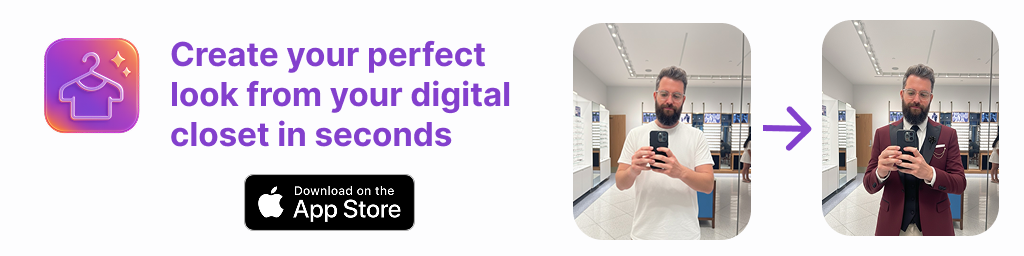
If getting dressed feels like a daily decision marathon, an outfit planning app can turn your wardrobe into a system. The goal isn’t to own more clothes—it’s to use what you already have more intentionally, reduce decision fatigue, and build outfits you trust for work, weekends, events, and travel.
This guide walks through a practical, repeatable workflow you can use with most modern wardrobe tools (including apps with a digital wardrobe, smart closet organizer features, and virtual try-on or AI-assisted outfit suggestions). You’ll learn how to set up your closet, create a few “default uniforms,” and plan outfits in minutes—without making it feel like a second job.
Why an outfit planning app actually saves time (when used right)
Many people try a closet app once, upload a few items, then stop. The difference between “another app” and a true time-saver is having a workflow that matches how you live:
- Fewer decisions in the morning: pre-made outfits beat starting from scratch.
- Better cost-per-wear: you see neglected items and can rotate them in.
- Less overbuying: you stop buying duplicates of what you already own.
- More consistent style: you repeat what works and refine it over time.
Rule of thumb: The app should reduce choices, not create more. If it’s taking longer than getting dressed, simplify.
The 20-minute setup that makes the rest easy
You don’t need to catalog every sock to get value. Start with a “high-impact wardrobe” set: your most-worn tops, pants/skirts, shoes, outerwear, and a few go-to accessories.
Step 1: Pick your starter categories
A strong starter set is usually 40–80 items. Focus on what you wear weekly.
- Tops (work + casual)
- Bottoms
- One-piece outfits (dresses/jumpsuits)
- Outerwear
- Shoes
- Key accessories (belt, bag, scarf)
Step 2: Add the metadata that drives outfit suggestions
The biggest upgrade you can make to any outfit planning app is consistent tags. Tags turn a digital closet from a photo album into a planning tool.
Use these core tags:
- Occasion: Work, Weekend, Date, Event, Gym, Travel
- Weather: Hot, Mild, Cold, Rain, Snow, Wind
- Formality: Casual, Smart Casual, Business, Formal
- Color family: Neutrals, Warm, Cool, Bright
- Comfort level: Relaxed, Structured (surprisingly useful)
If your app supports it, add fabric (cotton, wool, linen) and care (dry clean, delicate) later—those become valuable when planning travel or laundry cycles.
A simple weekly outfit planning routine (that doesn’t take over your Sunday)
The easiest way to benefit from an outfit planning app is a short weekly “pre-decide” session. Aim for 10–15 minutes.
What to do each week
- Check your calendar: meetings, dinners, weather, errands.
- Choose 3–5 anchor outfits: the outfits you can rely on.
- Create 2 backups: one warmer, one more casual.
- Note one style goal: e.g., “wear the green trousers twice” or “use the new blazer.”
When Monday morning hits, you’re not “creating.” You’re selecting from a small, pre-approved set.
Build your personal outfit formula (so planning gets faster every week)
Most people don’t need endless variety—they need repeatable formulas. An outfit formula is a combination pattern that consistently looks good on you and fits your life.
Examples of reliable formulas
- Work formula: knit top + tailored pants + blazer + loafers
- Casual formula: fitted tee + straight jeans + light jacket + sneakers
- Event formula: dress + structured jacket + heeled boots
- Hot weather formula: linen shirt + shorts/skirt + sandals
In your outfit planning app, save 3–7 formulas as outfit templates. Then you’re mostly swapping colors, textures, and layers—not reinventing the wheel.
Using virtual try-on and AI suggestions without losing your style
Apps that include virtual try-on or an AI outfit generator can be useful—especially when you’re stuck or want to test combinations quickly. But the best results come from guiding the AI with constraints.
Use constraints to get better outfit outputs
- Start with an anchor item: “Build around these wide-leg trousers.”
- Set the occasion: “Smart casual for a client lunch.”
- Set the weather: “Rainy, need closed-toe shoes.”
- Limit the palette: “Neutrals + one accent color.”
Think of AI as a fast stylist assistant—helpful for options, but you decide what matches your body comfort, your lifestyle, and your personal taste.
A decision framework: choose outfits in under 2 minutes
When you’re rushed, you need a quick filter. Use this order:
- Weather first: eliminates 30–50% of options instantly.
- Occasion second: eliminates another chunk (work vs. weekend).
- Comfort third: choose based on the day you expect.
- Style last: pick the version you feel best in.
If your outfit planning app allows it, build saved filters like “Cold + Work + Structured” or “Hot + Weekend + Relaxed.” That becomes your one-tap outfit shortlist.
What to track inside your digital wardrobe (and what to ignore)
Tracking is powerful, but only if it stays lightweight. Here’s what’s worth tracking for most people:
- Wear count: to identify favorites and neglected items
- Outfit photos: what worked (and what didn’t)
- Notes: “wrinkles easily,” “needs camisole,” “great for presentations”
What to ignore at first: exact purchase price, hyper-detailed sizing notes, and too many micro-tags. Add detail only when you notice a repeated need.
Comparison table: three common outfit-planning approaches
| Approach | Best for | Pros | Cons |
|---|---|---|---|
| Notes app / photo album | Minimal setup | Fast, no learning curve | No tagging, no outfit logic, hard to reuse |
| Spreadsheet wardrobe | Data lovers | Custom fields, great for cost-per-wear | Not visual enough; slower for outfit decisions |
| Outfit planning app (digital wardrobe) | Daily outfit decisions | Visual closet, tagging, saved outfits, planning | Requires initial setup; needs a simple routine |
A practical tagging “schema” you can copy
If you like consistent systems, here’s a simple tagging structure you can adapt. Even if your app doesn’t use JSON, this shows how to keep tags standardized.
{
  "occasion": ["work", "weekend", "event", "travel"],
  "formality": ["casual", "smart-casual", "business", "formal"],
  "weather": ["hot", "mild", "cold", "rain"],
  "palette": ["neutral", "warm", "cool", "bright"],
  "fit": ["relaxed", "tailored"],
  "layer": ["base", "mid", "outer"],
  "shoe_type": ["sneaker", "boot", "loafer", "heel", "sandal"]
}
Tip: Choose tags you’ll actually use weekly. The best tag is the one that helps you decide faster.
Troubleshooting: why outfits still feel “off” (and how to fix it)
Problem 1: You have plenty of clothes but “nothing goes together”
Fix: Identify your top 2–3 base neutrals (e.g., black, navy, cream). Then check whether your tops and bottoms share at least one neutral. If not, you likely need a bridging item (like a neutral shoe, belt, or jacket) rather than a whole new wardrobe.
Problem 2: You save outfits but never wear them
Fix: Save outfits in the context you’ll wear them: add weather and comfort notes. Also, aim for reality-based outfits—if you hate stiff fabrics on long days, don’t plan around them.
Problem 3: Planning takes too long
Fix: Cap your weekly plan to 5 core outfits + 2 backups. If you plan 14 outfits, you’ll spend more time managing the plan than benefiting from it.
A 7-day starter challenge (use this to build momentum)
- Day 1: Upload 20 most-worn items and add occasion + weather tags
- Day 2: Create 3 outfits you already know work
- Day 3: Build 2 variations using different shoes or outerwear
- Day 4: Try one new combo using an “ignored” item
- Day 5: Add notes to two outfits (comfort, fit, what you’d change)
- Day 6: Plan 3 outfits for next week based on your calendar
- Day 7: Remove or archive 5 items you never wear (digital declutter)
Closing thoughts: the goal is fewer decisions, better outfits
A great outfit planning app workflow is simple: capture your real wardrobe, tag it in a way that matches your life, and reuse outfit formulas you trust. Add AI or virtual try-on features when you want inspiration, but keep the system grounded in comfort, weather, and occasion.
If you’re looking for an iOS tool that combines a digital wardrobe with AI-assisted outfit building and virtual try-on, Outfit Maker is one option—whichever app you choose, the workflow above is what makes it stick.