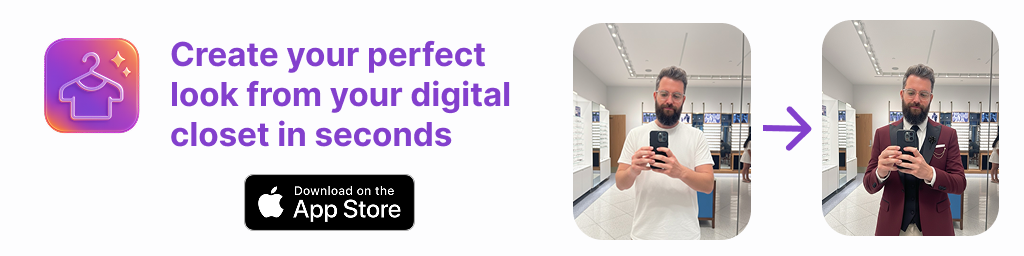
If you’ve ever stood in front of your closet thinking “I have nothing to wear,” the issue usually isn’t a lack of clothes—it’s decision fatigue, poor visibility into what you own, and uncertainty about what works together. An ai outfit generator for ios can solve those problems by turning your wardrobe into a searchable, testable system: you digitize your closet, add a few details (like color, occasion, and warmth), then generate outfit combinations and preview them with virtual try-on.
This guide walks through a practical, repeatable workflow for using an AI outfit generator on iOS—from setup to better daily decisions—without turning your wardrobe into a part-time job.
What an AI outfit generator on iOS actually does
Most AI outfit tools for iPhone combine three capabilities:
- Digital wardrobe: a catalog of your clothing items with photos and attributes (category, color, season, dress code, brand, etc.).
- Smart closet organizer: filters, tags, and tracking that help you find what you own and avoid duplicates.
- Outfit generation + virtual try-on: suggestions for outfit combinations, often with a visual preview so you can compare looks without changing clothes.
When it works well, the app doesn’t “replace” your style—it reduces the friction between your taste and your real closet constraints (weather, dress code, comfort, laundry, and time).
Start with a minimal wardrobe upload (so you don’t quit)
The biggest reason people abandon a digital wardrobe is trying to catalog everything at once. Instead, aim for a two-stage setup:
- Stage 1 (30–45 minutes): Upload your most-worn items (the top 20–40 pieces you reach for weekly).
- Stage 2 (ongoing): Add the rest gradually—5 to 10 items per week—while you’re already doing laundry or outfit planning.
Quick capture tips that improve AI results
- Use consistent lighting (near a window is ideal) and a plain background.
- Photograph items front-on; avoid extreme angles.
- For shoes and bags, include the full shape (toe/heel, straps, hardware).
- If your app supports it, crop the item cleanly so the AI “sees” the garment clearly.
Better inputs beat better algorithms. A clear wardrobe photo and a few accurate tags can outperform a huge closet with messy data.
The tagging system that makes outfit generation feel “smart” (not random)
An ai outfit generator for ios is only as useful as the wardrobe data it can reason about. The good news: you don’t need dozens of tags. You need the right tags.
Use 5 core tag categories
- Occasion: work, casual, date, formal, travel, gym
- Weather/temperature: hot, mild, cold, rain-friendly
- Formality level: relaxed, smart casual, business, dressy
- Silhouette: fitted, straight, oversized, cropped, longline
- Color family: neutrals, warm, cool, bright, muted
Then add two “power tags” that dramatically improve recommendations:
- Comfort notes: itchy, restrictive, all-day, breathable
- Shoe compatibility: sneakers, boots, heels, flats
Keep tags consistent with a tiny taxonomy
Inconsistent tags (“office,” “work,” “business day”) create duplicate categories and weaker filters. Define a small tag set and stick to it.
| Tag Category | Good (Consistent) | Bad (Fragmented) |
|---|---|---|
| Occasion | work, casual, date | office, workplace, meeting-day, casual-ish |
| Weather | hot, mild, cold, rain | summer, 72 degrees, chilly, drizzle-safe |
| Formality | relaxed, smart casual, business | semi-formal, kinda formal, elevated casual |
How to generate outfits that match your real life (not a perfect feed)
Outfit generation improves when you give constraints. Instead of asking for “an outfit,” set parameters like you would if you were texting a stylish friend. Use this checklist before you generate:
- Where am I going? (dress code + activity level)
- What’s the weather window? (morning vs afternoon temperature)
- What shoes must work? (walking, commuting, rain)
- What’s my comfort constraint? (no tight waist, breathable, layers)
- What’s my time constraint? (5-minute outfit vs “I can iron”)
A simple “3-option” generation rule
To avoid endless scrolling, generate three options on purpose:
- Safe default: your go-to silhouette and colors
- One-step bolder: a new pairing using a familiar base
- Wildcard: something you rarely wear, to rotate your closet
This keeps the AI helpful without turning choice into a new problem.
Make virtual try-on more accurate (and more useful)
Virtual try-on is most helpful when it answers a specific question: Does this combination look balanced on me? Use it to test proportion, contrast, and repeatable formulas.
Three things to check in a virtual try-on preview
- Proportion: If the top is oversized, do you want a straighter bottom (or vice versa)?
- Contrast: Do you want high contrast (black/white) or low contrast (tonal neutrals)?
- Focal point: Where does the eye go—shoes, jacket, neckline, bag?
Common issues (and quick fixes)
- The outfit feels “off” but you can’t tell why: change one variable (shoe type or outer layer) before replacing the whole outfit.
- Too many statements: keep one hero item, then make everything else quiet (solid colors, simple shapes).
- Looks good, feels wrong: prioritize comfort tags (fabric, stretch, temperature) so suggestions fit your day, not just your mirror.
Build reusable outfit formulas (the fastest way to get dressed)
The secret to consistent style isn’t more clothes—it’s reusable formulas. Once you find a winning combination, save it as a template and swap one piece at a time.
Examples of outfit formulas to save
- Work smart casual: knit top + tailored trouser + loafer + structured bag
- Off-duty: tee + straight jean + sneaker + light jacket
- Cold weather: base layer + wool sweater + warm coat + boot + scarf
- Dressy minimal: monochrome base + one standout accessory
When your app suggests outfits, compare them against your formulas. If the suggestion doesn’t map to a formula, it may be “interesting” but not practical for daily wear.
Use a weekly planning routine (so mornings are easy)
Outfit planning works best in a short weekly session. Try this 15-minute routine:
- Check your calendar: pick 3–5 key days (meetings, events, travel).
- Check the forecast: identify one warmest and one coldest day.
- Pre-select outfits: save 5 looks (even if two are backups).
- Identify gaps: note missing basics (e.g., “need comfortable rain shoe”).
- Stage items: if possible, group outfits by hangers or closet section.
This is where a digital wardrobe planner becomes more than a catalog—it becomes an operational system.
Advanced: Create “rules” so the AI matches your preferences
Some apps let you create rules, favorites, or constraints. Even if yours doesn’t, it helps to write your personal rules down and tag accordingly. Here’s an example of a lightweight rule set you can adapt:
{
  "workday_rules": {
    "shoes": ["loafer", "flat", "clean_sneaker"],
    "avoid": ["itchy", "restrictive"],
    "preferred_colors": ["neutral", "muted"],
    "layers_if": {
      "temp_below_f": 60,
      "add": ["blazer", "light_coat"]
    }
  },
  "casual_rules": {
    "allow": ["bright", "oversized"],
    "must_have": ["walkable_shoes"]
  }
}
When you consistently apply tags like itchy or walkable_shoes, your outfit generator learns the difference between outfits that look good and outfits you’ll actually wear.
Privacy and accuracy: what to keep in mind
Because virtual try-on and wardrobe apps can involve personal photos, it’s smart to do a quick privacy check:
- Review what’s stored locally vs in the cloud.
- Use app permissions intentionally (Photos access, sharing settings).
- Consider using clothing-only images (flat lays) if you prefer not to upload body photos.
Accuracy-wise, remember that AI previews are decision aids. If something is “almost right,” treat it like a fitting-room mirror: adjust sizing assumptions, layering, or shoe choice before dismissing the whole idea.
Troubleshooting: when an AI outfit generator feels repetitive
If your ai outfit generator for ios keeps producing the same combinations, it’s usually one of these issues:
- Too few tagged items: add 10 more pieces, especially shoes and outerwear.
- Tags are too broad: split “casual” into “casual” + “smart casual,” or add comfort tags.
- Wardrobe imbalance: you may have many tops but few bottoms (or not enough layering pieces).
- Everything is a neutral: add one accent color category so outfits vary without clashing.
A good goal is to have at least:
- 3–5 everyday shoes
- 3 outer layers (light jacket, warm coat, rain option)
- 5 bottoms you genuinely like
Putting it all together: a realistic workflow
Here’s the simplest sustainable system:
- Catalog gradually: prioritize the items you wear weekly.
- Tag consistently: occasion, weather, formality, silhouette, color family, plus comfort.
- Generate with constraints: shoes + weather + dress code.
- Use virtual try-on to compare: check proportion, contrast, focal point.
- Save formulas: build templates that reflect your real life.
- Plan weekly: five saved outfits beats five rushed mornings.
If you’re looking for an iOS tool that combines a digital wardrobe, outfit generation, and virtual try-on in one place, Outfit Maker is one option to explore—just make sure whichever app you choose supports the workflow above so it stays useful long-term.