When getting dressed feels repetitive, buying something new can seem like the fastest fix. But often, the clothes you already own can make more outfits than you expect. The challenge is seeing fresh combinations, remembering what is in your closet, and putting pieces together for the day ahead.
Learning how to style clothes you already own starts with looking at your wardrobe as a set of usable pieces rather than a collection of individual favorites. With a little organization and a few reliable outfit formulas, you can find new ways to wear familiar items without turning getting dressed into a complicated project.
Start with what you actually wear
Begin with a small, realistic selection—not a full closet overhaul. Choose clothes you reach for regularly, plus a few pieces you like but rarely wear. Include different categories, such as tops, bottoms, layers, dresses, and shoes. The aim is to notice what works together, not to judge your style or clear out your wardrobe.
As you look through each item, ask three practical questions:
- Does it feel comfortable and suit my day-to-day activities?
- What other pieces do I already own that could go with it?
- Is there a clear reason I tend not to wear it, such as needing a particular layer or occasion?
These questions turn vague wardrobe frustration into something you can act on. A skirt that seems difficult to style might work with a simple knit and boots. A shirt you save for special occasions may also fit a casual look with jeans and an everyday jacket.
Make your wardrobe easier to see
Out of sight, out of mind applies to clothes, too. If you have forgotten what is tucked at the back of a drawer, it cannot easily become part of an outfit. Arrange your clothes in a way that helps you scan them: group similar items together, keep frequently worn pieces accessible, and store seasonal clothing where it is easy to retrieve when the weather changes.
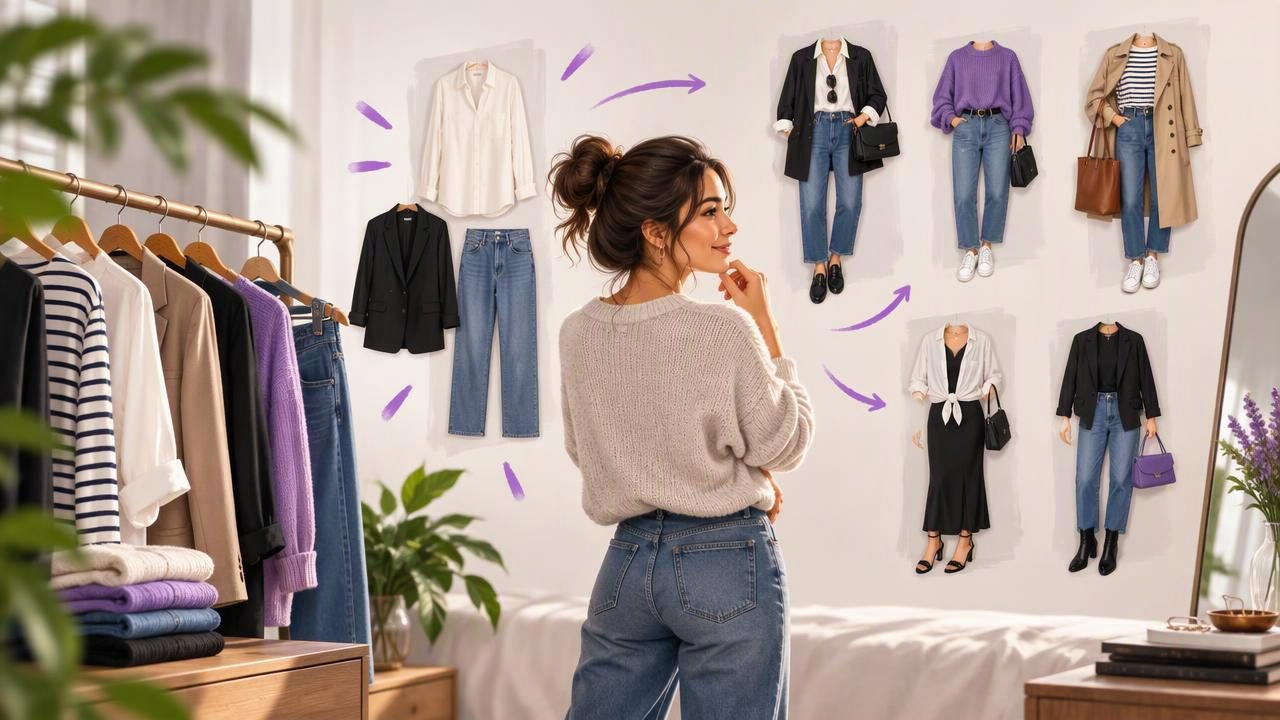
You can also make a simple list or take reference photos of individual garments. A digital closet can help you keep track of clothing and spot options without pulling everything out. Start with the items you wear most; cataloging every sock or accessory is not necessary to make useful outfit combinations. For a practical approach to building one, see this guide to a digital closet for organizing clothes you already own.
Use outfit formulas as a starting point
An outfit formula is a repeatable structure, not a strict uniform. It gives you a dependable place to begin, while leaving room to change colors, textures, shoes, and accessories. Try a few combinations that match your routine:
- Everyday casual: comfortable top + jeans or relaxed trousers + a layer.
- Polished casual: simple base layer + tailored trousers + jacket or structured cardigan.
- Dress-based: dress + weather-appropriate layer + shoes suited to your plans.
- Comfort-first: easy-fitting top + flexible bottoms + practical shoes, with one more structured piece for balance.
Work with the clothes you have rather than shopping to complete a formula. If you do not own a blazer, a cardigan, overshirt, or other layer may serve the same styling purpose. The formula is useful because it reduces the number of decisions: instead of asking what to wear from scratch, you choose a base and then adjust it.
Build a new look around one familiar piece
Pick a garment you wear often and style it in three different ways. For example, start with straight-leg blue jeans. For a relaxed day, combine them with a white T-shirt, sneakers, and a casual layer. For a more put-together outfit, try a tucked-in shirt, a belt if you own one, and loafers or other neat shoes. For cooler weather, use a knit top, boots, and a coat or jacket.
The jeans stay the same, but the shape, layers, and footwear shift the overall impression. You can apply the same exercise to a skirt, plain shirt, or dress. Change just one or two elements at a time so it is easier to see what makes the combination feel different. If an outfit feels too plain, try a contrasting layer or a more noticeable accessory already in your wardrobe. If it feels busy, remove one element and reassess.
Pay attention to proportion, color, and texture
You do not need advanced fashion rules to make an outfit feel intentional. Start with proportion: if one piece is loose or oversized, try balancing it with a more fitted or structured item, if that feels comfortable to you. This is a guideline, not a requirement. Wearing relaxed shapes together can also work when that is the look you prefer.
For color, look for connections between pieces. Neutrals can make a bright item easier to wear, while repeating a color in two parts of an outfit can help it feel coordinated. You can also keep the palette simple and use texture for interest—for example, pairing denim with a soft knit or a smooth shirt with a textured layer. These are options to test, not rules about which colors or fabrics belong together.
Fit and comfort matter more than a formula. If you keep adjusting a garment or cannot move comfortably in it, it may not be the right choice for that day. Styling can change how pieces look together, but it cannot change their actual fit, construction, or feel.
Style for the occasion you have
The same garment can work across different parts of your week when the rest of the outfit changes. A button-up shirt might suit a casual day with jeans, or a work setting with tailored trousers, depending on the dress code and how you style it. Before choosing an outfit, think about the actual demands of the occasion: how much you will walk, whether you will be indoors or outdoors, and whether there are workplace or event expectations.
Then choose clothes that meet those needs from your own closet. A comfortable pair of shoes may be more useful than a dressier option for a day spent walking. A removable layer can help when you expect changes in temperature. Planning around the real activity makes an outfit more practical, not just visually coordinated.
Keep a record of combinations that work
When you find an outfit you like, save a note or take a photo for future reference. Include the pieces and, if useful, the context: “comfortable for errands,” “works for a cool office,” or “needs different shoes for walking.” This creates a personal record that reflects your clothes and your actual preferences.
If you use a digital wardrobe or AI outfit generator, treat suggested combinations as ideas to evaluate rather than instructions. A virtual try-on can help you visualize clothing combinations from photos, but the result is a styling preview. It does not guarantee exact fit, sizing, drape, texture, or fabric behavior in real life. Lighting, image angles, and how an item is represented can also affect what you see. Check the actual garment and try it on when you need to assess comfort or fit.
Make outfit planning a small routine
A short weekly check-in can help you use your wardrobe more intentionally. Look at the days ahead, note any events or practical needs, and choose a few combinations from pieces you already know work together. If you want to try something different, test one new pairing alongside familiar outfits rather than planning an entirely new look for every day.
- Choose a piece you have not worn recently.
- Pair it with two items you already trust.
- Try the combination on, or use photos to help visualize it.
- Adjust the layer, shoes, or accessories based on comfort and occasion.
- Save the combination if you would wear it again.
This routine is flexible. You can do it in a few minutes, focus on one category, or skip a week when your usual outfits are working well. The goal is to make your existing clothes easier to use, not to create another demanding task.
Make more of the wardrobe you have
To style clothes you already own, make your options visible, begin with one familiar piece, and test simple combinations that suit your comfort and plans. Outfit formulas can help you get started, while saved looks make successful pairings easier to remember. A digital closet or AI visualization tool may support that process, provided you treat visual previews as styling aids—not as proof of fit or fabric performance.
Outfit Maker is one option for exploring a digital closet and visualizing combinations from your own clothing photos. Whatever method you use, the most useful outfit is one you can wear comfortably and confidently with what is already in your wardrobe.