Decision fatigue is real: even a great wardrobe can feel overwhelming when you have five “good” options and no clear winner. The quickest shortcut is feedback—especially from people who know your style, your calendar, and what looks like you. With a simple process, you can share clothing combinations with friends for votes, get a clear winner in minutes, and still keep the final choice in your hands.
This guide gives you a repeatable system: how to prep outfit choices, how to request votes without spamming anyone, what to ask so feedback is actually useful, and how to keep it private and kind.
Why outfit voting works (and when it doesn’t)
Outfit voting helps because it replaces open-ended “What should I wear?” with a constrained choice. That constraint makes it easy for friends to respond, and it protects your time.
- It reduces decision load: Two to four options are faster to evaluate than a whole closet.
- It reveals blind spots: You might overlook a fit issue, formality mismatch, or color clash.
- It adds confidence: Knowing others see your “best version” can reduce second-guessing.
When it doesn’t work: if you ask too many people, include too many options, or don’t specify the event. Voting is only as good as the prompt.
Rule of thumb: Fewer options, clearer context, faster votes.
Step 1: Build 2–4 strong options (not 12 “maybes”)
Before you ask anyone, curate your choices. The goal is to present outfits that are all plausible—so the “winner” actually works.
A simple filtering checklist
- Fit check: comfortable sitting/standing, no tugging, right undergarments available.
- Weather check: temperature range, rain plan, indoor/outdoor time.
- Dress code check: casual, business casual, cocktail, etc.
- Shoe check: can you walk the day you’ll have?
- Real-life check: wrinkles, stains, lint, pet hair, see-through fabrics.
If an option fails one of these, don’t include it. You’re not asking friends to troubleshoot basics—you’re asking them to help you choose between good contenders.
Step 2: Photograph or mock up outfits consistently
Inconsistent photos create inconsistent votes. You want people voting on the outfit—not on better lighting in Photo B.
Quick photo standards that improve vote quality
- Same angle: full body, phone at chest height, timer mode.
- Same lighting: near a window or a bright room light.
- Same background: a blank wall or tidy corner reduces distractions.
- Same framing: include shoes and hemlines—those often decide the vote.
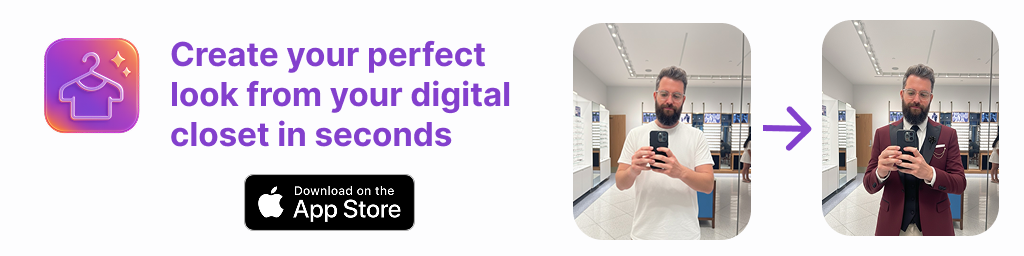
If you don’t want to change clothes multiple times, a digital wardrobe mockup or virtual try-on screenshot can work. Just keep the format consistent across options so the comparison stays fair.
Step 3: Ask for the right kind of vote (use a clear prompt)
The biggest mistake is sending photos with “Thoughts?” People don’t know what you need: best color? most flattering? most formal? most on-trend? Give them a job and a deadline.
Copy-and-paste voting prompts
- For an event: “Which outfit fits cocktail dress code best—A, B, or C? Vote by 6pm.”
- For confidence: “Which one looks most ‘put-together’ on me—A or B? One-word vote is perfect.”
- For styling help: “Pick A/B/C, and if you have one tweak (shoes, jewelry, layer), tell me.”
- For packing: “I can only bring 2 looks—vote for the most versatile: A/B/C/D.”
Tip: Use letters (A/B/C) instead of “the first one / the blue one.” It reduces confusion and speeds up replies.
Step 4: Choose your “voting panel” intentionally
More voters doesn’t always mean a better answer. Three to seven people is usually ideal. Pick friends who are:
- Context-aware: they know your workplace, your city, or the event vibe.
- Honest but kind: they’ll tell you the truth without being harsh.
- Style-diverse (optional): one minimalist friend + one trend friend can balance bias.
If you want speed, create a small “outfit hotline” group chat where everyone agrees that quick votes are welcome and no one is obligated to respond every time.
Step 5: Use a simple scoring method (so the winner is obvious)
Sometimes votes split 3–3–2. A lightweight scoring rubric breaks ties and makes feedback more actionable than “cute!”
| Criteria | What it means | Score (1–5) |
|---|---|---|
| Fit & proportion | Looks balanced; lengths and silhouettes work together | __ |
| Appropriate for occasion | Matches dress code and setting | __ |
| Color harmony | Flattering colors; intentional pairing | __ |
| Comfort & practicality | Walkable shoes, weather-ready, not fussy | __ |
| “You” factor | Feels authentic; aligns with your style identity | __ |
Ask voters to pick a winner and name one criterion: “A (best for dress code)” or “B (best color).” That small addition prevents vague feedback and helps you learn what to repeat.
Step 6: Keep voting frictionless with a mini-poll format
If you’re texting, keep it short. If you’re using a notes app or form, structure the choices. Here’s a tiny, shareable template you can paste anywhere.
{
  "event": "Dinner + rooftop drinks",
  "deadline": "Today 6:00 PM",
  "options": [
    {"id": "A", "summary": "Black slip + blazer + heels"},
    {"id": "B", "summary": "Wide-leg trousers + knit + loafers"},
    {"id": "C", "summary": "Midi dress + denim jacket + boots"}
  ],
  "vote": "Reply A/B/C",
  "tiebreaker": "Best for dress code? (yes/no)"
}
You don’t need special tools—just clarity. The easier you make it to vote, the more likely people respond quickly.
Step 7: Make feedback kinder (and more accurate)
Outfit feedback can accidentally drift into body commentary. Set a tone that keeps it style-focused and respectful.
Feedback guidelines you can include
- Focus on the outfit, not the body: “The neckline feels formal” instead of “Your shoulders…”
- Name the reason: “B feels most modern” is more useful than “B.”
- Offer one tweak max: too many suggestions overwhelm the decision.
Try: “Vote A/B/C + one reason (fit, color, vibe). No body comments—just styling.”
Step 8: Handle privacy like a pro
Outfit photos can reveal your home, location, or routine. A few small habits reduce risk:
- Crop the frame: remove identifying details (mail, photos, street view).
- Use a neutral background: a blank wall beats a recognizable entryway.
- Create a “trusted list”: not every acquaintance needs access to your try-ons.
- Avoid real-time location hints: don’t share “on my way to…” with a timestamp unless necessary.
Common voting scenarios (and what to ask)
1) Job interview
Ask: “Which reads most polished and confident—A or B? (Business formal)”
2) Wedding guest
Ask: “Which is best for cocktail wedding (outdoor ceremony)? A/B/C. Any color concerns?”
3) First date
Ask: “Which feels approachable but put-together—A or B? Vote + one word (romantic/edgy/classic).”
4) Everyday errands, but you want to feel good
Ask: “Quick vote—A or B for comfy-cute today? (Walking a lot.)”
How to learn from votes (so you need them less)
The long-term win is pattern recognition. After a few rounds, you’ll notice repeat reasons friends choose a look. Capture those insights in a quick note:
- “Best colors on me: cream, navy, deep green.”
- “People like outfits with structure (blazer, tailored waist).”
- “Shoes decide the vibe more than I think.”
Over time, you’ll build a personal style rulebook—and voting becomes a final check, not a rescue mission.
Putting it all together: a 10-minute outfit voting workflow
- Pick 2–4 valid outfits using the fit/weather/dress code checklist.
- Capture consistent photos (same lighting, same angle).
- Send a clear prompt with A/B/C labels and a deadline.
- Collect votes from a small trusted panel.
- Use a tiebreaker (dress code or “most flattering color”).
- Save the winner and note why it worked for future decisions.
If you prefer doing this with a digital closet and virtual outfit previews, an iOS tool like Outfit Maker can help you assemble and compare options before you send them out for votes.