A capsule wardrobe works best when you can see how its pieces come together—not just what is hanging in your closet. Saving favorite looks in a capsule wardrobe app gives you a practical record of outfit combinations you already like, so you can revisit them when getting dressed, planning a week, or deciding what to pack.
The goal is not to save every possible combination. It is to keep a useful collection of looks that fit your real routine and make sense with the clothes you own. With a digital closet, you can organize your garments, test combinations visually, and keep the strongest outfits easy to find.
This guide explains how to create a small but useful set of saved looks, how to label them, and what to keep in mind when using AI outfit generation or virtual try-on. It also covers an important limitation: a visual preview can help you assess styling, but it cannot guarantee exact fit, sizing, or fabric behavior.
What does saving a favorite look mean?
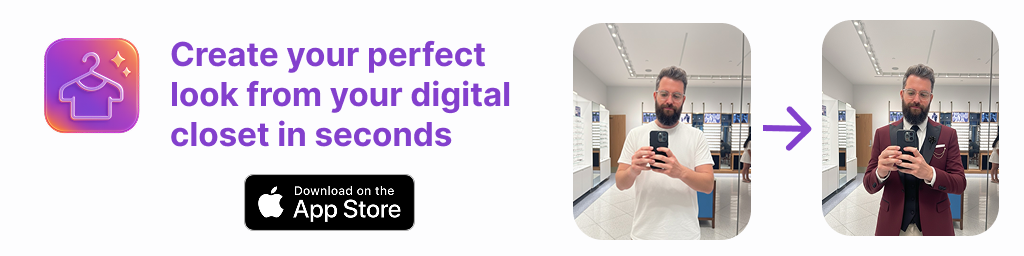
A saved look is a record of an outfit combination you want to reuse. Depending on the app, it may show the clothing items together in a flat lay, on a model, or through an AI-generated virtual try-on using your photo. The useful part is having the combination connected to the garments in your digital wardrobe, rather than relying on memory or a camera roll full of unrelated pictures.
A capsule wardrobe app can also help you distinguish between individual favorites and complete outfits. A jacket might be a favorite item, for example, but a saved look captures how you wear it—with a particular top, bottom, shoes, and accessories.
- Favorite item: one garment or accessory you reach for often.
- Saved look: a complete or nearly complete outfit combination.
- Digital closet: a catalog of clothing you can use to build and revisit combinations.
These records are most helpful when they reflect clothes you own and occasions you actually encounter. A collection of attractive but impractical ideas is less useful than a handful of reliable outfits for work, errands, dinners, or changing weather.
Start with a small, realistic capsule
Before saving outfits, choose a manageable group of garments from your wardrobe. A capsule does not need a fixed number of pieces. It might be a workweek selection, a seasonal edit, or a compact set of clothes for a specific routine. Include items that work together and that you are comfortable wearing now.
For example, imagine a simple weekday capsule containing a navy blazer, a cream knit top, a striped shirt, dark jeans, tailored black trousers, a midi skirt, loafers, ankle boots, and a crossbody bag. These pieces can create several distinct combinations without requiring a large wardrobe. The example is a starting point, not a formula; your climate, dress code, preferences, and available garments should shape your own selection.
Add clear photos or other useful visual records of the pieces to your digital closet. Make sure each item is easy to recognize. If two garments look similar in a thumbnail, a short label such as “cropped denim jacket” or “black wide-leg trousers” can help you choose the right one later.
Build and save looks with a repeatable process
- Choose an occasion. Begin with a real need, such as a day at the office, a casual lunch, or a weekend walk. This gives the outfit a purpose.
- Select a base. Pick a top and bottom, or a dress, from your capsule. Start with garments you know you enjoy wearing.
- Add supporting pieces. Consider a layer, shoes, and one or two accessories. Avoid adding items just to make the look feel complete if you would not actually wear them.
- Preview the combination. Arrange the pieces in your app or use its available outfit visualization tools. Check the overall color balance, proportions, and formality.
- Make one useful adjustment. Try changing one item at a time—such as loafers instead of boots—so you can tell what improves the look.
- Save it with a helpful name. Use labels that describe when or why you would wear it, rather than names you will not remember.
For the sample capsule, one saved combination might be “Office: navy blazer, cream knit, black trousers, loafers.” A second could be “Casual Friday: striped shirt, dark jeans, ankle boots.” You could also save the first outfit with a skirt instead of trousers if that is a combination you would genuinely wear. These examples show how a small group of garments can support different occasions; they do not guarantee that every combination will suit every person or setting.
Use labels that make favorite looks easy to find
Good organization turns saved outfits into a usable reference. Pick a simple naming system and apply it consistently. You can label looks by occasion, season, activity, or a combination of those details. Keep the wording short enough to scan on a phone.
| Label type | Example | Useful when |
|---|---|---|
| Occasion | Client meeting | You want a polished option for a particular setting. |
| Activity | Weekend walk | Comfort and practicality guide the outfit. |
| Weather | Cool, dry day | Layers or footwear change with conditions. |
| Season | Early autumn | You rotate garments as temperatures shift. |
| Personal note | Try with scarf | You want to remember a styling idea to test later. |
Do not over-tag every look. A few consistent labels are easier to maintain than a complicated system. If an app lets you save, compare, or share combinations, use those options to keep the looks you want to revisit and to ask for feedback when you find it helpful. Sharing is optional; a digital closet can be valuable as a private planning tool, too.
Choose favorites based on real use
A heart icon or favorites folder can quickly become crowded if every experiment gets saved. Before marking a look as a favorite, ask three questions: Would I wear this in my actual routine? Do I have the garments shown? Can I move, sit, and go about my day comfortably in this combination?
You can keep two levels of saved outfits if your app supports them: a small set of dependable favorites and a separate group of ideas to try. For instance, a proven office outfit can stay in favorites, while a new color pairing remains an experiment until you have worn it. This distinction prevents an appealing preview from being mistaken for a tested outfit.
It is also useful to review saved looks when your wardrobe changes. Remove combinations built around items you no longer own, and update labels when an outfit suits a different season or occasion than you first expected. A short review every few weeks—or when you make a seasonal closet edit—can keep the collection relevant without turning outfit planning into a chore.
What AI outfit previews can—and cannot—tell you
AI outfit generation and virtual try-on can help you visualize clothing combinations without physically changing clothes each time. That makes them useful for styling questions: Does this top look balanced with those trousers? Would a jacket make the outfit feel more formal? Which of these combinations better matches the occasion?
However, an image is a visual aid, not a fitting-room guarantee. The appearance of clothes in a preview may differ from how they sit on your body. A generated image cannot reliably confirm the correct size, precise garment measurements, stretch, weight, texture, drape, comfort, or how fabric moves when you walk or sit. Photo angle, lighting, garment images, and the technology used may also affect what you see.
Use a preview to narrow down styling choices, then check the real garment and your own comfort before relying on the outfit. For a new or important combination, try the pieces on when practical. This distinction helps you benefit from digital styling without treating visualization as proof of fit.
Make saved outfits useful for weekly planning
Once you have a few reliable looks, use them as a starting point for your week rather than rebuilding every outfit from scratch. Match a saved combination to the day’s plans, then account for weather, dress expectations, and laundry. If a look needs a change, swap one piece and save the revised version only if it is worth reusing.
Try not to schedule the same standout item for consecutive days if you prefer variety or need time to wash it. At the same time, repeating a favorite combination is not a planning failure. The point of saving it is to make a good option easy to find, not to impose a rule that every outfit must be new.
If you are building your catalog as well as your outfit collection, a practical digital closet guide can help you think through how to organize wardrobe items. Outfit Maker is one example of an app designed around a digital wardrobe, outfit combinations, and AI-assisted visualization.
A simple checklist for saving a look
- The outfit uses garments in your wardrobe.
- The combination suits a real occasion or activity.
- The preview helps answer a styling question, without being treated as a fit guarantee.
- The name or label will make sense when you search for it later.
- You have marked it as a favorite only if you expect to wear or revisit it.
A capsule wardrobe app is most useful when it becomes a dependable record of outfits, not a collection of endless possibilities. Start with a few combinations, label them clearly, and keep the ones that work for your life. Over time, those saved looks can make a digital closet feel less like an inventory and more like a practical tool for deciding what to wear.