If you’ve ever stood in front of a full wardrobe and felt like you had nothing to wear, you’re not alone. The solution isn’t more clothes; it’s better systems. In this guide, you’ll learn a clear, repeatable method to plan outfits from my closet using tags, capsules, simple formulas, and a 10-minute weekly routine. The result: fewer last-minute decisions, more repeatable wins, and a wardrobe that finally works as hard as you do.
Step 1: Digitize and Audit Your Closet
Before planning comes clarity. Digitizing your wardrobe gives you a searchable, visual catalog that makes mixing and matching effortless. Do a quick audit as you upload items—decide what stays, what needs repair, and what to donate.
How to photograph items fast
- Pick a neutral background with good daylight. Lay flat or use a hanger.
- Shoot front-on, fill the frame, and include texture details if relevant.
- Keep naming consistent: Brand_Category_Color_Descriptor (e.g., Uniqlo_Oxford_Shirt_Blue).
Capture the right data
Add metadata once—save time forever. These fields power smart filtering later.
| Field | Why it matters | Example values |
|---|---|---|
| Category | Group by type to build outfits systematically. | Top, Bottom, Dress, Outerwear, Shoes, Bag |
| Color | Balance palettes and avoid clashes. | Black, Navy, Taupe, White, Olive |
| Fabric/Texture | Seasonality and contrast decisions. | Wool, Denim, Silk, Linen, Knit |
| Season | Filter for weather-appropriate picks. | All-Season, Spring, Summer, Fall, Winter |
| Formality | Match context quickly. | Casual, Smart-Casual, Business, Formal |
| Fit/Silhouette | Proportion rules, tuck/untuck choices. | Relaxed, Regular, Tailored, Oversized |
| Care | Plan around laundry/cleaning. | Machine, Hand-Wash, Dry Clean |
Step 2: Build a Tagging System That Works (and Sticks)
Tags turn chaos into filters you can actually use. Keep your taxonomy short and intentional. If you can’t remember a tag, you won’t use it.
| Tag Set | Purpose | Keep to | Examples |
|---|---|---|---|
| Palette | Color harmony and mix rate. | 5–7 colors | Navy, Black, White, Camel, Olive, Denim |
| Occasion | Context-first planning. | 5–6 uses | Work, Travel, Weekend, Date, Event, Gym |
| Weather | Season + temperature. | 4–5 ranges | Hot, Warm, Mild, Cool, Cold, Rain |
| Silhouette | Balance and proportion. | 5–6 shapes | Slim, Straight, Relaxed, Cropped, Longline |
Rule of three: Give every item 1 palette tag, 1 occasion tag, and 1 season/weather tag. Add more only if it helps a specific decision later.
Step 3: Create Capsules and Guardrails
A capsule is a small, purposeful subset of your wardrobe that multiplies into many outfits. Start with constraints—capsules work because they reduce decision fatigue.
Three capsule types to consider
- Work Capsule: Neutral base, elevated textures, minimal prints.
- Travel Capsule: Wrinkle-resistant, 2 pairs of shoes max, one palette.
- Weekend Capsule: Comfort-first, weather-ready, one statement piece.
Use simple formulas to size a capsule without overthinking:
- 5–4–3–2–1: 5 tops, 4 bottoms, 3 layers, 2 shoes, 1 statement. Typically yields 30–40 outfits.
- 3–3–2: 3 tops, 3 bottoms, 2 layers for short trips or a fresh weekly rotation.
Step 4: Use the Three-Layer Outfit Formula
Most reliable outfits follow a three-layer logic. Once you see it, you can repeat it quickly.
- Base: Top + Bottom or a Dress/Jumpsuit.
- Mid: Layer or structure (blazer, cardigan, overshirt).
- Finish: Shoes + Accessories (bag, belt, watch, jewelry).
Examples you can clone:
- Smart casual: White oxford + navy straight chinos | grey knit blazer | white leather sneakers + brown belt.
- Creative work: Black tee + dark denim | olive overshirt | black Chelsea boots + slim watch.
- Summer city: Linen shirt + tailored shorts | light denim jacket (optional) | espadrilles + canvas tote.
Step 5: Calendar-Driven Planning
Great outfits are context-aware. Tie planning to your actual week, not abstract inspiration.
The 10-minute weekly routine
- Check your calendar: Meetings, events, commute, gym, nights out.
- Scan the weather: Temperature range, rain, wind; note laundry/cleaning constraints.
- Pick a capsule: Choose a base palette; set one statement piece for the week.
- Lay out 5–7 looks: Build with the three-layer formula; pre-check shoes and accessories.
- Buffer one flex outfit: A “works-anywhere” combo for surprises.
Label your plan (Mon–Sun) and save it so you can iterate. A repeatable weekly system is how I consistently plan outfits from my closet without overthinking.
Step 6: Mix Smarter With Matrices
Matrices reveal combinations you’d otherwise miss and surface gaps in your wardrobe. Start with a basic Top × Bottom grid in your capsule colors.
| Top \ Bottom | Black Trousers | Denim | Khaki Chino | White Jean |
|---|---|---|---|---|
| White Oxford | Formal-leaning, add blazer | Classic casual | Smart-casual, brown leather | High-contrast summer |
| Striped Tee | Parisian casual | Weekend staple | Nautical vibe | Fresh, add loafers |
| Black Knit | Monochrome sleek | Edgy casual | Elevated neutral | Graphic contrast |
Now add a Layer × Shoe mini-matrix to finish looks:
| Layer \ Shoe | White Sneaker | Loafer | Chelsea Boot |
|---|---|---|---|
| Denim Jacket | Casual cool | Smartens up | Modern edge |
| Blazer | High-low balance | Business-ready | Evening-friendly |
| Cardigan | Cozy everyday | Preppy polish | Textural contrast |
Use matrices to spot gaps: if too many combinations depend on one pair of shoes, that’s a bottleneck. If contrast is always high, add a mid-tone neutral.
Step 7: Fit, Proportion, and Texture Rules
Style isn’t only what you wear—it’s how pieces relate. Use these quick rules to improve almost any outfit.
- One volume at a time: Pair relaxed top with tailored bottom or vice versa.
- Thirds rule: Crop or tuck tops to avoid a 50/50 split—aim for 1/3–2/3 proportion.
- Texture trio: Combine smooth + knit + matte leather/suede for depth.
- Palette discipline: 2 neutrals + 1 accent is usually enough for day-to-day looks.
- Shoe weight: Match shoe bulk to pant width for visual balance.
Step 8: Solve Common Wardrobe Blockers
- “I keep repeating one outfit.” Build a micro-capsule around that winning item (3 tops, 2 bottoms, 1 layer that pair with it) to unlock variety.
- “Colors clash.” Set a 5-color core palette. Make sure every new item works with at least three existing pieces.
- “Shoes limit my options.” Invest in two versatile pairs that bridge contexts (white leather sneakers, brown or black loafers/boots).
- “Laundry timing ruins plans.” Pre-plan a midweek outfit that avoids your high-maintenance items.
- “Weather flips.” Pre-pack a thin, neutral layer and water-resistant outerwear when forecasts are uncertain.
Advanced: Use AI Try-On and Digital Workflows
Once your wardrobe is digitized, you can plan faster by virtually testing combinations. AI try-on helps you compare silhouettes, check color balance, and save final looks without changing clothes. It’s especially handy for:
- Travel: Validate a carry-on capsule before packing.
- Event dressing: Compare formality levels and accessories quickly.
- Season switches: See how summer items layer into fall.
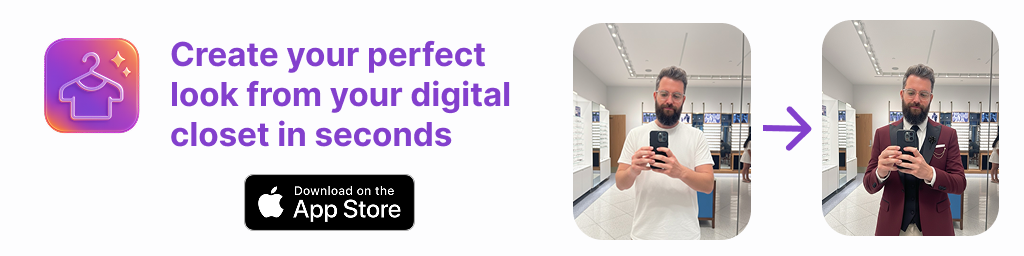
When using any digital wardrobe tool, look for realistic rendering, easy tagging, outfit calendars, and private sharing. For iPhone users, an app like Outfit Maker helps you photograph items, plan weekly looks, and run realistic AI try-ons—all useful if you want to consistently plan outfits from your closet without the guesswork.
Templates You Can Copy
Tagging starter pack
palette: ["navy", "black", "white", "camel", "olive"]
occasion: ["work", "weekend", "travel", "date", "event", "gym"]
weather: ["hot", "warm", "mild", "cool", "cold", "rain"]
silhouette: ["slim", "straight", "relaxed", "cropped", "longline"]
Item entry example (JSON)
{
  "name": "Uniqlo_Oxford_Shirt_White",
  "category": "top",
  "palette": ["white"],
  "occasion": ["work", "weekend"],
  "weather": ["mild", "cool"],
  "silhouette": ["regular"],
  "season": ["spring", "fall", "winter"],
  "care": "machine",
  "notes": "works with navy chinos, black denim; layer with grey knit blazer"
}
Weekly planner checklist
- Review calendar + weather
- Pick capsule and palette
- Select 5–7 looks using the three-layer formula
- Assign shoes and accessories
- Photograph or save the plan
- Prep laundry/repairs
Maintain the System: Small Habits, Big Payoff
- Sunday reset: Rotate pieces to the front of your closet after you plan the week.
- Monthly review: Archive items you didn’t wear; identify gaps or duplicates.
- Quarterly edit: Repair, tailor, or responsibly donate what doesn’t serve the system.
- Buy with intent: Every new item must match 3 items already in your closet and fit one capsule.
Putting It All Together
To sustainably plan outfits from my closet, build a simple pipeline: digitize → tag → capsule → formula → calendar → iterate. The early setup pays you back every week. You’ll wear more of what you own, with fewer decisions and better results—whether you’re dressing for a boardroom, a red-eye flight, or a weekend brunch.
Start small: photograph 15–20 core items, choose a 5-color palette, and plan just three days ahead. Once the routine clicks, extend to a weekly plan and experiment with new capsules. Your future self—standing in front of the closet with coffee in hand—will thank you.