Wondering how to organize clothes in a way that stays tidy past next week? The secret isn’t fancy bins—it’s a simple, repeatable system that fits your space, your wardrobe, and your daily routine. This guide walks you through a step-by-step method you can complete in a weekend, plus maintenance habits to keep your closet streamlined for good.
Step 1: Audit First, Then Declutter with Clear Rules
Before folding a single tee, audit what you own and what you actually wear. Set a simple set of rules so decisions are fast and consistent.
- Fit & comfort test: If it doesn’t fit now or you avoid wearing it because it’s itchy, tight, or stiff, it probably won’t improve in storage.
- Occasion & lifestyle match: Keep what serves your current routine (work, gym, kids, travel). Outliers live in a labeled “special occasion” zone, not your prime real estate.
- Condition check: Stains, pilling, holes? Fix within two weeks or let it go. Bag items for tailoring immediately; put a calendar reminder.
- Frequency filter: If you haven’t worn it in the last season when it makes sense, it needs a strong reason to stay.
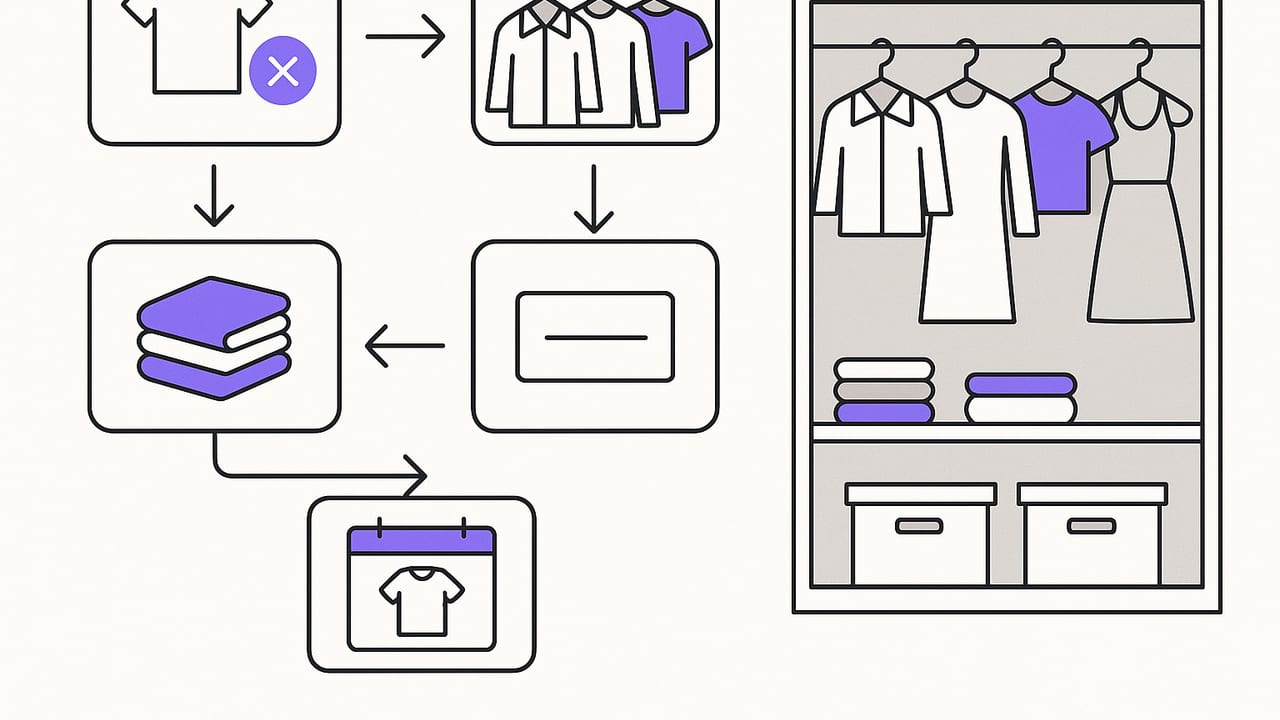
Use the 4-bin method:
- Keep (fits, loved, used)
- Tailor/Fix (deadline in two weeks)
- Donate/Sell (good condition, not for you)
- Recycle (worn-out textiles—check local programs)
Pro tip: Declutter by category, not location. Pull all jeans from everywhere in the home to judge duplicates and gaps.
Step 2: Map Your Space Into Zones
Measure hanging height, shelf depth, and drawer width. Then assign zones by frequency of use.
- Prime zone (eye to hand level): Everyday tops, jeans, work staples.
- Secondary zone (higher/lower): Seasonal, formal, bulky sweaters.
- Accessory zone: Belts, scarves, small bags near the mirror or exit.
- Overflow/Archive: Underbed, top shelves, vacuum-sealed off-season.
Maximize vertical space with slim non-slip hangers, shelf risers, over-the-door hooks, and hanging organizers. Use the floor for a shoe rack or lidded boxes, not loose piles.
Step 3: Decide What Hangs vs. What Folds
Match storage to fabric, structure, and frequency. Use the quick guide below.
| Item Type | Best Storage | Method | Tools |
|---|---|---|---|
| T-shirts | Drawer | File fold so fronts face up | Drawer dividers |
| Jeans | Shelf or hanger | Stack or hang by waistband | Sturdy hangers/shelf dividers |
| Dress shirts/blouses | Hanging | Button and hang | Non-slip or wooden hangers |
| Knit sweaters | Shelf | Flat fold to avoid stretch | Shelf dividers |
| Dresses | Hanging | Use garment bags for delicate | Wide or padded hangers |
| Suits/Blazers | Hanging | Structured hangers | Suit hangers, garment bag |
| Activewear | Drawer or bin | Roll or file fold | Bins/labels |
| Underwear/Socks | Drawer | Small cubbies | Drawer organizers |
| Shoes | Rack/cubbies | Pairs together, toe out | Tiered rack/clear boxes |
| Scarves/Belts | Wall/door | Hang or roll | Hooks/S-hooks/rod |
Folding Techniques That Save Space
- File fold: Fold into rectangles that stand upright; you see every item at once.
- Rolling: Great for gym sets and travel; reduces creases.
- Gentle stack: For knits; keep stacks short to avoid toppling.
Step 4: Create Clear Categories and Labels
Organize by type, then color within each type for a quick visual scan. Labels remove decision friction and help everyone maintain the system.
- Primary labels: Tees, Tanks, Blouses, Jeans, Trousers, Skirts, Sweaters, Active, Loungewear, Underwear, Socks.
- Secondary tags: Season (S/S, F/W), Occasion (casual, work, dressy), Care (delicate, dry clean).
- Color order (light to dark): White → Cream → Pastel → Mid-tone → Dark → Black → Prints.
If you like structure, a simple tag schema keeps things consistent (works on sticky labels, spreadsheets, or wardrobe apps):
{
  "type": "shirt",
  "color": "white",
  "fit": "relaxed",
  "season": ["spring", "summer"],
  "occasion": ["casual", "work"],
  "care": "cold_wash",
  "notes": "pairs with navy chinos"
}
Step 5: Build a Laundry-to-Closet Pipeline
Clothing chaos often starts after laundry day. Design a simple, repeatable pipeline.
- Sort at source: Use a divided hamper (lights/darks/delicates). Minimal sorting later.
- Stage post-wash: A folding surface and a “to-hang” hook rail prevent piles.
- Return by zone: Put-away order mirrors your closet layout: drawers first, then shelves, then hanging.
- Repair station: Keep a small kit (needle, buttons, fabric shaver) near the closet for 5-minute fixes.
Step 6: Rotate Seasonally Without Losing Track
Seasonal rotation keeps prime space for what you’re wearing now—but only if it’s organized.
- Before storing: Launder, de-pill, and de-lint. Dirt can set stains or attract pests.
- Protection: Use breathable cotton garment bags for wool/silks; avoid plastic long-term.
- Containers: Clear bins with labels like “Knitwear F/W,” “Swim & Linen S/S.”
- Climate control: Add cedar blocks or lavender sachets; use silica packets in humid areas.
Step 7: Plan Outfits to Reduce Daily Decision Fatigue
An organized closet is most powerful when it speeds up getting dressed.
- Create mini-capsules: Group 8–12 pieces that mix-and-match for work, weekend, or travel. Store together or tag them.
- Front-load the week: Pre-plan 3–5 outfits on Sunday. Use a valet hook or a dedicated rail.
- Fill gaps intentionally: If three outfits need a nude belt or a black sneaker, add a focused shopping list rather than impulse buys.
Small Closet or Shared Space? Use These Tactics
- Go vertical: Double-hang rods, hanging shelves, and S-hooks for bags and hats.
- Choose slim, matching hangers: Save inches and create a uniform look that prevents snags.
- Door real estate: Over-the-door racks for shoes, scarves, or a daily-outfit station.
- Underbed storage: Low-profile bins for off-season coats or bulky knits.
- Drawer dividers: Transform a jumbled drawer into clear cubbies for socks, underwear, and accessories.
- One-in, one-out rule: Especially important for shared closets—keeps volume steady.
Special Fabrics and Care Considerations
- Wool & cashmere: Fold and store with cedar. Air out after wear; avoid frequent washing.
- Silk: Hang on padded hangers; use breathable garment bags.
- Leather: Hang to keep shape; keep away from heat and direct sun. Condition seasonally.
- Denim: Air between wears; wash inside-out in cold to preserve color.
The 2-Hour Closet Reset (When You’re Short on Time)
- 15 min: Pull obvious no’s (poor fit, damaged, duplicates).
- 25 min: Re-hang and re-fold into correct zones. Group by type, then color.
- 30 min: Drawer overhaul: file fold tees, roll activewear, insert dividers.
- 20 min: Shoe rack tidy and door hooks setup.
- 20 min: Label shelves/bins; set a laundry pipeline and a valet hook for the week.
- 10 min: Bag donations and put in the car. If it’s not in the car, it’s still clutter.
Smart Buying: Tools That Actually Help
- Non-slip velvet or wooden hangers: Uniform and space-saving.
- Shelf dividers: Keep sweater stacks and jeans from collapsing.
- Clear bins with labels: Instantly see contents; stackable.
- Drawer organizers: Adjustable inserts for socks/underwear.
- Tiered shoe rack: Vertical storage without crushing shoes.
- Garment bags: Cotton for long-term storage of delicates.
- Cedar blocks or lavender sachets: Natural pest deterrents.
Maintenance: The 5-15-60 Routine
- 5 minutes daily: Return outliers, hang tomorrow’s outfit, close drawers fully.
- 15 minutes weekly: Re-fold messy stacks, clean out the laundry basket backlog, lint-roll coats.
- 60 minutes quarterly: Seasonal rotation, repair session, reassess categories and labels.
Mindset shift: Closets don’t fail because you’re messy. They fail when the layout doesn’t match how you use clothes. Redesign, don’t blame.
Troubleshooting Common Closet Problems
- Piles reappear on the chair: Add a “re-wear” hook or shallow bin for items that aren’t dirty yet.
- Bulky hoodies toppling: Limit stack height to 5; use a shelf divider or move to a wider shelf.
- Wrinkled dress shirts: Too tightly packed. Aim for a finger-width between hangers; consider a second rod.
- Lost accessories: Use a pegboard or clear trays. Keep jewelry near the mirror, not in a random drawer.
- Musty smell: Improve airflow, use breathable storage, and add dehumidifiers in damp closets.
Make It Visual and Digital
Seeing everything at a glance prevents duplicates and speeds up mornings. Keep fronts facing out in drawers and maintain color order on hanging rods. If you prefer digital organization and outfit planning, consider photographing your items, tagging them by type, color, season, and occasion, and using a virtual wardrobe tool to mix and match looks. A lightweight approach is to batch-shoot items on a plain background, tag them with the schema above, and plan a week of outfits in one sitting. For iOS users who want virtual try-ons and a smart closet organizer, Outfit Maker offers an AI-powered way to catalog pieces, plan outfits, and compare combinations without changing clothes.
Your Organized Closet, In One Page
- Declutter: Keep, Tailor, Donate, Recycle. Decide fast with clear rules.
- Zone: Prime for everyday, secondary for seasonal, archive for overflow.
- Store smart: Hang structured, fold knits, file-fold tees, roll activewear.
- Label: Type, color order, season, occasion, care.
- Laundry pipeline: Sort at source, stage to hang, return by zone.
- Rotate: Clean, protect, label, climate-control.
- Plan outfits: Mini-capsules, valet hook, targeted shopping list.
- Maintain: 5-minute daily tidy, 15-minute weekly reset, 60-minute seasonal review.
Follow the steps, personalize your zones, and treat your closet like a living system you update as your life changes. That’s how to organize clothes once—and keep them organized for good.