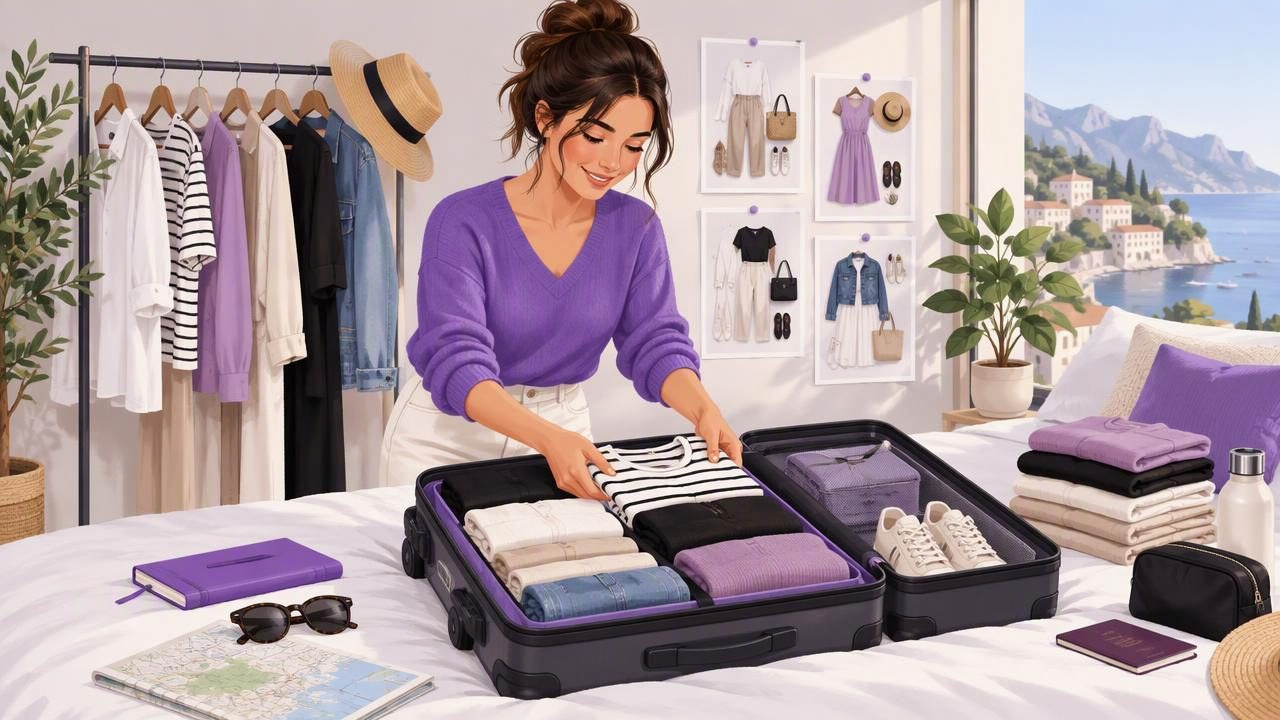
Packing for a trip can feel like solving a puzzle: you want enough options for different days and activities, but not a suitcase full of clothes you never wear. A wardrobe planner can make the process more deliberate by helping you start with garments you already own, build complete outfit combinations, and spot gaps before packing day.
The goal is not to create the largest possible travel wardrobe. It is to choose a manageable group of pieces that work for your itinerary, the weather, and your personal comfort. A digital closet can make those choices easier to see, while a virtual try-on can help you compare how combinations look together. Neither replaces checking the forecast, reviewing travel details, or deciding whether an item suits the conditions you expect.
Start with the trip, not the suitcase
Before choosing clothes, write down what the trip actually involves. Include the number of days, likely weather, planned activities, and any dress requirements. A city break with museums and restaurant dinners calls for different choices from a beach stay or a hiking weekend, even if both trips last four days.
- Check the forecast: Note expected temperatures, rain, wind, and any meaningful changes between day and night. Recheck close to departure.
- List activities: Separate everyday sightseeing from dinners, meetings, exercise, or outdoor plans.
- Identify practical needs: Consider walking distance, laundry access, clothing rules, and whether you need comfortable travel-day layers.
- Choose a realistic outfit count: Plan around actual activities rather than packing a separate look for every possibility.
This short inventory gives your wardrobe planner a purpose. Without it, it is easy to select clothes because they look appealing individually rather than because they suit the trip.
Build a digital closet from clothes you wear
A useful digital wardrobe starts with accurate, recognizable records of your own garments. Add pieces you are genuinely willing to wear on the trip, such as comfortable trousers, tops that coordinate with them, a versatile layer, and suitable shoes. You do not need to catalog everything you own before planning one journey.
When possible, use clear photos and simple descriptions. Record details that matter to your choices, such as color, garment type, warmth, or whether you consider an item dressy or casual. The purpose is to make browsing easier, not to create a perfect inventory. If the catalog becomes time-consuming, begin with the pieces most likely to travel.
Think in terms of outfit roles. A top may be for walking, a layer may help with cooler evenings, and shoes may need to handle hours on foot. These labels connect your clothing to the itinerary. They can also reveal when several items serve exactly the same purpose and one may be enough.
Use outfit combinations to reduce duplicate packing
Once you have a shortlist, create complete looks rather than counting individual garments. A pair of trousers that works with three tops has more planning value than three tops that only match one specific bottom. Repeating a garment is not a failure of planning; it is often how a compact travel wardrobe becomes practical.
For example, imagine a four-day city trip with mild days, cooler evenings, lots of walking, and one relaxed dinner. You might shortlist two bottoms, three tops, one light layer, one optional dressier layer, and two pairs of shoes. Before packing, test combinations such as:
- Travel day: comfortable trousers, a breathable top, a light layer, and walking shoes.
- Sightseeing day: the same trousers with a different top and the same walking shoes.
- Cool evening: the second bottom, a top, and the warmer layer.
- Dinner: a polished combination made from the existing shortlist, with a shoe change only if it is comfortable and appropriate.
This example is a starting point, not a universal packing formula. The actual pieces depend on the forecast, itinerary, laundry plans, and what you feel good wearing. The key is to check that each garment has a role and that several items can be combined in more than one sensible way.
Make a simple outfit map before packing
A wardrobe planner works best when you can see the trip as a whole. Use a table, notes app, or outfit planner to assign a possible look to each activity. Leave room for flexibility instead of treating every choice as fixed.
| Trip moment | Planning question | What to check |
|---|---|---|
| Travel day | What will stay comfortable in transit? | Layers, footwear, and easy movement |
| Full sightseeing day | Can the look handle walking and changing conditions? | Comfort, weather, and practical layers |
| Evening plan | Does the outfit meet the setting without requiring a whole extra wardrobe? | Dress expectations and footwear |
| Unplanned time | Can existing pieces cover a change of plans? | At least one flexible combination |
For a trip with changing weather, map layers separately from base outfits. That makes it easier to see whether a jacket or cardigan can adapt several looks, rather than packing a different outer layer for each day. For more involved itineraries, Outfit Maker’s guide to planning travel outfits offers another way to think through trip looks.
Compare looks with virtual try-on, but know its limits
When two combinations seem plausible, seeing them together can help you decide which feels more cohesive. An AI outfit generator or virtual try-on tool can visualize clothing combinations from photos, helping you compare looks without changing clothes each time. This is especially useful when you are choosing between a small number of outfits or trying to coordinate items you do not usually wear together.
Keep the purpose specific: visualization can help with appearance, not guarantee performance. A generated image does not reliably establish exact garment fit, sizing, fabric weight, stretch, breathability, warmth, or comfort after hours of wear. It may also represent colors or details differently from how they look in person. Use the preview to consider visual coordination, then check the real garment and your own experience before deciding to pack it.
For important practical questions, rely on direct information: try on the clothes, check care labels and garment details, and consider whether you have worn them comfortably in similar conditions. A polished-looking preview cannot confirm that shoes are broken in or that a fabric will be pleasant in humid weather.
Run a packing check for gaps and excess
Once the outfit map looks workable, review it from two directions. First, look for missing essentials: weather protection, comfortable walking footwear, or a suitable option for a specific reservation. Then look for duplicates: multiple pieces that perform the same role but do not add a useful alternative.
- Check every planned activity. Confirm that you have a plausible outfit for each one, including travel and downtime.
- Count repeat uses. Notice which items appear in several combinations and which appear once.
- Test the flexible pieces. Make sure a key layer or pair of shoes works with the outfits assigned to it.
- Remove speculative extras. Keep an item when it solves a realistic need, not only because you might wear it in an unlikely scenario.
- Revisit conditions. Adjust for updated forecasts, itinerary changes, or laundry access before closing the suitcase.
This is where a digital closet can be more useful than a blank packing checklist. Instead of asking only whether an item is packed, you can consider how it works with the other pieces you selected. Still, the final decision should reflect your comfort, personal preferences, and the realities of the destination.
Save the plan and learn from the trip
If you save or record your outfit combinations, you can return to the plan while packing and avoid rebuilding it from memory. A saved look can also make it easier to share options with a travel companion if you want a second opinion. Keep notes on what you actually wore, what stayed in the suitcase, and what you wished you had brought.
Those notes improve future planning without requiring a strict formula. Perhaps you learn that one pair of shoes was enough, or that evenings were colder than expected. The next time you use a wardrobe planner, you can start with that real experience rather than guessing from scratch.
Make packing a decision process, not a clothing challenge
Smarter travel packing comes from connecting garments to real plans. Start with the itinerary and conditions, catalog a manageable selection of clothes, build repeatable outfit combinations, and review the result for practical gaps. Use virtual try-on as a way to compare visual possibilities, not as a substitute for checking fit, sizing, fabric, or comfort.
A wardrobe planner will not predict every change of plan, and no outfit map needs to be perfect. Its value is in making your choices visible before departure: what works together, what earns space in your bag, and what you can leave at home with confidence.