Business casual can be tricky because it sits between formal officewear and everyday clothes. One workplace may consider dark jeans acceptable, while another expects tailored trousers and a blazer. The goal is to look polished and appropriate without feeling overdressed or uncomfortable. Once you understand the building blocks, you can create business casual looks from clothes you already own.
Start with your workplace’s expectations, then combine one or two structured pieces with comfortable, less formal items. For example, tailored trousers can balance a soft knit, while a simple blouse can make dark jeans look more intentional. The right outfit is not a fixed uniform; it is a combination that suits your office, your day, and your personal style.
What Does Business Casual Mean?
Business casual generally means neat, work-appropriate clothing that is less formal than a suit. It does not have one universal definition. Industry, company culture, client meetings, and even the day’s schedule can affect what feels suitable. When you are unsure, observe what colleagues wear or check whether your employer has a dress-code policy.
Common business casual pieces include chinos, tailored trousers, skirts, simple dresses, button-down shirts, blouses, fine-knit sweaters, loafers, flats, and clean, understated sneakers where they are accepted. A blazer or cardigan can add structure. Clothing should be clean, in good condition, and comfortable enough for a full workday.
Rather than focusing on whether each item is “business casual” by itself, look at the whole outfit. A relaxed piece can work well when the rest of the look feels polished. Similarly, a formal item can feel less stiff when paired with a simple knit or understated shoes.
Use a Simple Formula to Build an Outfit
A reliable approach is to choose one polished anchor, one comfortable supporting piece, and shoes that match the formality of your workplace. Add a layer if the weather or setting calls for it. The anchor might be tailored trousers, a structured skirt, a neat dress, or a crisp shirt.
| Outfit element | Useful options | What it contributes |
|---|---|---|
| Polished anchor | Tailored trousers, a midi skirt, a simple dress | Creates a work-ready foundation |
| Top or supporting piece | Button-down shirt, blouse, fine-knit sweater | Adds comfort, color, or texture |
| Layer | Blazer, cardigan, lightweight jacket | Adds structure and helps with changing temperatures |
| Shoes | Loafers, flats, low heels, accepted clean sneakers | Sets the outfit’s level of formality |
| Finishing detail | Belt, simple jewelry, tidy bag | Makes the combination feel considered |
You do not need every element every day. A dress may already provide a polished base, while a warm office may make a jacket unnecessary. Think of the formula as a set of choices, not a shopping list.
A Concrete Business Casual Outfit Example
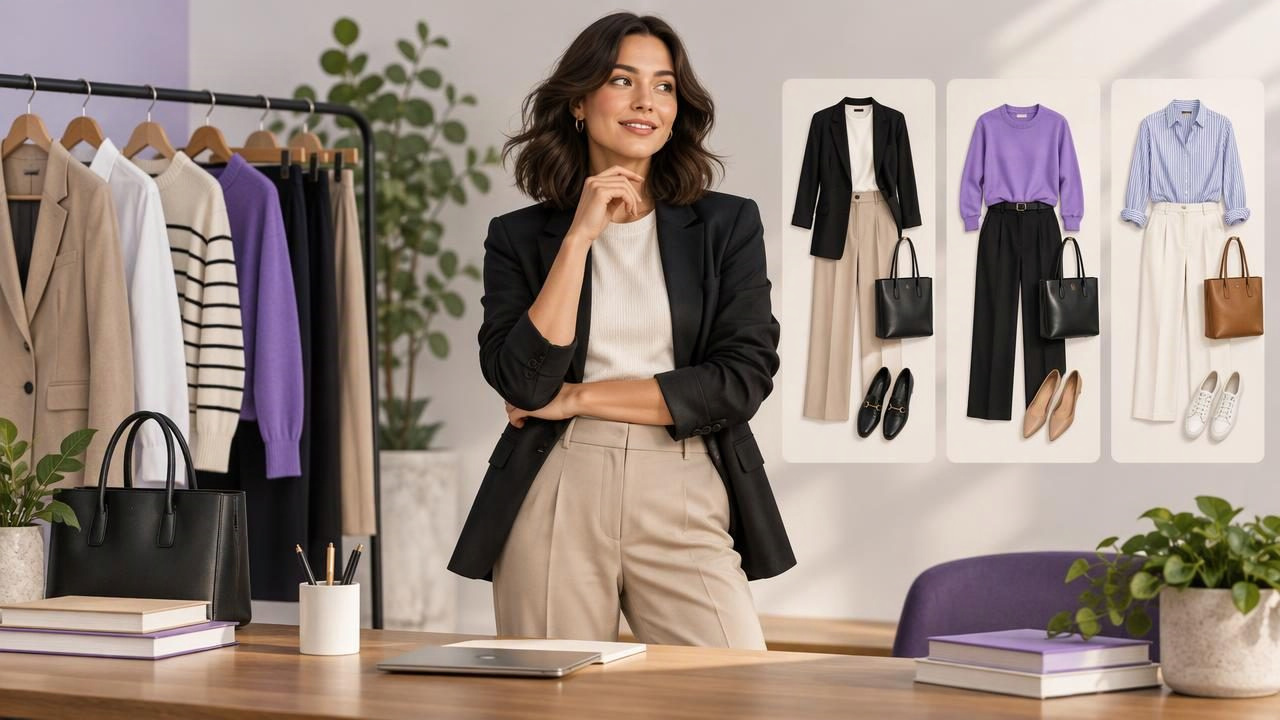
Imagine your closet contains navy tailored trousers, a white button-down shirt, a camel cardigan, black loafers, and a simple belt. Start with the trousers as your polished anchor. Add the shirt, tuck it in if that feels comfortable, and finish with the cardigan and loafers. The navy, white, camel, and black create a restrained color palette that is easy to wear in many offices.
This outfit can shift for different situations without changing its basic pieces. For a presentation or a meeting with clients, replace the cardigan with a blazer if you own one and your workplace calls for extra structure. On a regular office day, keep the cardigan. If the office is more relaxed, you might wear the shirt untucked with a clean, simple sneaker, provided that style fits your dress code.
You can also change the top while keeping the trousers and shoes. A fine-knit sweater gives the outfit a softer feel; a blouse can make it look more formal. This is a practical way to get several distinct combinations from a small group of garments. Before wearing a new combination to an important meeting, consider whether the shoes, fabric condition, and overall neatness match the occasion.
How to Create Business Casual Looks From Your Closet
- Check the setting. Consider whether you will be at your desk, meeting clients, presenting, or attending an office event. If you are new to a workplace, choose a slightly more polished option until you understand its norms.
- Choose the anchor first. Select trousers, a skirt, or a dress that feels comfortable for the day. This narrows your choices and prevents you from assembling an outfit around a top that does not suit the occasion.
- Balance structure and softness. Pair a structured bottom with a relaxed knit, or combine a simple top with a more formal layer. If every piece is very casual, the result may feel too informal; if every piece is highly structured, it may feel more formal than needed.
- Keep color combinations manageable. Neutrals such as navy, gray, black, cream, and tan are easy to combine. A single accent color or pattern can add personality without making the outfit difficult to coordinate.
- Finish with practical shoes and a layer. Choose footwear that suits both your office and your day’s activities. A blazer, cardigan, or light jacket can make a simple outfit feel more complete and help with indoor temperature changes.
- Check the full look. Make sure the pieces are clean and in good repair, and that the outfit feels comfortable when you sit, walk, and move. A polished look should still work for the realities of your day.
Adjust the Outfit for Your Workplace
Business casual varies, so use the most formal part of your day as a guide. For a standard office day, tailored trousers with a knit top or a blouse with a skirt may be enough. For a presentation, add a blazer or choose a more structured shirt and shoes. For a casual office, dark, neat jeans may work with a refined top and clean footwear, but do not assume they are acceptable everywhere.
Weather matters, too. In warm conditions, breathable fabrics and short-sleeved blouses can feel more comfortable; a light layer is useful if meeting rooms are cool. In colder weather, a fine-knit sweater over a shirt can add warmth without losing a polished appearance. Consider fabric weight and comfort, but remember that an image of an outfit cannot reliably show how a material will feel throughout the day.
For a video call, pay attention to the visible part of your outfit, but do not ignore comfort or the rest of your workday. A neat top and an appropriate layer may be enough on screen, while trousers and shoes should still suit any in-person plans.
Common Business Casual Mistakes to Avoid
- Assuming the dress code is the same everywhere: Ask, observe, or consult workplace guidance rather than relying on a general definition.
- Mixing too many competing details: Several bold colors, patterns, and statement accessories can make an outfit feel less cohesive. Let one item stand out and keep the rest simple.
- Ignoring condition and care: Wrinkles, visible wear, or shoes that need cleaning can undermine an otherwise suitable combination. Check garments before planning to wear them.
- Choosing appearance over comfort: If a waistband, shoe, or layer becomes distracting during the day, the outfit may not be practical. Try sitting and moving in it before committing.
- Overdressing every piece: Business casual does not require a blazer, dress shoes, and formal shirt in every combination. Match the level of polish to the setting.
Plan Combinations Before the Morning Rush
When you find a combination that works, note the pieces together so you can repeat or adapt it. A simple list might include “navy trousers, white shirt, camel cardigan, black loafers,” followed by variations such as “swap cardigan for blazer” or “replace shirt with knit.” This makes it easier to see which garments are doing the most work in your wardrobe.
A digital closet can make this process more visual by keeping track of the clothes you own and the combinations you have planned. An AI outfit generator or virtual try-on may help you preview how your own garments look together in a photo. Treat that preview as a style visualization aid: it can help you compare colors and outfit combinations, but it does not establish exact fit, sizing, fabric feel, or how an item behaves as you move.
For example, you might compare the navy-trouser outfit with a cardigan against the same trousers with a blazer, then decide which version suits your meeting. The final check should still be in person, especially for comfort, fit, and workplace appropriateness. If you want to organize clothing and plan combinations visually, Outfit Maker’s guide to building a digital closet explains the idea in more detail.
Build a Workwear Routine That Feels Like You
The easiest way to create business casual looks is to rely on a few comfortable formulas, then adjust them for the dress code and the day. Start with a polished anchor, add a top that balances its formality, and choose suitable shoes and layers. Use clothes you already own before deciding you need anything new.
Over time, notice which combinations feel good and work well in your environment. A small set of repeatable options can make getting dressed simpler while leaving room for color, texture, and personal style. Business casual is most useful when it helps you feel prepared—not when it becomes a rigid uniform.