Knowing how to compare different outfit combinations can make getting dressed feel less random and much more intentional. Instead of trying on five looks, forgetting what the first one looked like, and choosing the safest option by default, you can evaluate outfits using a repeatable process.
The goal is not to find one universally “perfect” outfit. A great outfit depends on the occasion, weather, comfort level, personal style, and how you want to feel. Comparing looks thoughtfully helps you identify the combination that works best for that specific day.
This guide explains how to compare outfit combinations visually and practically, with a concrete example you can use when choosing between multiple looks from your own wardrobe.
Why Comparing Outfit Combinations Is Hard
Outfit decisions often feel difficult because each option may solve a different problem. One look may be more polished, another may be more comfortable, and a third may make better use of colors you love. When you compare outfits only by asking, “Which one looks nicer?” you miss the details that determine whether you will actually want to wear it.
A useful comparison considers several factors at once:
- Silhouette: How the proportions of the top, bottoms, outerwear, and shoes work together.
- Color balance: Whether the colors feel coordinated, intentional, and appropriate for the setting.
- Occasion fit: Whether the outfit matches the dress code and expected level of formality.
- Comfort: Whether you can move, sit, walk, and feel like yourself in it.
- Practicality: Whether it works for the weather, commute, activities, and time of day.
- Personal preference: Whether the look reflects your style rather than simply following a rule.
By separating these criteria, you can make a clearer decision without overthinking every item.
Start With One Clear Outfit Goal
Before comparing combinations, define what the outfit needs to accomplish. This prevents you from comparing looks that are designed for completely different purposes.
For example, imagine you need an outfit for a casual work meeting followed by dinner with friends. Your goal might be: comfortable enough for a full day, polished enough for a meeting, and easy to dress up slightly for evening.
That goal immediately gives you useful filters. A very formal blazer-and-trouser look may be polished but too restrictive. Jeans and a graphic tee may be comfortable but not feel appropriate for the meeting. The strongest option will balance the priorities you identified.
Compare outfits against the needs of the day, not against an imaginary standard of perfection.
Create a Fair Comparison: Keep the Variables Simple
When you are trying to choose among several outfit combinations, change only one or two pieces at a time. If every item changes between looks, it becomes harder to understand why one outfit works better than another.
For instance, begin with the same black straight-leg trousers and white knit top. Then test three variations:
- Black trousers, white knit, camel blazer, loafers.
- Black trousers, white knit, denim jacket, white sneakers.
- Black trousers, white knit, black blazer, ankle boots.
Because the foundation stays the same, you can see how the jacket and footwear change the mood, formality, and proportions. This approach is especially helpful when building a capsule wardrobe or deciding which pieces deserve a place in regular rotation.
Use Photos to Compare Outfit Combinations More Objectively
A mirror is useful, but photos can reveal details that are easy to miss when you are standing close to your reflection. A full-length photo lets you compare the overall visual balance of several outfits side by side.
Take photos under similar lighting and from a similar distance. Stand naturally rather than posing dramatically, because the goal is to see how the outfit looks during everyday life. If possible, include a front view and one walking or seated photo for looks you plan to wear for long periods.
What to Look for in Outfit Photos
- Does one item visually overwhelm the rest of the outfit?
- Do the shoes create a balanced line with the trousers, skirt, or dress?
- Does the outfit have a clear focal point, such as a jacket, color, texture, or accessory?
- Do the layers look intentional rather than bulky?
- Does the outfit still look good when you are not standing perfectly still?
Photos are a style visualization tool, not a guarantee of how a garment will fit or feel. Lighting, camera angles, fabric movement, and posture can affect what you see. Always check the actual clothing when fit, sizing, comfort, or fabric behavior matters.
A Simple Outfit Comparison Scorecard
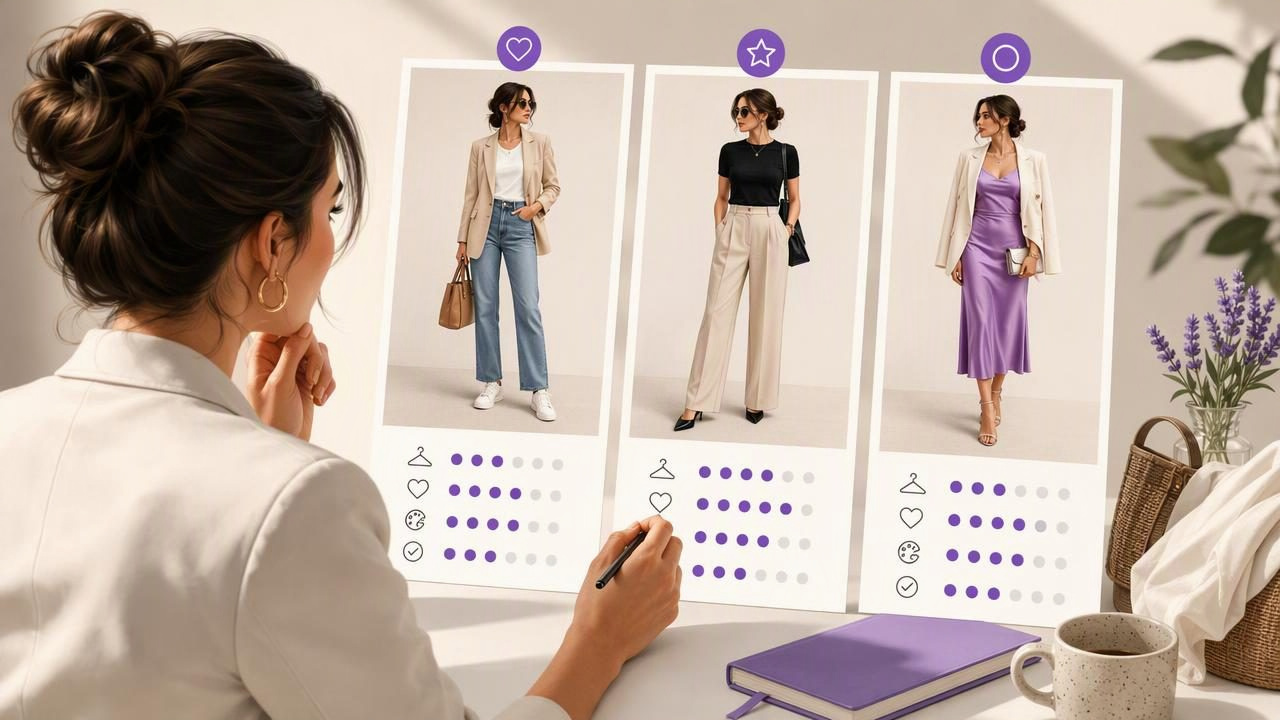
If two or three looks all seem good, use a quick scorecard. Give each category a score from 1 to 5, then compare the totals. The numbers do not replace your personal judgment; they simply make your priorities visible.
| Comparison Category | Question to Ask | Score Range |
|---|---|---|
| Occasion | Does it match the expected dress code? | 1–5 |
| Comfort | Can I wear this confidently for the planned activities? | 1–5 |
| Proportion | Do the pieces create a balanced silhouette? | 1–5 |
| Color and texture | Do the colors and materials work together? | 1–5 |
| Versatility | Can I adapt it with a layer, shoe, or accessory? | 1–5 |
| Confidence | Do I feel like myself in this look? | 1–5 |
For the casual work meeting example, the camel blazer and loafers might score highest for occasion and polish. The denim jacket and sneakers may win for comfort, while the black blazer and ankle boots may be strongest for an evening setting. Your final choice depends on which category matters most that day.
Compare the Silhouette Before the Small Details
Many people focus first on accessories, but silhouette usually has a larger impact. Silhouette describes the overall shape created by your clothing: fitted, relaxed, oversized, streamlined, cropped, long, structured, or flowing.
When comparing different outfit combinations, look at the relationship between volume and length. For example:
- A roomy sweater may work well with straight or slim trousers.
- Wide-leg trousers often benefit from a more defined or tucked-in top.
- A long coat can create a clean vertical line over a simpler base outfit.
- A cropped jacket can emphasize the waist when paired with high-rise bottoms.
These are not strict fashion rules. They are visual tools. If you love an oversized-on-oversized outfit, the key is deciding whether the deliberate volume feels balanced to you and suits your plans.
Check Color, Contrast, and Texture
Color coordination does not require matching every item exactly. In fact, outfits often look more considered when they include controlled contrast. Compare each combination by noticing how light and dark shades, warm and cool tones, and smooth and textured fabrics interact.
A simple way to assess color is to identify the outfit’s three visual roles:
- Base color: The dominant neutral or main shade, such as navy, black, cream, olive, or denim blue.
- Supporting color: A second shade that connects with the base without competing with it.
- Accent: A smaller pop of color, print, metallic detail, or texture.
For example, black trousers and a white knit create a neutral base. A camel blazer adds warmth, while burgundy shoes or a gold accessory could become an accent. If the outfit includes too many competing accents, simplify one element and compare the result again.
Test Each Look for Real-Life Use
An outfit can look excellent in a photo and still be the wrong choice for your schedule. Before deciding, run through the practical details. Will you be walking several blocks? Sitting in a meeting? Going outdoors after dark? Carrying a bag? Moving between heated and cold spaces?
Ask these questions:
- Can I layer this outfit if the temperature changes?
- Are the shoes appropriate for the amount of walking planned?
- Will the fabric wrinkle easily or require frequent adjustment?
- Do I have the undergarments and outerwear needed for this look?
- Would I still choose this outfit if my day ran longer than expected?
This step is where the “best-looking” option sometimes loses to the most wearable one. That is not settling; it is choosing a look that supports your day.
Save Winning Combinations for Future Decisions
Once you find an outfit that works, document it. Save a photo, note the occasion and weather, and record any useful styling detail, such as which shoes felt best or which layer made the look more polished. Over time, this creates a personal reference library based on clothes you actually own and wear.
A digital wardrobe can make this easier by keeping clothing images and outfit combinations together. For example, Outfit Maker’s guide to creating a digital closet explains how organizing your garments visually can support faster comparisons and future fashion planning.
Know the Limits of Virtual Outfit Comparison
Digital photos, saved outfit boards, and AI style visualization can help you compare colors, layers, proportions, and overall outfit direction. They are valuable for narrowing down choices before you get dressed.
However, virtual comparisons cannot reliably predict exact garment fit, sizing, fabric stretch, opacity, weight, comfort, or how a material moves throughout the day. Use visual tools to choose which combinations to try first, then confirm your final choice with the real clothing when possible.
Make the Final Choice Without Second-Guessing
After comparing your options, choose the outfit that best meets your main goal and gives you the strongest sense of ease. If two outfits score similarly, select the one that feels more like you. Confidence is not always about wearing the boldest look; often, it comes from wearing something that fits your plans, your comfort needs, and your personal style.
The more often you compare and save successful combinations, the easier future decisions become. You will start to recognize your best silhouettes, favorite color pairings, and most useful wardrobe pieces—turning “What should I wear?” into a much simpler question.