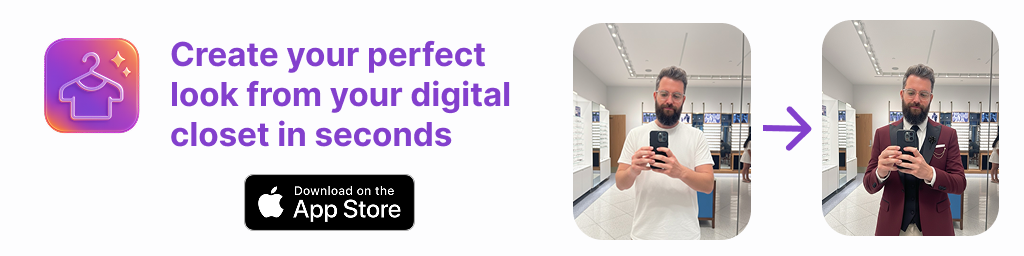
Getting dressed can feel surprisingly high-stakes. Whether you are heading to work, meeting friends, packing for a weekend away, or attending an event, uncertainty often comes from one question: Will this outfit actually work? A digital closet app can make that decision easier by helping you see what you own, test outfit combinations, and keep successful looks available for future reference.
Learning how to get more confident outfit planning with a digital closet app is not about following rigid fashion rules or buying an entirely new wardrobe. It is about creating a clearer system around the clothes you already wear. When your wardrobe is visible, organized, and connected to real occasions, you can make choices with more intention and less last-minute doubt.
This guide explains how to use a digital wardrobe for confident fashion planning, including a practical example, a simple weekly process, and important limitations to keep in mind when using virtual try-on technology.
Why Outfit Planning Confidence Is Often Missing
Outfit confidence is not the same as having a large wardrobe. In fact, having more clothing can sometimes make decisions harder. You may own several shirts, trousers, shoes, and jackets, yet still default to the same few combinations because they are familiar and feel safe.
Common causes of outfit uncertainty include:
- Forgetting about pieces stored in drawers, boxes, or the back of the closet.
- Buying items that seem appealing alone but do not work with your existing clothes.
- Trying to picture combinations mentally instead of seeing them together.
- Making decisions while rushed, tired, or distracted.
- Repeating outfits not because you love them, but because they are the only combinations you can recall quickly.
- Feeling unsure about how formal, casual, colorful, or weather-appropriate an outfit appears.
A digital closet addresses the planning side of these problems. It turns individual garments into a visual library, allowing you to build a personal reference point for outfits that feel like you.
What a Digital Closet App Can Do for Fashion Planning
A digital closet app is a visual catalog of your wardrobe. You add photos of clothing, shoes, accessories, and outerwear, then organize those items into categories or outfits. Instead of opening every drawer before leaving home, you can review your wardrobe from one screen.
The most useful purpose is not simply inventory. It is decision support. A well-maintained digital wardrobe makes it easier to compare garments, create outfit combinations, and save looks you want to wear again.
| Planning Challenge | How a Digital Closet Helps |
|---|---|
| “I have nothing to wear.” | Shows overlooked items and possible combinations from your own wardrobe. |
| Morning decision fatigue | Lets you save outfit ideas before busy days begin. |
| Uncertain color combinations | Provides a visual way to compare clothing pieces together. |
| Packing for several occasions | Helps map garments into repeatable outfits before you pack. |
| Style experimentation | Lets you explore different combinations without pulling out every item. |
Start With a Smaller, More Useful Digital Wardrobe
You do not need to photograph every sock, lounge shirt, or seasonal item on day one. Trying to digitize your entire closet at once can turn an encouraging project into another unfinished task. Begin with the items you reach for most often.
A practical starter collection could include:
- Five to eight tops you wear regularly.
- Three to five bottoms, such as jeans, trousers, skirts, or shorts.
- Two layers, such as a blazer, cardigan, denim jacket, or coat.
- Two or three pairs of shoes.
- A few accessories that noticeably change an outfit.
Photographing this core group first gives you enough variety to spot patterns. You may discover that most of your reliable looks depend on the same neutral trousers, or that a jacket you rarely wear connects several outfits together. Those observations make future wardrobe choices more confident and specific.
Use clear photos with decent lighting and a simple background where possible. The goal is not professional product photography. You just need images that let you recognize color, silhouette, texture, and key details later.
Create Outfit Formulas Instead of Random Combinations
Confidence improves when you know your personal outfit formulas. A formula is a repeatable structure rather than one fixed look. For example, “straight-leg trousers + fitted knit + relaxed outer layer + loafers” can be adapted with different colors and fabrics throughout the week.
Digital wardrobe planning helps you identify formulas by allowing you to compare versions of the same basic structure. You may notice that you feel most comfortable when your outfit includes one polished item, one relaxed item, and one personal detail such as a watch, scarf, or statement shoe.
Useful outfit formulas to test
- Polished casual: dark jeans, simple top, structured jacket, clean sneakers or loafers.
- Office-ready: tailored trousers, knit or blouse, light layer, practical shoes.
- Weekend relaxed: comfortable bottoms, oversized shirt or sweater, casual footwear.
- Evening simple: one elevated base piece, a refined layer, and one intentional accessory.
- Weather-change ready: breathable base, adaptable middle layer, and outerwear.
Save multiple versions of a formula. This prevents your wardrobe from feeling repetitive while keeping the decision process familiar. The objective is not to make every outfit completely different; it is to recognize what reliably makes you feel comfortable and appropriately dressed.
A Concrete Example: Planning Three Workdays
Imagine that Maya works in an office with a smart-casual dress code and has three busy days ahead: a normal desk day, a client meeting, and an after-work dinner. She often spends too long deciding what to wear, then worries that she chose the wrong level of formality.
Rather than planning from a crowded closet each morning, Maya adds these items to her digital wardrobe:
- Navy tailored trousers
- Dark straight-leg jeans
- Ivory knit top
- Blue button-down shirt
- Black blazer
- Tan trench coat
- Black loafers
- White sneakers
- Small gold earrings
She creates and compares three looks:
- Desk day: dark jeans, ivory knit, tan trench, and white sneakers.
- Client meeting: navy trousers, blue button-down, black blazer, and loafers.
- Dinner: navy trousers, ivory knit, blazer, loafers, and gold earrings.
The third outfit uses nearly the same foundation as the meeting look, but the different top and accessory make it feel less formal. By viewing the combinations in advance, Maya can see that she has a coherent plan without needing three entirely separate wardrobes. She also learns that her navy trousers are a high-value item because they work for both professional and social plans.
Confidence often comes from having evidence that an outfit has a purpose—not from endlessly searching for a perfect option.
Use Virtual Try-On as a Visualization Tool
Virtual try-on can add another helpful layer to outfit planning. By using your photo and images of clothing, AI-based tools can help you visualize how a combination may look on your overall appearance. This can be useful when you are comparing proportions, color placement, layering ideas, or the general mood of different outfits.
For example, you may be choosing between a cropped jacket and a longer blazer with the same trousers. Viewing both versions can make it easier to decide which silhouette aligns with the occasion and your preferred style.
However, virtual try-on has important limits. It is a style visualization tool, not a guarantee of physical results. Digital images cannot reliably confirm:
- Exact garment fit, sizing, or comfort.
- How fabric stretches, drapes, wrinkles, or moves while walking.
- Whether a garment feels too warm, too restrictive, or too sheer.
- Precise color accuracy under every type of lighting.
- How alterations, footwear height, or undergarments affect the final look.
Use virtual try-on to narrow choices and build outfit ideas, then rely on real-world wear for the final decision. If an outfit is for an important event, try it on in person ahead of time and move around in it.
Build a Five-Minute Weekly Outfit Planning Routine
Confidence grows when outfit planning becomes a light routine rather than a stressful emergency. Set aside five to ten minutes once a week, ideally before your busiest days.
- Check your calendar for work commitments, social events, travel, and weather changes.
- Choose two to four outfit foundations that suit those plans.
- Build alternatives for any day with uncertain weather or a possible change of venue.
- Save the combinations you would genuinely wear, not just ones that look interesting on screen.
- After wearing a look, make a note of what worked and what you would adjust next time.
That final step is especially valuable. Perhaps an outfit looked balanced but the shoes were uncomfortable, or a layer was unnecessary indoors. Your digital closet becomes more useful when it reflects real experiences rather than only idealized outfit images.
Make Your Digital Closet More Accurate Over Time
A wardrobe system should evolve with your life. Review it periodically, especially when seasons change, your work routine shifts, or you notice that certain clothes never appear in your outfit planning.
Consider adding simple notes to garments or saved looks, such as:
- “Best for mild weather.”
- “Needs steaming before wear.”
- “Comfortable for walking.”
- “Works well for presentations.”
- “Prefer with a tucked-in top.”
These small details turn a visual archive into a practical smart closet organizer. They also help you distinguish between clothes you admire and clothes that support your actual routine.
Share Looks When You Need a Second Opinion
Sometimes confidence comes from outside perspective, especially for a new dress code or event. Sharing two or three saved outfit options with a trusted friend can be more useful than sending a vague message asking what to wear. Give context: the location, expected weather, timing, and how formal you expect the event to be.
Ask focused questions such as, “Which option looks more appropriate for a creative office?” or “Does this jacket make the outfit feel too formal for dinner?” Specific feedback helps you decide without handing over your personal style entirely.
Final Thoughts: Plan for Ease, Not Perfection
The goal of a digital closet is not to eliminate every clothing doubt. Personal style changes, occasions vary, and some decisions will always be subjective. The real benefit is reducing avoidable uncertainty by making your wardrobe easier to see, understand, and use.
Start with a small selection, save the combinations that feel authentic, and improve your system based on real wear. If you want a practical starting point for organizing garments and building looks, Outfit Maker’s digital closet guide offers additional context for creating a more visual wardrobe routine.
When you can see your options before the morning rush, outfit planning becomes less about second-guessing and more about choosing a look that supports the day ahead.