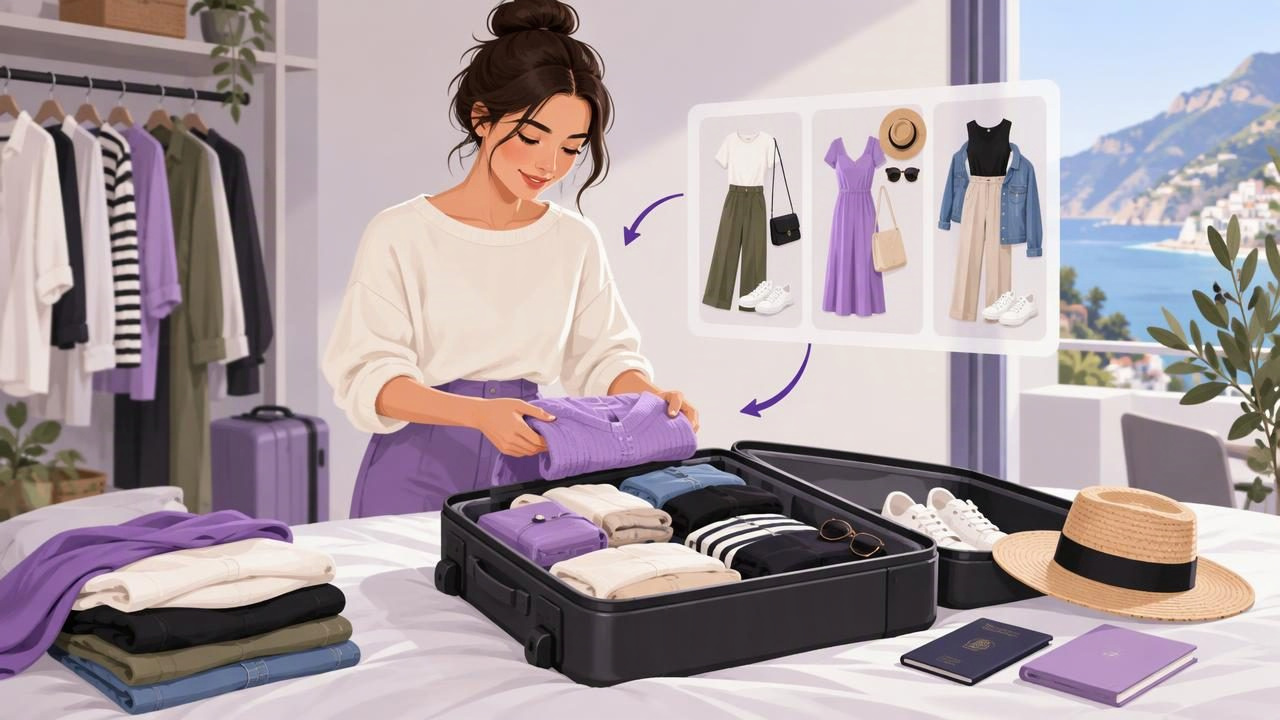
Packing for a trip can feel like solving a small puzzle: you need enough outfits for the itinerary, but not so many clothes that your bag becomes difficult to manage. A wardrobe assistant for smarter travel packing helps you see how the clothes you own can work together before you pack. Instead of choosing individual items at random, you can plan complete looks around your activities, the forecast, and the pieces you are willing to bring.
A digital wardrobe or outfit-planning tool can make those combinations easier to review. The goal is not to pack the fewest possible items at any cost. It is to choose a practical set of clothes that gives you useful options, accounts for real trip conditions, and still feels like your style.
What a wardrobe assistant can do for a trip
A wardrobe assistant is most useful when it helps connect three decisions: what you will do, what you already own, and which garments can serve more than one purpose. A digital closet gives you a visual record of clothing you may otherwise forget about. An outfit planner lets you compare combinations before they go into your suitcase.
For example, a lightweight shirt might work for a daytime walking outfit, then pair with different trousers for dinner. Seeing both combinations can help you decide whether the shirt earns its place in your luggage. That is different from assuming every item needs a unique outfit.
Some tools also use AI to visualize clothing combinations or support virtual try-on from photos. These features can help you consider a look without changing clothes, but they are best treated as style visualization. They do not establish whether a garment will fit comfortably, feel suitable in a particular climate, or behave like its real fabric.
Start with the itinerary, not the suitcase
Before picking clothes, list the activities that will shape your outfits. A city break with a museum visit, a long walking day, and a nicer dinner has different needs from a beach stay or a work conference. Group your plans into broad outfit situations rather than packing one separate look for every hour.
- Everyday: sightseeing, cafés, and casual meals.
- Active: long walks, outdoor plans, or activities that may need comfortable layers.
- Polished: a dinner, meeting, event, or place with a dress code.
- Contingency: a weather change, laundry delay, or unexpected plan.
Then check the expected weather for the dates and locations on your itinerary. Averages are not a substitute for a current forecast, and conditions can change. Use the forecast to guide layers and footwear, while leaving room for a backup if the trip has a meaningful chance of rain or temperature swings.
A practical example: four days in a walkable city
Imagine a four-day trip with sightseeing, one nicer dinner, and a forecast that may shift from mild afternoons to cool evenings. Rather than packing four unrelated head-to-toe outfits, start by identifying a small group of pieces that can create different looks. The example below is a planning framework, not a universal packing formula; your activities, laundry access, and personal preferences matter.
| Clothing role | Example piece | Possible use |
|---|---|---|
| Bottoms | Dark trousers | Walking day or dinner with a more polished top |
| Bottoms | Comfortable jeans | Casual daytime combination |
| Tops | Two everyday tops | Pair with either bottom, depending on comfort and weather |
| Top layer | Light sweater or cardigan | Extra warmth over a top in the evening |
| Outer layer | Weather-appropriate jacket | Wind or rain protection if the forecast calls for it |
| Shoes | Walking shoes and an optional second pair | Choose based on itinerary, comfort, and dress needs |
Now map combinations to the trip: jeans with one top for a relaxed day; trousers with the other top and the cardigan for an evening; then swap the top or layer to make another daytime option. The dinner outfit could use the same trousers with a top that feels appropriate for the venue. If you would not realistically wear a combination, do not count it as a useful outfit just because the colors match.
This plan makes the value of each item visible. If the second pair of shoes only works with one outfit and adds bulk, you can decide whether that specific use justifies bringing it. If the itinerary includes a formal event, however, a dedicated pair may be worth the space. The best choice depends on the trip, not a strict rule about limiting shoes.
Count outfit options, not just clothing pieces
A pile of interchangeable basics can look efficient but still leave you with outfits you do not want to wear. Review the combinations one by one. Ask whether they suit the activity, whether the layers make sense together, and whether you would be comfortable wearing them for the time involved.
A useful test is to assign each planned look a real moment on the itinerary. If several looks have no clear purpose, they may be duplicates. If one item appears in many combinations, consider whether you are comfortable relying on it repeatedly and whether it can be reworn or washed during the trip.
Do not assume every garment is ready for multiple wears. Heat, activity, personal comfort, and fabric care all affect how often you may want to wear something. If laundry is available, account for when and how you can do it rather than treating it as guaranteed. Pack a spare option when a delayed wash would cause a problem.
Use a digital closet to spot what you might miss
When clothes are out of sight, it is easy to pack familiar favorites and overlook a useful layer, accessory, or versatile top. A digital wardrobe lets you browse items visually and consider combinations from your own garments. It can also help you notice that several pieces serve the same role, or that a planned outfit depends on an item you have not worn in a while.
For a more useful catalog, start with the garments likely to affect this trip rather than photographing every possession at once. Include clear images and enough detail to recognize each piece, such as its color, category, or a note about when you wear it. A catalog only helps when it reflects what is actually available and in wearable condition.
When you save or compare outfit ideas, keep the trip context with them: the day, activity, and any layer you may need. A look that works for a short indoor dinner may not be the right choice for hours outdoors. This context turns a collection of attractive combinations into a plan you can use while packing.
Where AI try-on helps—and where it stops
An AI outfit generator or virtual try-on can offer a quick visual way to explore how clothing items might look together on your photo. That can be especially helpful if you are deciding between two combinations or want to see whether a color mix feels cohesive before packing. It can support styling decisions without requiring you to put on every possible combination.
However, an image is not a fitting room or a fabric test. Visualization may not accurately show exact sizing, garment drape, texture, transparency, stretch, warmth, or how comfortable shoes feel after a full day. It also cannot confirm that an item is clean, intact, weatherproof, or appropriate for a venue’s dress code. Check those factors yourself before relying on a look.
Use AI-generated visuals to answer a narrow question such as, “Do I prefer this top with the dark trousers or the jeans?” Then verify the practical details in person. If the trip depends on a specific coat for rain or a particular pair of shoes for long walks, assess the real item rather than trusting a visual preview.
Common packing mistakes a wardrobe assistant can help reveal
- Packing for an imaginary itinerary: Choose clothes for the activities you have planned, not every possible version of the trip.
- Counting combinations that are not comfortable: A visual match is not useful if you dislike wearing the outfit.
- Ignoring layers: A base outfit may need a cardigan, jacket, or other layer as temperatures change.
- Forgetting footwear needs: Consider distance, terrain, dress expectations, and whether shoes are already comfortable.
- Assuming laundry or rewear will work out: Make a realistic plan based on access, timing, and your own preferences.
- Overpacking backups: Keep a contingency item when it solves a real problem, rather than adding duplicates without a reason.
A visual plan can expose these gaps before you leave. It cannot make the decisions for you, but it gives you a clearer way to review them while your clothes are still at home.
A final review before you pack
Lay out or review the planned pieces and check each one against the trip. Is it clean and ready? Does it suit at least one real activity? Can it work with the other items you selected? Does the forecast call for a layer or protection you have not included? Are any event requirements still uncertain?
Next, look for weak links. If several outfits depend on one top, decide whether you are happy to repeat it. If a garment only works with shoes you are leaving behind, revise the combination. If the plan includes a long walking day, prioritize footwear you already know is comfortable rather than choosing shoes solely because they complete the look.
Finally, leave some flexibility. A wardrobe assistant helps you plan from known information, but weather, schedules, and preferences can change. A sensible packing plan gives you enough options to adapt without trying to prepare for every imaginable scenario.
Make packing decisions before the last minute
Smarter travel packing is less about a perfect capsule and more about choosing clothes with clear jobs. Start from the itinerary, build outfits from garments you own, and check that the combinations work for the weather and the actual activities. A digital closet can make those options easier to see, while AI visualization can help you compare style ideas—with real-world fit and comfort checked separately.
If you want to organize your own garments for outfit planning, Outfit Maker’s guide to building a digital closet explains the idea in more detail. Use any planning tool as a support for your judgment: the strongest travel outfit plan is one you will genuinely want to wear.