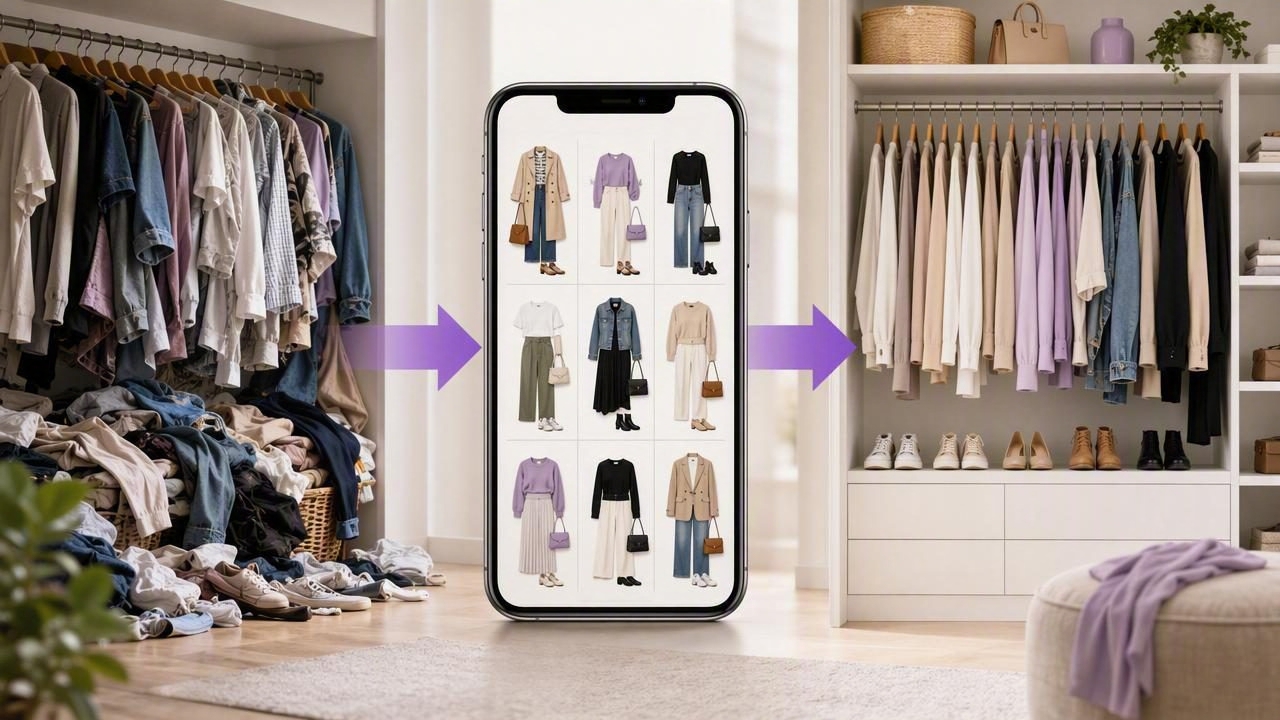
A crowded wardrobe does not always mean you have too many clothes. Often, it means you cannot easily see what you own, remember where items are, or decide how to wear them. Pieces get pushed to the back of the rail, forgotten in storage boxes, or left unworn because they do not fit into a clear outfit plan.
A closet catalog app for less closet clutter can solve much of this problem without requiring a dramatic decluttering weekend. By creating a visual record of your wardrobe, you can identify duplicates, rediscover neglected favorites, organize seasonal pieces, and make smarter decisions before buying anything new.
This guide explains how cataloging your clothes digitally can lead to a calmer, more functional closet—and how to set up a system that is useful in real daily life.
Why Closet Clutter Is Usually an Information Problem
Physical clutter is only part of the issue. Many wardrobes become difficult to use because the owner lacks a clear overview. You may know you have several black tops, for example, but not know whether you have a fitted long-sleeve option, a casual cotton tee, or a dressier blouse that works for dinner.
When wardrobe information is unclear, common habits follow:
- Buying similar items because you forgot what you already own.
- Wearing the same small group of dependable outfits repeatedly.
- Keeping items “just in case” because you are unsure how they fit into your wardrobe.
- Creating piles of clothes during rushed morning outfit decisions.
- Storing items you might wear if only you remembered they existed.
A digital wardrobe turns vague memory into an accessible visual inventory. Instead of opening a packed closet and hoping for inspiration, you can browse your pieces by category, color, season, occasion, or brand before you pull anything out.
How a Closet Catalog App Helps Reduce Clutter
A closet catalog app is not simply a place to save clothing photos. Used consistently, it becomes a decision-making tool. It gives every item a visible role and makes it easier to see which clothes support your lifestyle.
1. It reveals duplicate purchases
Duplicates are not necessarily bad. If you wear black trousers constantly, owning more than one pair may be practical. The problem is accidental duplication: buying a fifth striped shirt or another nearly identical blazer because the earlier versions were out of sight.
Once your wardrobe is cataloged, you can search or filter your existing pieces before shopping. This pause makes purchases more intentional. You may realize that what you actually need is not another sweater, but shoes that work with the sweaters you already own.
2. It makes forgotten clothes visible again
Most people have “invisible” clothes—items that are technically owned but rarely considered. They may be hidden behind other garments, stored in another room, or difficult to style. A photo-based catalog gives those items another chance.
As you browse your digital wardrobe, you may spot a jacket you have not worn in months and pair it with jeans you wear every week. This helps increase the value you get from existing clothes while reducing the urge to buy a new outfit for every event.
3. It supports better keep, donate, and repair decisions
Decluttering is easier when it is based on evidence instead of guilt. A digital wardrobe can help you ask practical questions:
- Have I worn this during the past year?
- Can I create at least three outfits with it?
- Does it fit my current size, style, and routine?
- Is it worth repairing, tailoring, or dry-cleaning?
- Do I own another item that performs the same role better?
If an item has no clear purpose and no realistic styling path, it may be a good candidate for donation, resale, recycling, or storage elsewhere. The goal is not to own the fewest clothes possible. It is to own clothes you can find, wear, and enjoy.
What to Include in Your Digital Wardrobe
You do not need a perfect database to get useful results. Start with information that makes your clothes easier to identify and use. A basic catalog should include a clear photo, category, color, and season. Add more details over time as needed.
| Catalog Detail | Why It Helps | Example |
|---|---|---|
| Photo | Creates a fast visual overview | Front-facing image of a denim jacket |
| Category | Makes filtering simple | Tops, trousers, dresses, shoes |
| Color | Helps build coordinated outfits | Navy, cream, olive, black |
| Season | Prevents irrelevant options from appearing | Summer, winter, all-season |
| Occasion | Supports faster outfit planning | Work, casual, date night, formal |
| Condition | Flags items needing attention | Ready to wear, repair, dry clean |
Optional tags can make the catalog even more useful. Consider adding fit notes, fabric type, warmth level, favorite status, purchase date, or laundry instructions. For example, tagging a shirt as sheer or needs strapless bra prevents last-minute surprises when planning an outfit.
A Simple Step-by-Step Setup Process
The biggest mistake is trying to catalog every garment perfectly in one day. A simpler approach is more sustainable. Build the system in stages and start with the clothes you currently wear most.
- Choose one category first. Begin with tops, shoes, or outerwear rather than emptying your entire closet.
- Remove obvious clutter as you go. Set aside damaged, poorly fitting, or unwanted items before adding the rest to your catalog.
- Photograph items in consistent lighting. Lay clothes flat against a plain background or hang them on a simple wall. Consistency matters more than professional-quality images.
- Add only essential tags. Category, color, and season are enough to start. Avoid spending ten minutes entering details for each basic T-shirt.
- Create a few saved outfits. Build combinations for your most common situations, such as workdays, weekend errands, dinners, or workouts.
- Review your closet monthly. Update worn, donated, repaired, or newly purchased items so your digital wardrobe stays accurate.
“A useful closet system does not demand perfection. It should make the next outfit decision easier than the last one.”
Use Outfit Planning to Keep Your Physical Closet Tidy
Cataloging is most effective when it changes your routine. Outfit planning reduces the everyday mess created by indecision: the chair covered in rejected clothes, the bed piled with options, and the closet rail pulled apart during a rushed search.
Try planning three to five outfits at the beginning of each week. Include shoes, layers, and accessories when relevant. If the weather changes, you can swap a piece digitally before disrupting your whole wardrobe.
This process also helps you identify wardrobe gaps. If you repeatedly build an outfit but cannot finish it because you lack a warm layer or suitable shoes, that is a more meaningful shopping signal than browsing trends online.
Create outfit formulas for repeatable ease
Outfit formulas are reliable combinations that reduce decision fatigue. They are especially useful for people who want a polished wardrobe without spending a long time styling each morning.
- Relaxed trousers + fitted knit + loafers
- Jeans + plain T-shirt + structured jacket + sneakers
- Midi dress + ankle boots + lightweight coat
- Tailored trousers + button-down shirt + simple jewelry
Save several versions of each formula in your digital wardrobe. You will quickly see which pieces work hard, which combinations you enjoy, and which items consistently remain unused.
Virtual Try-On Can Prevent More Closet Clutter
Seeing clothing combinations before changing can make outfit planning more efficient. Virtual try-on tools allow you to visualize how selected items may look together, helping you narrow down options before taking clothes off hangers.
This can be particularly helpful when styling a less familiar piece, comparing layers, or choosing between two outfit options for an event. While virtual styling should not replace checking fit and comfort in real life, it can reduce unnecessary wardrobe disruption and make experimentation feel easier.
Virtual try-on also encourages you to use what you already own. Instead of assuming you need a new look, you can test alternative pairings from your catalog: a formal skirt with casual trainers, a neglected cardigan over a favorite dress, or a blazer styled with different trousers.
Common Mistakes to Avoid
A closet catalog should simplify your life, not become another unfinished project. Avoid these common obstacles:
- Cataloging clothes you already know you will not keep: Donate or recycle them first.
- Over-tagging everything: Use only labels you will realistically search for.
- Ignoring laundry and repairs: Update unavailable items so planned outfits remain realistic.
- Forgetting seasonal storage: Catalog off-season items so they remain visible without taking up daily closet space.
- Using the catalog only when shopping: Make it part of weekly fashion planning for the greatest benefit.
Build a Closet You Can Actually Use
The best organized closet is not necessarily color-coordinated, minimal, or filled with expensive basics. It is a closet where every item is easy to find, works with your life, and has a reasonable chance of being worn.
Using a closet catalog app for less closet clutter gives you a practical view of your wardrobe and turns clothing organization into a repeatable habit. You can see what you own, create more outfits from fewer forgotten pieces, and make clearer choices about what should stay.
For people who want to combine a digital wardrobe, outfit comparison, and virtual styling in one place, tools such as Outfit Maker can make that planning process feel more visual and manageable.