Planning outfits can mean arranging clothes on a rack, building looks in a digital closet app, or combining both methods. A clothes rack makes outfits visible in your room, while a digital wardrobe lets you review clothing combinations on a screen. Neither approach is automatically better: the right choice depends on your space, planning habits, and what you need to see before getting dressed.
This guide compares digital closet app vs. clothes rack planning, with a practical example of how each method can handle a busy workweek. It also explains what virtual try-on can and cannot tell you, so you can choose a system that supports your decisions without expecting it to predict exact fit or fabric behavior.
What Is Clothes Rack Outfit Planning?
Clothes rack planning means selecting garments ahead of time and hanging them together, often as complete outfits. You might place a shirt, trousers, jacket, and accessories on one section of a rack, then reserve another section for the next day. A rail, garment rack, or a clear section of your closet can all work.
The method is tangible: you see the real clothes, notice wrinkles or stains, and can check whether a piece is ready to wear. It can also make mornings easier because the chosen outfit is already together. The trade-off is that it uses physical space and depends on you remembering which combinations you have already tried. If your wardrobe is large, a small rack may show only a fraction of your options.
What Does a Digital Closet App Do?
A digital closet app is a visual catalog of garments you own. Depending on the app, you can add clothing photos, browse your wardrobe on a phone, and assemble or save outfit combinations. It can be useful when you want to compare several looks without physically changing clothes or pulling every option out of storage.
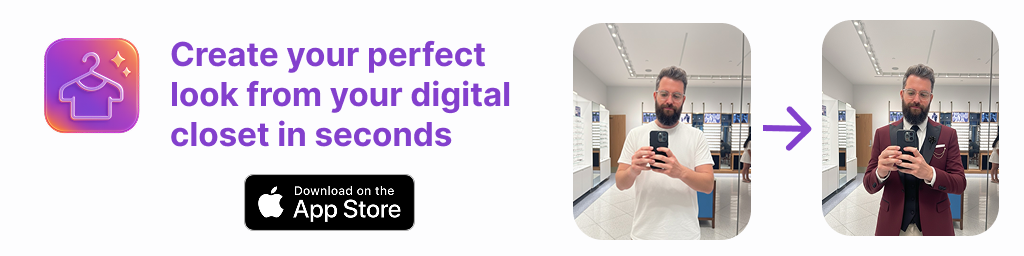
Some tools also offer AI outfit generation or virtual try-on from photos. These features can help you visualize how your own pieces might look together. Think of the result as a styling preview, not a guarantee of how the outfit will fit, feel, or move in real life. A digital closet is most useful when its catalog reflects the clothes you actually wear and when you keep it organized enough to browse.
Digital Closet App vs. Clothes Rack Planning
| Planning need | Digital closet app | Clothes rack |
|---|---|---|
| See your options | Browse cataloged garments and saved combinations on a screen. | View the clothes physically arranged in one place. |
| Compare combinations | Review multiple looks without changing clothes or moving garments around. | Try combinations by placing pieces together; some may need to be rehung. |
| Check garment readiness | A photo may not show a current stain, wrinkle, or repair need. | Inspect the actual garment and prepare it to wear. |
| Space and setup | Requires time to photograph and organize wardrobe items. | Requires accessible hanging space and room to display outfits. |
| Plan away from home | View your catalog wherever you have access to your device. | Useful mainly where the rack and garments are physically available. |
| Best at | Exploring and saving visual outfit ideas. | Keeping selected, ready-to-wear outfits visible. |
The biggest difference is not simply digital versus physical. It is exploration versus preparation. A digital wardrobe helps you consider combinations across your catalog. A rack turns a shortlist into visible, physical outfits. Many people can use the first to decide and the second to stage what they have chosen.
A Concrete Example: Planning Three Office Outfits
Imagine you have three office days coming up, one pair of black trousers, navy trousers, two shirts, a knit top, and a jacket. The weather forecast calls for one rainy morning. You want variety but do not want to discover at the last minute that your preferred shirt is in the laundry.
Using a digital closet
- Review what you own. Open your wardrobe catalog and identify the pieces suitable for the office. This can bring less recently worn items into consideration without searching through drawers.
- Build a short list of combinations. Pair the black trousers with one shirt and the jacket, then consider navy trousers with the knit top. Try another combination using the remaining shirt. If your app offers virtual try-on, use it to preview how the pieces look together in the image.
- Compare the overall looks. Consider color balance, formality, and whether the combinations feel distinct enough across the week. Save the options you want to remember, if the app supports saving looks.
- Check real-world availability. Look at the actual garments before relying on the plan. Confirm that they are clean, comfortable, and appropriate for the day’s conditions.
Here, the digital closet helps you explore the wardrobe and compare possible outfits. It does not tell you whether the trousers are freshly pressed or whether the jacket will be comfortable over a particular top.
Using a clothes rack
Choose three outfits from the same garments and hang each group together. Put the rain-friendly option at the front for the wet morning. You can see immediately whether every outfit has all its pieces, and you can swap garments while standing beside the rack. However, trying a different combination may mean rearranging the display. If you have limited space, you may also need to take down one outfit to make room for another.
For this example, a practical combination is to use the digital closet for comparing several possibilities, then use the rack for the final three outfits. If you prefer to avoid using an app, the rack alone can do the job; write a short note on your phone if you need to remember why you assigned a particular look to a day.
Where Virtual Try-On Helps—and Where It Stops
Virtual try-on can make outfit planning more visual. Seeing your own garments represented together may help you judge whether colors and proportions seem appealing before you get dressed. It can also reduce the effort of physically assembling every possible combination. For an AI outfit generator to be useful, though, the images and garment details you provide need to represent your wardrobe reasonably well.
A visual preview should not be treated as a fitting-room result. Photos cannot reliably establish exact sizing, comfort, stretch, texture, thickness, or how a garment moves when you sit or walk. Lighting, camera angle, pose, and image quality can also affect what you see. Check the actual clothing for fit and condition, and try on an outfit when those factors matter. Use AI as a way to consider styling possibilities, not as proof that a combination will fit perfectly.
How to Choose the Right Planning Method
Choose a digital closet app if you want to explore outfits from different parts of your wardrobe, compare combinations on a screen, or keep visual records of looks. It may suit you if you often forget what you own or want to plan when you are away from your closet. Allow time to add and update garment photos; a catalog that is incomplete or out of date can lead to frustrating searches.
Choose a clothes rack if seeing and touching the real garments matters most, you have room to display them, or you mainly need to stage a few outfits for the next several days. It is a straightforward option for spotting wrinkles, checking layers, and keeping selected clothes ready. It is less convenient for reviewing a large wardrobe or comparing many alternatives at once.
You do not have to commit to just one. Use a digital wardrobe to brainstorm and shortlist, then hang chosen outfits together. This hybrid approach separates two jobs: deciding what to wear and making sure the selected clothes are ready. Keep the process small enough to maintain. Planning three outfits you can actually wear is more useful than building a long list that you never check.
Make Outfit Planning More Useful
- Start with real needs. Plan around your schedule, dress expectations, and weather rather than building outfits only for a photo.
- Keep a practical shortlist. Compare a few options at a time so the process does not become another task to manage.
- Check the physical garments. Confirm availability, cleanliness, comfort, and condition before relying on a planned look.
- Use both views thoughtfully. A screen can help you see combinations; a rack can help you prepare the clothes you chose.
- Update your system. Remove or revise items that are no longer in your wardrobe, and adjust plans when your schedule changes.
The most effective system is the one that helps you make a decision with less friction. A rack offers a clear view of a small, physical selection. A digital closet can make a broader set of combinations easier to revisit. For a closer look at cataloging garments, Outfit Maker’s guide to building a digital closet explains the basics of organizing a visual wardrobe.