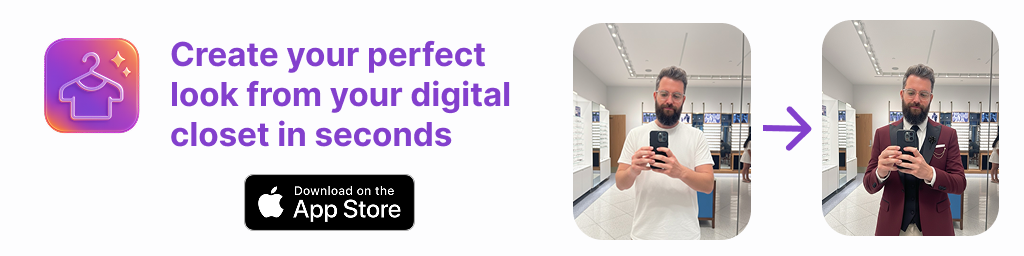
A digital closet app can make it easier to see what you own, plan combinations, and remember outfits you like. But adding every item in your wardrobe on day one can turn a helpful tool into another chore. The best way to begin is to create a small, useful collection, learn what details help you find clothes, and build from there.
These digital closet app tips for beginners focus on a practical first step: catalog around 20 frequently worn pieces, then use them to plan a few real outfits. You will learn how to photograph and label garments, test combinations, and understand what an AI virtual try-on can—and cannot—tell you.
1. Decide what you want your digital closet to do
Before taking photos, choose one problem you want the app to solve. Perhaps you forget what is in a drawer, repeat the same outfits, or struggle to plan clothes for work. A clear purpose helps you decide which items to add and what information is worth recording.
For example, if mornings feel rushed, prioritize the clothes you wear during the week and make a short list of complete outfits. If you often buy pieces that do not work with your existing wardrobe, catalog the garments you already reach for and use them as a reference when considering combinations.
- For outfit planning: Start with items you wear regularly and can combine in several ways.
- For wardrobe visibility: Include pieces tucked away in drawers or stored out of sight.
- For a specific occasion: Begin with clothing suitable for that event, season, or trip.
Keep the first goal modest. A digital wardrobe does not need to be complete to be useful; it needs to represent enough of your real clothes to answer a question you actually have.
2. Start with 20 useful items, not everything
Choose a manageable first batch of about 20 pieces. This is a starting point, not a rule: add fewer if you want a quick trial, or more if you already have clear photos. A balanced selection might include five tops, four bottoms, two dresses or one-piece outfits, three layers, and a few pairs of shoes. Adjust the mix to your lifestyle.
Pick clothes that are clean, available, and part of your current routine. Include a couple of dependable basics and a few distinctive items you enjoy wearing. Avoid beginning with a pile of clothes you have not worn in years; they may add catalog work without helping you plan next week.
As you add each piece, ask: Would I realistically wear this in the coming weeks, and can I imagine pairing it with something I own? If the answer is no, leave it for a later review. You can expand the collection when you notice a genuine gap.
3. Take clear photos that are easy to recognize
Item photos are the visual foundation of your digital closet. A simple, consistent setup makes the catalog easier to scan. Use a well-lit spot, a plain background, and a view that shows the garment’s overall shape. Lay an item flat or hang it neatly; keep sleeves, hems, and important details visible.
Photograph one item at a time. Try to avoid strong filters, colored lighting, or a busy background that changes how a color appears. If a garment has a detail that affects styling—such as a bold pattern, an unusual collar, or a visible texture—make sure it can be seen. The aim is recognition, not a professional product shoot.
For shoes and accessories, frame the complete item rather than a close crop. If you are using a photo of yourself wearing an item, choose one where the clothing is unobstructed. Some apps may use garment images for outfit visualization, but the displayed result is a visual aid, not a precise rendering of every fabric or construction detail.
4. Add only the labels that help you find things
Useful labels make a catalog searchable and practical. Begin with details you can identify consistently, such as garment type, color, and season or occasion. Add other labels only if you expect to use them. A long list of vague tags can make adding clothes slower without making future searches better.
| Label | Example | How it helps |
|---|---|---|
| Type | Jeans, blouse, cardigan | Find a category when building a combination |
| Color | Navy, cream, olive | Spot pieces that may coordinate |
| Use | Work, casual, event | Filter mentally or in the app by occasion |
| Season | Warm weather, cold weather | Keep planning relevant to current conditions |
| Notes | Needs a layer, delicate fabric | Remember a practical styling detail |
Choose one naming style and stick with it. For instance, if you tag a pair of trousers as “work,” use that label for similar pieces instead of switching between “office,” “business,” and “workwear” without a reason. Consistency helps you make sense of the collection later.
5. Build outfits from clothes you already wear
A catalog becomes more useful when it helps you create complete outfit combinations. Start with a familiar item, then add pieces around it: a top, bottom or one-piece garment, a layer if needed, and footwear. Save combinations that feel plausible for your daily life, rather than creating looks just because the colors appear together on a screen.
For example, suppose your starter closet includes a white T-shirt, straight-leg dark jeans, a green cardigan, a lightweight jacket, and white sneakers. One casual combination is the T-shirt, jeans, cardigan, and sneakers. For a cooler morning, try the same base with the jacket instead of the cardigan. If you own a patterned scarf, compare it as an additional accent. This gives you variations from pieces already in the catalog without requiring a new purchase.
When trying a combination, think about the whole situation: weather, comfort, dress expectations, and how long you will be wearing it. A visual match is only one part of a good outfit. Save the looks you would genuinely consider wearing, and note what needs changing when a combination does not work.
6. Use AI try-on as a visualization tool—not a fitting room
AI outfit generators and virtual try-on tools can help you preview how clothing combinations might look together from photos. This is useful when you want to compare options without physically changing clothes, or when you are trying to remember whether a particular layer works with an outfit.
However, treat the image as an approximation. Visualization does not guarantee an exact representation of fit, garment length, drape, fabric weight, texture, or how a piece moves on your body. A photo-based preview cannot replace checking the actual garment, trying it on, or considering its comfort and construction. Results may also be affected by the quality and angle of the source photos.
Use the preview to answer style questions, such as “Do these colors and layers look balanced?” Then rely on real-world checks for fit and feel. This distinction keeps an AI outfit generator helpful without expecting it to make sizing or fabric predictions it cannot guarantee.
7. Make a small outfit plan and keep it flexible
For a first planning exercise, choose three days rather than attempting a full month. Assign one saved combination to each day based on your schedule. If two days have similar demands, see whether a small change—such as swapping shoes or adding a layer—creates a different look.
- Check the calendar for the occasion and any dress expectations.
- Look at the forecast and note whether you may need a warm or rain-ready layer.
- Choose a base outfit from your catalog.
- Preview or compare alternatives, then select the option that seems practical.
- Keep a backup combination if your plans or the weather may change.
Do not treat the plan as a rigid schedule. If an item is in the laundry or the weather shifts, substitute another piece and update the saved look if the alternative works. Planning is meant to reduce last-minute decisions, not create another rule to follow.
8. Keep the catalog current with a quick routine
A digital closet is most helpful when it reflects clothes you can actually wear. Set aside a few minutes after adding new pieces or changing seasons to check for missing, duplicated, or outdated entries. If you no longer own something, remove it or mark it unavailable if the app offers that option. If an item is temporarily packed away, a note can help explain why it is not part of everyday planning.
Make small updates rather than waiting for a major catalog project. When you wear a saved combination, consider whether it was comfortable and suitable for the occasion. A short note such as “good for a cool office” or “needs different shoes” can make the next decision easier. You can also save combinations you want to share or compare, where your app supports those options.
Common beginner mistakes to avoid
- Trying to catalog everything immediately: Begin with a useful subset and add items in small batches.
- Taking hard-to-recognize photos: Use simple lighting and show the whole garment clearly.
- Over-tagging: Use a few consistent labels that support real searches.
- Saving unrealistic combinations: Consider comfort, weather, and the actual occasion.
- Expecting exact fit predictions: Use virtual try-on for visual comparison, not sizing certainty.
- Never reviewing the collection: Update it when your wardrobe or routine changes.
Make your digital closet useful one outfit at a time
The easiest way to maintain a digital wardrobe is to connect it to decisions you already make. Start with clothes you wear, photograph them clearly, use a few helpful labels, and build combinations around familiar pieces. Then add more items when a specific planning need arises.
Keep your expectations grounded: an app can help you organize garments and visualize outfit ideas, but your own judgment remains important for fit, comfort, and fabric. For a step-by-step overview of organizing wardrobe items, see Outfit Maker’s guide to creating a digital closet. A small, accurate catalog is a better beginner’s tool than a large collection you never use.