Picture this: every item you own has a crisp photo, consistent tags, and searchable details. You can filter by color, season, or dress code, and instantly preview complete outfits before you even open a drawer. That’s the promise of using a closet organizer to catalog clothes photos—less decision fatigue, fewer impulse buys, and more wear from what you already own.
This guide outlines a practical, repeatable method to build and maintain a digital wardrobe that actually works. You’ll learn how to photograph garments, design a tag system, name files that scale, and translate your catalog into outfit formulas and daily looks. Whether you’re starting from scratch or refining an existing setup, use these steps to create a clean, useful wardrobe database you’ll rely on year-round.
What a Digital Closet Organizer Should Do
An effective closet organizer to catalog clothes photos is more than a gallery of images. Look for, or design, a system with these capabilities:
- Fast photo capture: Batch add items, remove backgrounds, and crop consistently.
- Structured data: Tags for category, subcategory, color, fabric, pattern, season, occasion, and care.
- Measurements and fit notes: Shoulder, inseam, rise; tailored adjustments; how it fits compared to your norm.
- Wear tracking: Calendar or history to log outfits and compute cost-per-wear.
- Outfit builder: Layer items virtually, save looks, and clone variations for different weather.
- Search and filters: Multi-filter by color + occasion + temperature range, etc.
- Sync and backup: Cloud backup and device sync to protect your catalog.
- Privacy controls: Manage sharing; remove location data when exporting images.
“If you can’t find it in 20 seconds, you won’t wear it.” Treat your digital closet like a search engine for your wardrobe.
Photograph Your Wardrobe the Right Way
Set up once, batch forever
- Lighting: Indirect daylight by a window is ideal. Avoid mixed light (warm lamps + daylight) to keep color true.
- Background: Neutral, matte surface (white poster board or plain wall). Consistency accelerates background removal.
- Tripod and grid: Enable camera grid lines for alignment. Use a tripod or stand for consistent framing.
- Cleaning and prep: Steam, lint roll, and zip/button garments so they lay flat and true-to-fit.
Choose your capture style
- Flat lay: Fast, great for tops, knits, denim. Watch for warping; smooth hems and collars.
- On hanger: Good for dresses, coats, and flowy fabrics. Shoot straight-on to reduce skew.
- On-body (optional): Useful for fit reference and drape. Keep a neutral pose and background.
Angles and completeness
- Primary image: Full item, centered, with space around edges.
- Detail shots: Fabric texture, pattern repeat, labels, and unique features (pleats, hardware).
- Back/alternate view: Especially for outerwear, denim, shoes, and bags.
Background removal and cleanup
- Use automatic background removal for uniform product-like images that layer cleanly in outfit builders.
- Manually correct edges on complex shapes (lace, straps, fringe).
- Keep color true—avoid filters that shift hue; adjust white balance sparingly.
Batching workflow
- Group items by type (all tees, then all denim) for faster muscle memory and consistency.
- Shoot primary images first, then detail shots.
- Immediately rename or tag in batches so items don’t stack up nameless.
File Names and Folders That Scale
A solid naming convention makes your images self-explanatory, sortable, and resilient across apps. Use a predictable schema and ISO dates for chronology.
Category_Subcategory_Sleeve/Length_Color_Brand_Size_YYYY-MM_costXX.jpgExamples:
TOPS_Tee_Crew_Short_Black_UNIQLO_M_2023-08_cost35.jpg
BOTTOMS_Jeans_Slim_32x30_Indigo_Levi's_31_2022-11_cost79.jpg
SHOES_Sneaker_Leather_White_NewBalance_9_2024-05_cost110.jpg- Underscores separate fields; CamelCase or TitleCase inside fields improves readability.
- Use fixed vocab for categories and colors (e.g., Navy vs. Blue-Navy). Random synonyms break search.
- Folder structure: /Wardrobe/Category/Subcategory. Keep the catalog mirrored locally and in cloud storage.
Build a Smart Tag Taxonomy
Tags turn photos into a searchable database. Start simple, then expand. Below is a practical baseline:
| Tag Group | Examples | Notes |
|---|---|---|
| Category | Tops, Bottoms, Dresses, Outerwear, Shoes, Bags, Accessories | Primary filter for navigation |
| Subcategory | Tee, Button-Down, Jeans, Trousers, Blazer, Coat, Skirt | Refine within category |
| Color | Black, White, Navy, Olive, Camel, Burgundy | Fixed palette; avoid duplicates like “Dark Blue” vs “Navy” |
| Pattern | Solid, Stripe, Check, Floral, Graphic | Optional if you wear mostly solids |
| Fabric | Cotton, Wool, Linen, Silk, Denim, Leather | Useful for season and care |
| Season | All-Season, Summer, Winter, Transitional | Tie to weather filtering |
| Occasion | Work, Casual, Smart-Casual, Formal, Travel | Drive outfit suggestions |
| Fit/Notes | TTS, Oversized, Tailored, Needs Hem | Helps with future purchases and styling |
| Care | Machine Cold, Dry Clean, Hand Wash | Plan maintenance easily |
| Status | In Rotation, Archive, Sell/Donate | Lifecycle management |
Keep a living glossary that defines each tag, with examples, so you apply them consistently. Consistency is what makes search work.
Step-by-Step: Using a Closet Organizer to Catalog Clothes Photos
- Ingest: Import all new garment photos into a single “To Tag” queue.
- Clean: Remove backgrounds, crop to consistent margins, and color-correct gently.
- Name: Apply your filename schema. Automate with a batch renamer or a simple shortcut that prompts for fields.
- Tag: Add category, color, season, and occasion at minimum. Attach measurements and fit notes where relevant.
- Group: Create collections such as “Work Capsule,” “Weekend Casual,” “Travel Summer.”
- Outfit base sets: Save 5–10 staple combinations (e.g., “Navy blazer + white tee + indigo denim + white sneakers”). These anchor your style.
- Calendar: Log what you actually wear. This powers cost-per-wear and highlights underused items.
- Review: Monthly mini-audit: tag gaps, duplicates, repair notes, and sell/donate candidates.
From Catalog to Outfits: Formulas That Work
Once your catalog is in place, outfit planning becomes modular. Use formulas to generate reliable combinations without starting from zero.
- 3-1 Proportion Rule: Three fitted or streamlined pieces to one relaxed piece, or vice versa. Balances silhouette.
- Color Ladder: 2 neutrals + 1 accent; or 1 neutral + 1 mid-tone + 1 texture/pattern.
- Texture Mix: Pair smooth (poplin) with tactile (wool, suede) for depth in monochrome looks.
Example capsules based on common cores:
| Core | Add | Result |
|---|---|---|
| White tee + indigo jeans | Navy blazer + white sneaker | Smart casual baseline |
| Black turtleneck + trousers | Camel coat + Chelsea boot | Polished winter look |
| Linen shirt + chinos | Loafers + woven belt | Warm-weather refined |
| Silk blouse + midi skirt | Heeled ankle boots + trench | Office-ready ensemble |
| Overshirt + tee + joggers | Leather sneaker | Elevated athleisure |
Save these as reusable “recipes.” When the weather or dress code shifts, swap a single layer or shoe to create variations without rethinking everything.
Maintenance, Analytics, and ROI
- Cost-per-wear: For each item, track purchase price and number of wears. Aim to drive CPW down by remixing, not replacing.
- Seasonal edit: At transitions, archive off-season items. Tag damage and tailor/repair needs.
- 30-day rotation audit: Identify unworn items. Ask why: wrong fit? Missing complementary piece? If fixable, add a “bridge” purchase; otherwise, migrate to sell/donate.
- Gap analysis: Use filters to spot missing anchors (e.g., no rain outerwear) that block multiple outfits.
Over time, the data flips shopping from guesswork to targeted upgrades. You’ll buy fewer, better pieces that unlock many looks.
Privacy, Syncing, and Backups
- Metadata hygiene: When sharing or exporting outfit images, remove geolocation and personally identifying metadata.
- Selective sharing: Share specific outfits or collections, not your entire wardrobe, unless you intend to.
- Backups: Keep redundant backups—cloud sync plus a local archive. Versioning prevents accidental deletions from permanent loss.
- Offline access: Ensure your core catalog is available offline for travel and last-minute outfit planning.
Troubleshooting and Pro Tips
- Colors look wrong? Shoot near a window with lights off to avoid mixed color temperatures; use a gray card or auto white-balance once per batch.
- Background removal halos: Add contrast between garment and background; refine edges manually around hair, lace, and straps.
- Tag sprawl: If filters feel messy, prune synonyms and consolidate. Maintain a tag dictionary and stick to it.
- Duplicate items: Merge entries and preserve the most complete data (purchase date, wear history).
- Hard-to-photograph textures: Add a close-up detail image and a note like “heavy twill” or “sheen.”
- Fit confusion: Add measurement fields and reference your body measurements. Notes like “Rise feels high when seated” are surprisingly useful later.
- Outfit ruts: Create constraints to spark variety: “No denim Thursdays,” “One color accent per day,” or “Rotate all shoes in two weeks.”
- Accessibility: Use high-contrast backgrounds and alt text for items if you rely on screen readers.
Quick Checklists
Photo Capture Checklist
- Neutral background and even light
- Garment steamed, lint-rolled, buttoned/zipped
- Primary, back, and detail shots
- Background removed and edges cleaned
Tagging Checklist
- Category + Subcategory
- Color palette term from your dictionary
- Season and Occasion
- Fabric, care, fit notes
- Purchase date and price (for CPW)
Template You Can Copy
Item Name:
Brand:
Category > Subcategory:
Color:
Pattern:
Fabric:
Size/Measurements:
Season:
Occasion:
Care:
Fit Notes:
Purchase Date / Price:
Status:
Photos: [Primary] [Back] [Detail]
Paste this template into your notes or use it as custom fields in your organizer. Fill it out as you import each item to keep your catalog clean from day one.
With a clear process, your closet stops being a mystery and becomes a reliable system. A closet organizer to catalog clothes photos gives you fast answers: What do I own? What goes together? What should I wear today? Start small, be consistent, and let your data guide smarter styling and smarter shopping.
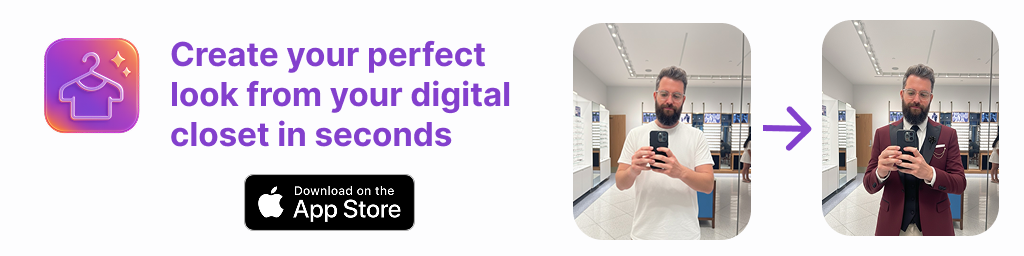
If you prefer an iOS app that combines virtual try-on, smart tagging, and outfit planning in one place, you can explore Outfit Maker as one option.