Looking for a cheap closet organizer for small apartments that actually keeps your clothes visible, reachable, and neat—without drilling into walls or blowing your budget? This guide walks you through a practical, renter-friendly plan: how to assess your wardrobe, measure your space, pick low-cost components that pull double duty, and keep everything tidy with simple habits. You’ll also find a price comparison table and a complete under-$100 shopping list to get started today.
Start With a Plan (So You Buy Less and Use More)
Before purchasing any organizer, take 30 minutes to right-size what the closet must hold. The quickest way to reduce clutter—and cost—is to match storage to what you actually wear.
- Sort by use: Daily, weekly, seasonal, rarely used. Daily items deserve prime eye-level space. Seasonal and rarely used items can go up high or under the bed.
- Group by type: Tops, bottoms, dresses, outerwear, activewear, underwear/socks, accessories, shoes. This will map exactly to bins, shelves, or hanging zones.
- Set a space budget: Give yourself fixed limits, e.g., three bins for sweaters, one hanging section for long dresses, one for short items. When a zone is full, something exits.
- Note special items: Bulky coats, tall boots, hats, formalwear. These determine whether you need an extra tension rod, a deeper bin, or vacuum bags.
Measure Once, Organize Forever
Tiny closets punish guesswork. A few quick measurements ensure every cheap piece you buy fits perfectly and works hard.
- Width: Inside wall to wall. Common reach-in closets range 36–72 inches.
- Depth: Measure door clearance. Some older rentals are shallow; you might prefer front-facing hooks or slim hangers.
- Height: Floor to shelf and shelf to ceiling. Look for 12–16 inches of vertical “air” you can fill with stackable bins.
- Rod height: Standard single-rod closets sit ~66–68 inches high. If you mostly own tops and skirts, add a tension rod about 40–42 inches below to double your hanging capacity without drilling.
- Door type: Swing, sliding, or no door. Over-the-door solutions won’t work on sliding doors; choose slim freestanding towers instead.
Budget Organizer Picks That Work in Rentals
These low-cost components are widely available, easy to install, and re-usable when you move.
1) Over-the-Door Organizers
Shoe pockets or multi-hook racks add vertical storage for shoes, scarves, belts, hats, and even tees rolled into pockets. Choose metal hooks that sit over the door to avoid drilling.
2) Tension Rods (No Tools)
Create double-hang sections for shirts and pants in seconds. Also great for scarf bars or to suspend a few S-hook bags. Look for rods with non-slip rubber ends.
3) Hanging Fabric Shelves
Attach to the existing closet rod to make instant cubbies for sweaters, denim, or handbags. They’re inexpensive, collapse flat for moving, and keep stacks tidy.
4) Slim, Non-Slip Hangers
Velvet or rubberized hangers prevent slippage and save horizontal space. Upgrading hangers is often the cheapest way to gain capacity without adding furniture.
5) Cube Storage (2x2 or 2x3)
Lightweight cubbies fit in the closet floor or outside the closet and hold baskets for socks, tees, or accessories. Choose fabric bins for flexible capacity; label fronts for clarity.
6) Under-Bed Bins or Vacuum Bags
Move off-season items out of the closet. Clear bins let you see contents; vacuum bags shrink bulky coats and blankets, freeing precious rod space.
7) Adhesive or Command Hooks
Perfect for hats, belts, and bags. They turn dead side walls into accessory zones without holes. Check weight limits and prep surfaces to stick well.
8) Drawer Dividers
In a dresser or shallow bin, dividers prevent “junk drawers.” Roll tees, leggings, and socks; stand them upright so you can see every piece at a glance.
Closet Layout Recipes for Small Apartments
Use these quick templates to assemble a cheap closet organizer for small apartments with common constraints.
Reach-In Closet (Single Rod)
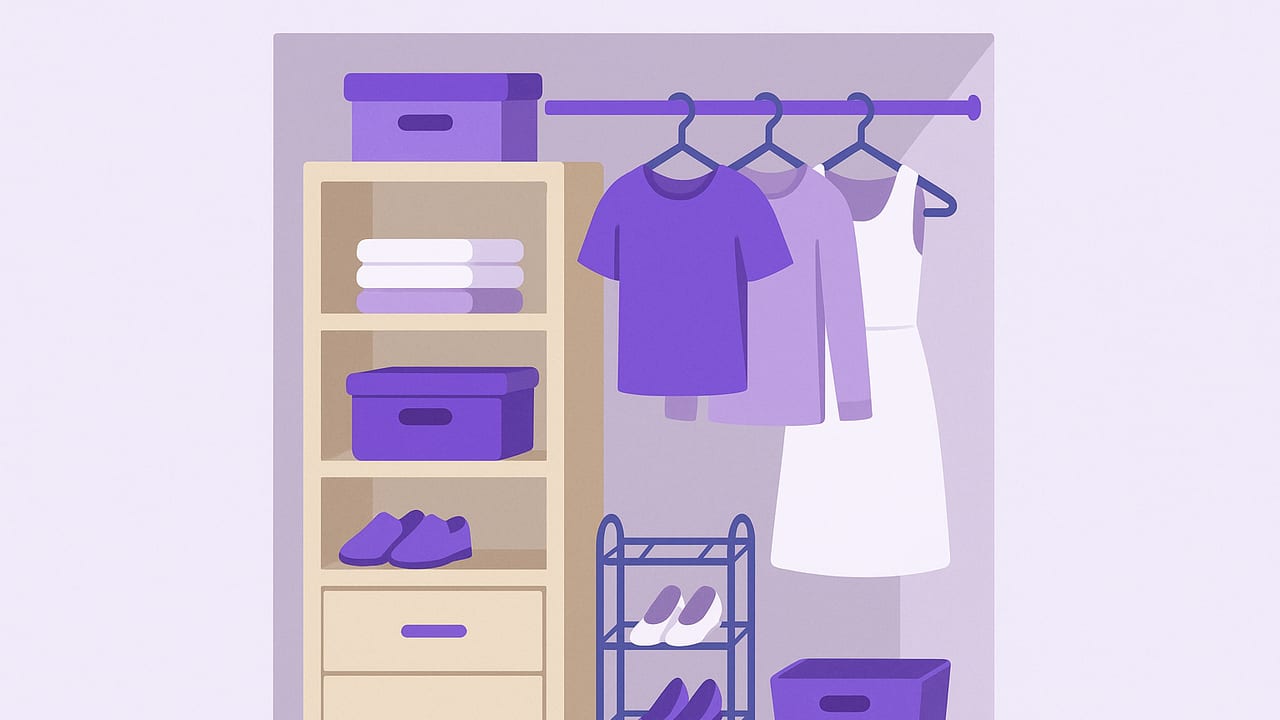
- Add one tension rod for double-hang: upper for tops, lower for pants/skirts.
- Install a hanging shelf unit at one side for sweaters and bags.
- Use under-rod shoe rack or a 2x2 cube on the floor for shoes.
- Place clear bins overhead for seasonal items.
No Closet? (Studio or Micro-Apartment)
- Freestanding garment rack + 2x3 cube base for folded items.
- Use matching hangers to keep it visually tidy in the room.
- Store off-season items in under-bed bins to keep the rack minimal.
Shared Closet (Roommates or Couples)
- Divide left/right zones; match each person’s height with separate tension rods.
- Color or label fabric bins for each person.
- One over-door rack each for accessories to prevent mixing.
Cost Comparison: Cheap Organizer Options
These typical price ranges help you build a plan that fits your budget. Prices vary by retailer and quality tier, but you can often mix these to stay under $100.
| Organizer | Typical Price | Tools Needed | Pros | Best For |
|---|---|---|---|---|
| Over-the-door shoe organizer | $10–$25 | None | Maximizes vertical space; flexible use | Accessories, small shoes, rolled tees |
| Tension rod | $10–$20 | None | Instant double-hang; no drilling | Shirts, pants, light jackets |
| Hanging fabric shelf (5–6 tiers) | $15–$30 | None | Creates cubbies; collapsible | Sweaters, denim, handbags |
| Slim non-slip hangers (20 pack) | $12–$25 | None | Space-saving; keeps garments aligned | General clothing |
| Cube storage (2x2 or 2x3) | $20–$40 | Simple assembly | Modular; works inside/outside closet | Foldables, shoes, accessories |
| Under-bed bins (set of 2) | $15–$30 | None | Hides seasonal overflow | Coats, sweaters, bedding |
| Adhesive/Command hooks (8–12 pack) | $8–$15 | None | Renter-safe; quick installs | Belts, hats, bags |
| Drawer dividers (set) | $10–$20 | None | Prevents clutter; easy to maintain | Underwear, socks, tees |
A Realistic $100 Shopping List (Everything You Need Now)
Use this as a template for a small apartment setup. Adjust quantities to fit your measurements and wardrobe size.
- 1 Hanging fabric shelf (5-tier): $18
- 1 Tension rod (double-hang): $14
- 20 Slim non-slip hangers: $15
- 1 Over-the-door shoe organizer: $15
- 2 Under-bed zip bins: $22
- 8 Adhesive hooks: $10
- Set of drawer dividers: $12
Total: ~$106. Swap the under-bed bins for vacuum bags or scale down hooks to hit $100 flat. This configuration doubles hanging capacity, adds five shelves, stores off-season items, organizes accessories, and tames drawers—all without drilling.
Placement: A 15-Minute Install Map
- Hang the fabric shelf at the far left or right of the closet rod.
- Set the tension rod below the main rod to create a top-and-bottom zone.
- Slide slim hangers on and group by category (tops together, pants together).
- Hook the over-door organizer on the closet door for shoes or small items.
- Place adhesive hooks on side walls for hats, belts, and bags.
- Fill under-bed bins with off-season or bulky items; label the fronts.
- Insert drawer dividers and roll socks/tees so each item is visible.
Make It Maintainable: Simple Systems That Stick
- One-in, one-out rule: When a hanger is added, remove one item. This keeps capacity stable.
- Label lightly: A small tag on bin fronts (“Sweaters,” “Athletic”) prevents drift.
- Weekly 10-minute reset: Re-hang stray pieces, re-roll tees, empty laundry basket.
- Seasonal swap: Move out-of-season garments to under-bed storage and bring the current season into prime space.
- Color from light to dark: A quick visual gradient makes the closet look neater and helps you find items faster.
Inventory Shortcut: A Tiny Closet Catalog You’ll Actually Use
Even in small spaces, a simple inventory prevents duplicates and helps plan outfits with what you already own. If you like spreadsheets, start with this CSV template:
Category,Item,Color,Season,Frequency,Location
Top,White Oxford,White,All,Weekly,Main Rod
Bottom,Black Jeans,Black,Fall/Winter,Weekly,Cube Shelf
Dress,Slip Dress,Green,Summer,Monthly,Hanging Shelf
Outerwear,Light Puffer,Blue,Fall/Winter,Weekly,Overhead Bin
Shoes,White Sneakers,White,All,Weekly,Door Organizer
Accessory,Leather Belt,Brown,All,Weekly,Hook - Left Wall
Keep it to under 50 items so it stays current. Sort by “Weekly” first to ensure prime space goes to the clothes you truly wear.
Common Problems and Fast Fixes
- Too many long items: Group dresses/coats to one side; maintain double-hang on the other. Consider a slim garment bag for special pieces to compress width.
- Shallow closet: Use front-facing hooks and hanging shelves; avoid deep bins that block doors.
- Shoes eating floor space: Move lightweight pairs to the over-door organizer; use a two-tier shoe rack only for heavy footwear.
- No shelf above the rod: Add a lightweight, no-drill shelf riser or stack a narrow 2x2 cube inside the closet for instant overhead storage.
FAQ: Cheap Closet Organizer for Small Apartments
How do I maximize space without drilling?
Use tension rods for double-hang, over-door racks for shoes/accessories, adhesive hooks for hats/belts, and hanging fabric shelves for folded items. These are renter-safe and removable.
Is a garment rack better than a dresser in a studio?
If you own mostly hangables and want visual access, a garment rack plus a 2x3 cube can replace a dresser. If you prefer hidden storage, keep a low dresser and move hangables into the closet with double-hang rods.
What’s the most cost-effective first upgrade?
Switch to slim non-slip hangers and add one tension rod. Together they increase capacity and visibility for under $35–$45, often eliminating the need for bulkier furniture.
Quick Wins You Can Do Today
- Remove truly off-season items and store them under the bed.
- Replace mismatched bulky hangers with slim, uniform ones.
- Add an over-door organizer and move small items off shelves.
- Label two bins: “Weekly Wear” and “Seasonal.” Sort accordingly.
- Schedule a 10-minute Sunday reset to keep the system clean.
Small closets don’t fail for lack of space—they fail for lack of allocation. Give every category a home and protect that border.
With a clear plan, compact measurements, and a few renter-friendly pieces, you can build a cheap closet organizer for small apartments that looks tidy, functions daily, and adapts as your wardrobe evolves. If you prefer a digital layer for planning outfits and keeping a visual wardrobe catalog, the iOS app Outfit Maker can help you virtually try on combinations and organize looks without changing clothes.