A capsule wardrobe planner is more than a minimalist trend. It’s a practical system for deciding what to own, how to combine it, and what to wear—without second-guessing in the morning. The goal isn’t to restrict your style; it’s to remove friction, reduce waste, and increase the number of outfits you genuinely love. This guide covers the full blueprint: color palettes, item counts, outfit formulas, budget math, and simple automation ideas you can start using today.
What a Capsule Wardrobe Planner Actually Does
- Translates your life into clothes: Week-to-week activities, dress codes, and weather become concrete item requirements.
- Limits duplication: You replace five similar tops with two that work better across outfits.
- Creates compatibility: Colors and silhouettes are chosen so pieces mix and match.
- Reduces decision fatigue: Outfit formulas turn planning into a two-minute task.
- Optimizes spending: A budget and cost-per-wear model directs money to high-impact items.
The Step-by-Step Capsule Wardrobe Planner Blueprint
-
Map your life buckets.
List where you actually spend time: office, home, gym, school runs, dinners, travel. Estimate weekly hours. A capsule should reflect reality, not wishful thinking.
-
Choose a cohesive color palette.
Pick 2 base neutrals, 1–2 mid neutrals, and 2 accent colors. Keep silhouettes classic; let texture create interest.
Palette Role Examples Pairs With Notes Base Neutrals Black, Navy, Charcoal Everything Anchor pieces: trousers, coats, shoes Mid Neutrals Grey, Olive, Taupe Bases + Accents Adds depth without clashing Accents Rust, Teal, Blush Neutrals Use for knits, scarves, shirts -
Lock in silhouettes and fits.
Decide on 1–2 core silhouettes per category: tapered vs. wide-leg trousers, relaxed vs. fitted shirts, cropped vs. long jackets. Repeatable silhouettes are the secret to effortless mixing.
-
Set item counts with a formula.
Use a structure like the 3-3-3 Core per season: 3 tops, 3 bottoms, 3 layers that all interoperate—plus shoes and accessories. Scale up with multiples (6-6-6) if needed. Target 30–40 total pieces per season including shoes but excluding underwear and athletic gear.
-
Audit your closet ruthlessly.
Try on and categorize: Keep (fits and flatters), Tailor (minor tweaks), Test (30-day trial), Rehome (donate/sell). Note fabric, fit, and care to inform future purchases.
-
Fill gaps with intent.
Create a punch list ranked by impact: 1) completes multiple outfits, 2) fills a role in your life buckets, 3) improves cost-per-wear across the capsule.
-
Build outfit formulas.
Examples:
- Office smart-casual: Tailored trouser + fine-gauge knit + blazer + loafers
- Weekend: Straight denim + tee + utility jacket + sneakers
- Evening: Satin skirt + silk blouse + cropped jacket + ankle boots
-
Align outfits with calendar and weather.
Create go-to options per temperature band (hot, mild, cool, cold) and per activity (work, errands, social). Pre-plan key days each week.
-
Document and tag.
Photograph items on-body or flat. Tag by color, fabric, season, dress code, and fit notes (e.g., “shrinks slightly,” “needs low-heel”). Documentation speeds planning and shopping.
-
Pressure test with a 10x10.
Select 10 items (7 garments + 3 shoes) and build 10 outfits for 10 days. Note any pain points and adjust your capsule accordingly.
Mix-and-Match Math That Makes It Work
Compatibility multiplies outfits. A small, well-planned set can yield weeks of looks.
| Category | Count | Notes |
|---|---|---|
| Tops | 3 | Button-up, knit, tee (neutrals + one accent) |
| Bottoms | 3 | Trouser, denim, skirt |
| Layers | 2 | Blazer, light jacket |
| Shoes | 2 | Dress shoe, sneaker |
If each top pairs with each bottom, and each top+bottom can take either layer, you get 3 × 3 × 2 = 18 base outfits, doubled again when you add shoe variation and accessories. With only 10 pieces you can easily reach 30+ distinct looks.
Budget Smarter With Cost-Per-Wear
Use cost-per-wear (CPW) to focus spending on high-impact items. Formula: CPW = Price ÷ Expected Wears.
| Item | Price | Target Wears (1 yr) | CPW | Decision |
|---|---|---|---|---|
| Wool Blazer | $220 | 55 | $4.00 | High priority anchor |
| White Tee | $25 | 35 | $0.71 | Buy 2, rotate |
| Sequin Skirt | $140 | 4 | $35.00 | Rent or skip unless essential |
| Leather Boots | $180 | 60 | $3.00 | Worth resoling |
Use CPW to justify quality upgrades on daily drivers (coats, shoes, bags) and to cap spend on special-occasion pieces.
Tailoring a Capsule Wardrobe Planner to Your Lifestyle
Corporate or Smart Casual
- Palette: charcoal, navy, white with a soft accent (burgundy or forest).
- Silhouettes: tailored trouser, pencil or A-line skirt, structured blazer, fine-gauge knits.
- Formulas: Trouser + knit + blazer + loafers; Skirt + blouse + cropped jacket + pumps.
Casual or Parent-On-The-Go
- Palette: mid-neutrals (olive, tan, denim blue) with low-contrast accents.
- Silhouettes: straight denim, breathable chinos, washable knits, utility jacket.
- Formulas: Chino + tee + overshirt + sneakers; Denim + henley + quilted vest + boots.
Creatives and Hybrid Work
- Palette: black/charcoal base with one bold accent (cobalt, rust) and texture play.
- Silhouettes: wide-leg trouser, statement jacket, relaxed shirts.
- Formulas: Wide-leg + crisp tee + architectural jacket + sleek sneakers.
Travel Capsule (5 Days)
- 3 tops, 2 bottoms, 1 layer, 2 shoes; aim for wrinkle-resistant fabrics.
- Formulas: Top A/B/C × Bottom 1/2 × Layer = 12+ outfits; add scarf for polish.
Active-Lifestyle Hybrid
- Palette: black, charcoal, and one athletic accent (teal or neon).
- Silhouettes: jogger-style trousers, performance button-ups, sleek trainers.
- Formulas: Tech trouser + merino tee + bomber + trainers.
Pro Tips for Maintaining Your Capsule
- Run a 30-wear test: If you can’t imagine 30 wears in a year, reconsider the purchase.
- Keep a laundry rhythm: Plan counts around wash cycles to avoid panic buys.
- Mind care labels: Favor machine-washable for daily drivers; reserve dry-clean-only for true anchors.
- Color discipline: New purchases must pair with both base neutrals.
- One-in, one-out: When adding a similar item, remove or repurpose the old.
- Seasonal swap: Box off-season items; re-evaluate when rotating back in.
- Photolog outfits: Save photos of successful looks; tag weather and occasion.
Buy less, choose well, wear it more. A capsule isn’t about austerity—it’s about intention.
Common Mistakes—and How to Fix Them
- Too many statement pieces: Limit to 10–20% of the capsule; ensure they still pair with neutrals.
- Ignoring footwear: Shoes drive formality and comfort. Budget for two high-quality pairs per season.
- Palette drift: Accumulating near-misses (slightly different beiges) fragments the capsule. Standardize.
- Fit amnesia: Keep notes on brands and sizes that truly fit; tailor early.
- Over-purging: Before donating a borderline piece, trial it in three outfits. If it still lags, let it go.
Simple Automation: Rules That Plan Outfits for You
You can encode outfit rules to reduce daily choices. Here’s a lightweight example using weather, occasion, and palette constraints:
# Pseudocode for a simple capsule planner
if temp <= 45:
  layer = "wool coat"
  shoe = "boots"
elif temp <= 70:
  layer = "blazer"
  shoe = "loafers"
else:
  layer = "light overshirt"
  shoe = "white sneakers"

if occasion == "office":
  bottom = pick(["navy trouser", "charcoal trouser"])
  top = pick_neutral_top()
elif occasion == "weekend":
  bottom = pick(["straight denim", "olive chino"])
  top = pick_accent_top()
else:
  bottom = pick_best_fit_bottom()
  top = pick_texture_top()

ensure_color_compatibility(top, bottom, layer)
Even a few rules like these turn a capsule wardrobe planner from a concept into a daily assistant.
FAQ: Quick Answers
How many items belong in a capsule?
There’s no fixed number. For many, 30–40 items per season (including shoes, excluding underwear/athleisure) is a practical range. Start small with a 10x10 to validate.
Do I need to stick to neutrals only?
No. Neutrals make mixing easy, but 1–2 accents keep outfits lively. The key is ensuring accents work with your base neutrals and core silhouettes.
How often should I update the capsule?
Seasonally is ideal. Run a quick audit at the start and end of each season. Replace worn daily drivers; evaluate whether new activities or climate shifts require changes.
A Quick Weekly Planning Routine
- Check the 5-day forecast and calendar events.
- Pre-select 5–7 outfits using your formulas.
- Identify any laundry or care needs early (steam, polish, repairs).
- Snap photos of each outfit for an easy morning reference.
This 10-minute routine turns your capsule into reliable, repeatable results.
Tools That Help
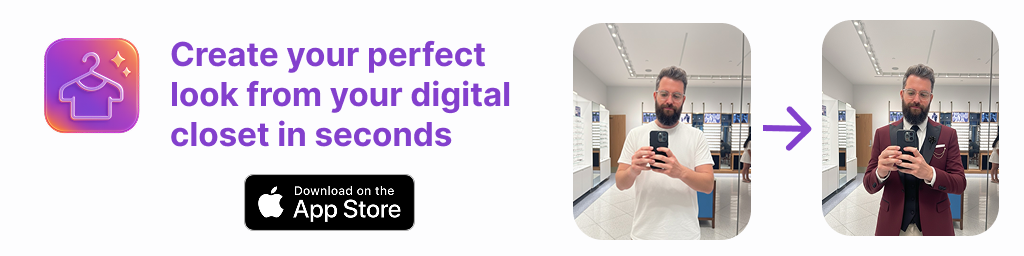
You can plan a capsule with a simple spreadsheet and photos, but visualizing combinations and tracking wear data is easier with a digital wardrobe. A single app-based capsule wardrobe planner lets you catalog items, tag colors and fits, simulate looks, and align outfits with weather and schedule. If you prefer an on-device experience with realistic try-ons, an app like Outfit Maker can help you photograph your closet, mix and match virtually, and save go-to outfits without changing clothes.
Bottom line: A well-built capsule wardrobe planner eliminates cluttered choices and amplifies your personal style. Start with your life buckets, set a disciplined palette, choose repeatable silhouettes, and let formulas and CPW guide the rest. The result is fewer pieces, more outfits, and a calm, confident morning—every day.