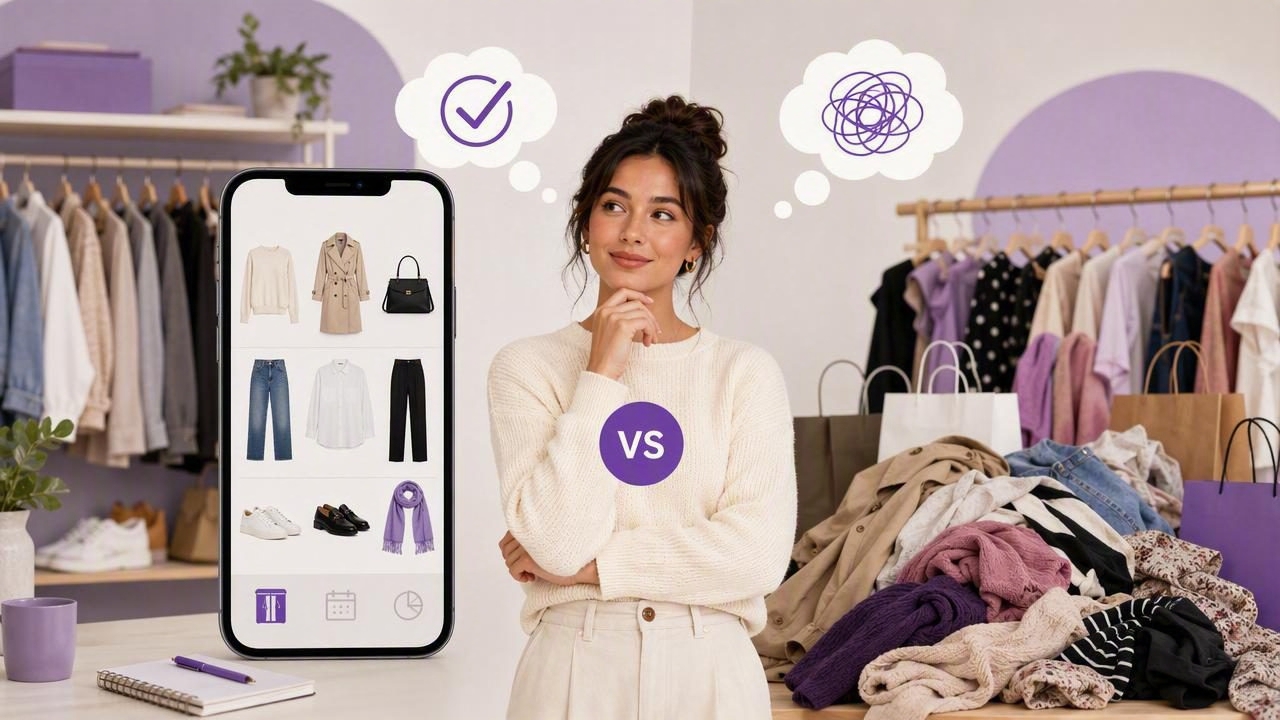
When you feel like you have “nothing to wear,” buying a new outfit can seem like the fastest answer. A new top, pair of trousers, or seasonal dress offers an immediate boost of inspiration. But frequent purchases can also lead to an overfilled closet, duplicate items, and even more stressful outfit decisions.
This is where the capsule wardrobe app vs shopping for new outfits comparison becomes useful. One approach starts with what you already own and helps you create more combinations. The other adds new pieces to solve a specific need, refresh your style, or replace worn essentials. Neither option is automatically right all the time. The better choice depends on your wardrobe gaps, budget, lifestyle, and buying habits.
This guide explains how both approaches work, when each makes sense, and how a digital wardrobe can help you make more intentional fashion decisions.
What Is a Capsule Wardrobe App?
A capsule wardrobe app is a digital tool for cataloging clothing, organizing items by category, and planning outfits from your existing closet. Instead of relying on memory or digging through packed rails and drawers, you can view your wardrobe visually on your phone.
Many wardrobe planning tools let you:
- Upload photos of clothing, shoes, and accessories
- Tag items by color, season, occasion, material, or style
- Create and save outfit combinations
- Track what you wear most often
- Plan looks for work, travel, events, and weekends
- Identify unused items and genuine wardrobe gaps
The purpose is not necessarily to own a tiny number of clothes. Rather, it is to build a wardrobe where more pieces work together. A well-planned capsule might include a limited set of reliable essentials for one season or one area of life, alongside statement pieces that make your personal style feel distinctive.
Why Shopping for New Outfits Feels Like the Easy Fix
Shopping solves a visible, immediate problem. If you have a wedding next week and no formal outfit that fits the dress code, purchasing something may be practical. The same is true when you start a new job, move to a different climate, change sizes, or need to replace clothing that is worn out.
New items can also provide creative energy. A great jacket or pair of shoes may unlock outfits you had not considered before. The issue is not shopping itself; it is unplanned shopping without knowing what your current wardrobe already offers.
Without a clear view of your closet, it is easy to buy:
- A fifth black sweater that performs the same role as four others
- A trendy item that only works with one outfit
- Another “going out” piece when your real need is everyday layering
- Clothing that does not fit your actual routine
- Items that look good in a fitting room but never get worn
A smart closet organizer helps slow down this cycle. It gives you evidence before you buy: what you own, what you wear, and what would genuinely add value.
Capsule Wardrobe App vs Shopping for New Outfits: A Comparison
| Factor | Using a Capsule Wardrobe App | Shopping for New Outfits |
|---|---|---|
| Upfront cost | Usually low; uses clothes you already own | Can range from modest to expensive |
| Speed | Requires initial setup and outfit planning | Can feel fast, but browsing and returns take time |
| Closet clutter | Helps reduce duplication and unused items | May increase clutter without a clear shopping list |
| Creativity | Encourages fresh combinations from existing pieces | Introduces new silhouettes, colors, and inspiration |
| Best for | Daily dressing, packing, budget control, wardrobe clarity | Replacing essentials, filling true gaps, special requirements |
| Long-term value | Improves awareness of personal style and wear habits | Varies greatly depending on versatility and quality |
The most effective wardrobe strategy often combines both. Use digital fashion planning to maximize what you own, then shop selectively for pieces that strengthen the system.
When a Capsule Wardrobe App Is the Better Choice
1. You Own Plenty of Clothes but Repeat the Same Few Looks
If your closet is full but you only wear a small rotation, you may not need more clothing. You may need visibility. Photographing your pieces and arranging them digitally can reveal overlooked trousers, jackets, bags, and shoes that already work with your favorites.
Try creating outfits around one item you rarely wear. Pair it with three basics you already know fit well. This turns an “unwearable” purchase into a useful part of your wardrobe—or confirms that it no longer suits you.
2. You Want to Spend Less Without Feeling Under-Dressed
A capsule approach helps separate an emotional urge to shop from a functional need. Before buying a new blouse, search your digital wardrobe for similar colors, fabrics, and use cases. You may discover that the desired item would duplicate something you already own.
It can also help you calculate cost per wear. A $120 blazer worn 60 times costs $2 per wear. A $40 top worn twice costs $20 per wear. Price matters, but repeatability often matters more.
3. You Are Packing for Travel or Planning a Busy Week
Travel is one of the clearest examples of why outfit planning beats last-minute shopping. Choose a small set of coordinating tops, bottoms, outerwear, shoes, and accessories, then map out outfits before packing. You will be less likely to bring “just in case” items that never leave the suitcase.
The same idea works for a workweek. Planning five outfits in advance reduces rushed mornings and shows whether you truly need another office-ready piece.
4. You Want to Learn What Your Personal Style Actually Is
Style becomes clearer when you observe patterns. You might notice that you consistently choose relaxed tailoring, neutral layers, colorful shoes, or simple dresses with bold accessories. A digital wardrobe creates a visual record of those preferences, making future purchases more accurate.
When Shopping for New Outfits Makes Sense
Using what you own is valuable, but it should not become a rule that prevents you from meeting real needs. Shopping is the better option when there is a clear, specific gap.
Replace Worn-Out Workhorses
If your everyday trainers have lost support, your coat no longer keeps you warm, or your best-fitting jeans are beyond repair, replacement is practical. Prioritize items that you wear frequently and that support multiple outfits.
Adapt to a Lifestyle Change
A new role, climate, fitness routine, or social schedule may require clothing your current wardrobe cannot provide. For example, someone moving from a casual workplace to a client-facing role may need polished layers, comfortable dress shoes, and a work bag. That is a functional wardrobe update, not unnecessary spending.
Fill a Versatile Gap
The best new purchases tend to connect with several items already in your closet. Before buying, ask: “Can I style this at least three ways with clothing I own now?” If the answer is yes, the piece may improve your capsule rather than become another isolated purchase.
A useful shopping rule: Buy for a documented wardrobe gap, not simply for the outfit displayed on a mannequin.
How to Decide Before You Buy
Use this short decision process whenever you are tempted to purchase a new outfit.
- Name the problem. Is it a missing item, an upcoming occasion, boredom, a sizing issue, or a need for a different dress code?
- Check your existing wardrobe. Search for items with a similar purpose, color, or silhouette.
- Create three possible outfits. Use a digital wardrobe or lay the pieces out physically. If three combinations work, you may not need to shop.
- Identify the exact gap. If none of the outfits work, write down what is missing: perhaps a neutral belt, weatherproof boots, or a lightweight layer.
- Set purchase criteria. Define fit, color, budget, care needs, and how many outfits the item should support.
- Review after wearing. If the purchase stays unworn after a reasonable period, learn why before making another similar purchase.
This process does not remove spontaneity from fashion. It simply gives spontaneous purchases a better chance of becoming clothes you genuinely enjoy wearing.
Use Virtual Try-On to Test Outfit Ideas First
One reason people keep shopping is uncertainty: Will these colors work together? Does this jacket balance the proportions of these trousers? Is this look appropriate for dinner, work, or a casual event? A virtual try-on tool can help answer those questions before you change clothes, order multiple items, or make a rushed decision.
By visualizing combinations using photos of your own wardrobe, you can compare options side by side. This is particularly helpful for planning outfits around one new item. Instead of imagining whether it will fit into your closet, you can test its potential role in your existing style.
For example, if you are considering a camel cardigan, try pairing it digitally with your favorite jeans, black trousers, midi skirt, white T-shirt, and patterned dress. If it creates several outfits you would realistically wear, it is likely a stronger purchase than an item that only works in theory.
Build a Better Balance Between Planning and Buying
The goal is not to stop buying clothes forever. It is to make purchases that support a more useful, enjoyable wardrobe. Start by cataloging your most-worn items rather than trying to upload every sock and T-shirt at once. Build a small digital capsule around the pieces you reach for weekly.
Then use that capsule to plan outfits, spot gaps, and create a focused wish list. Over time, your shopping decisions can become less reactive and more personal. You may buy fewer items, but choose ones that fit better, coordinate more easily, and earn more wears.
If you want to make this process visual, an AI outfit generator and digital wardrobe planner such as Outfit Maker can help you test combinations, organize your closet, and plan looks before deciding whether a new purchase is truly needed.
Final Takeaway
In the capsule wardrobe app vs shopping for new outfits debate, the best answer is not always one or the other. A capsule wardrobe app helps you see the value and potential in clothing you already own. Shopping remains worthwhile when you are replacing essentials, addressing a genuine lifestyle need, or choosing a versatile item that expands your outfit options.
Plan first, shop second. With a clearer view of your wardrobe, every new purchase can become a deliberate addition instead of another piece that disappears into the back of the closet.