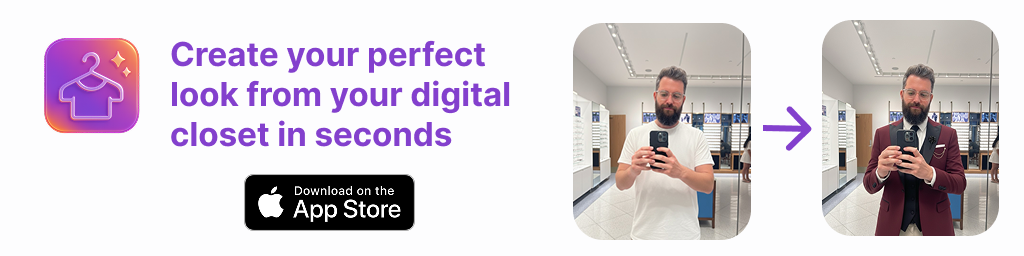
A capsule wardrobe app can make it easier to catalog clothes, test outfit combinations, and see where your wardrobe has gaps. But an app cannot make a capsule useful if the plan behind it does not reflect your life. A small collection can still feel restrictive, and dozens of possible combinations are not much help if none suit your routine or the weather.
To get more from a digital closet, avoid treating capsule planning as a numbers game. Start with what you wear, consider how pieces work together, and use virtual try-on as a visual aid rather than a promise about fit. These common mistakes to avoid can help you build a more practical wardrobe plan.
1. Choosing a target number before considering your lifestyle
There is no universal number of garments that makes a capsule wardrobe successful. A person who works from home, commutes to an office, exercises regularly, or attends frequent formal events will have different clothing needs. Copying a popular capsule count without checking those needs can leave you short on useful options or prompt you to exclude clothes you genuinely wear.
Instead, review a typical week. Note the settings you dress for, how often you do laundry, and which types of clothing earn regular use. Use those observations to decide what belongs in your capsule. An app should help you organize your choices, not set an arbitrary limit.
2. Adding clothes you do not actually wear
A digital closet can look polished while still being inaccurate. If you catalog aspirational purchases, rarely worn gifts, or items that no longer feel comfortable, your outfit plan may be based on clothes that will stay in the closet. That makes an appealing on-screen combination less useful in the morning.
Begin with a realistic edit. Include pieces you wear now, and make a separate note of items you are unsure about. You do not have to discard anything immediately; simply distinguish reliable wardrobe staples from occasional or undecided pieces. Update the catalog when your habits or wardrobe change.
3. Building around a color palette that is too strict
Coordinating colors can make outfit planning easier, but a capsule does not need to follow a rigid palette. A wardrobe made only of neutral basics might be versatile on paper and still feel unlike your personal style. On the other hand, choosing colors without checking how they pair can make it harder to combine pieces.
Try identifying a few colors you already wear often, then look at the actual garments in your closet. Consider whether tops work with your trousers, whether layers suit multiple outfits, and whether shoes fit the combinations you plan to wear. Keep a favorite accent color if it helps you enjoy getting dressed. Practical coordination matters more than following a prescribed palette.
4. Counting combinations instead of checking whether they work
An app can show many theoretical outfit combinations, but a high count does not guarantee useful variety. For example, one top might pair with four bottoms in a catalog, yet feel too formal with two and unsuitable for the weather with another. Accessories, layering, comfort, and dress codes all affect whether a combination is wearable.
Review combinations with real occasions in mind. Ask whether you would wear each look to work, on a casual day, or to an event you actually attend. Save the outfits that feel plausible, and remove or revise those that only work in theory. A smaller set of dependable looks is often more useful than a long list of untested possibilities.
5. Forgetting weather, season, and layering
A capsule wardrobe is not necessarily a year-round wardrobe. A plan built for mild weather may not cover cold mornings, rainy days, or heat. Cataloging a coat, a base layer, and a few light tops is not enough if they do not combine comfortably for the conditions you face.
Plan for the season and climate you are dressing for. Check whether your outfits include suitable layers, footwear, and weather-appropriate options. If you use one closet catalog across seasons, label or group items in a way that helps you find the current rotation. Revisit the plan when the weather changes rather than expecting one fixed capsule to solve every season.
6. Treating every garment as equally versatile
Some clothes are easy to style in several settings; others have a narrower role. A formal jacket may work for meetings and events but feel out of place in everyday outfits. A patterned skirt might be a favorite without pairing with many tops. Neither piece is a mistake simply because it has fewer combinations.
Use your catalog to understand each item’s role, not to score it in isolation. Mark the pieces that support many outfits, then make sure special-purpose favorites still have a place if you enjoy wearing them. A useful capsule balances dependable basics with distinctive items that reflect your taste.
7. Assuming virtual try-on predicts fit or fabric
AI try-on from photos can help you visualize how clothing items might look together on a person. This can be useful when comparing silhouettes, colors, or outfit ideas without changing clothes. However, visual styling is different from exact fit prediction. An image cannot reliably tell you how a garment will feel, drape, stretch, or move in real life.
Use virtual try-on as one input, not as proof that an outfit will fit perfectly. Check the garment in person when possible, consider its size information, and rely on your own experience of comfort and movement. The same caution applies to fabric: an image may suggest a look, but it cannot confirm texture, weight, or breathability.
8. Ignoring shoes, bags, and other finishing pieces
Capsule planning often focuses on tops and bottoms, but shoes, bags, belts, and outerwear can determine whether an outfit is practical. A combination may appear complete in a digital closet while relying on footwear that is uncomfortable for your commute or a bag that does not suit the occasion.
Include accessories that affect how you dress, especially items you use frequently. You do not need to catalog every small accessory at once. Start with the pieces that change an outfit’s formality, comfort, or usefulness, then check whether your saved looks have suitable finishing options.
9. Making a plan without testing it against your calendar
A capsule should support the days you have, not an imagined routine. If your month includes office days, childcare, travel, celebrations, or outdoor activities, a plan that covers only casual outfits may not be enough. Conversely, buying or cataloging formal options for occasions that rarely happen may add unnecessary complexity.
Look ahead at a representative week or month. Identify recurring occasions and plan a few outfits for them. If you travel, consider the destination and activities separately; a city break, a work trip, and a beach holiday call for different combinations. For trip-specific planning, a travel outfit planning guide can help you think through looks by activity and occasion.
10. Failing to revisit your digital closet
A digital closet needs occasional maintenance. You may wear an item more or less than expected, change your routine, or discover that a saved combination is uncomfortable. If the catalog no longer reflects what is clean, accessible, or in regular rotation, its suggestions become harder to rely on.
After trying a planned outfit, take a moment to note whether it worked. Keep the feedback simple: comfortable, weather-appropriate, needs another layer, or not a combination you would repeat. Remove outdated items and add new ones as your wardrobe changes. Small updates can keep the closet useful without turning cataloging into a major project.
A practical example: check a small capsule against real outfits
Imagine planning a workweek capsule around dark jeans, tailored navy trousers, two neutral tops, a striped shirt, a cardigan, a blazer, and comfortable shoes. Rather than deciding that eight pieces automatically make a complete capsule, test combinations against your schedule. The jeans and striped shirt might work for a casual day; the navy trousers, neutral top, and blazer may suit a meeting; the cardigan can add a layer when mornings are cool.
Then look for gaps. If your calendar includes a rainy commute, do you have practical shoes and a suitable outer layer? If a combination looks good in a photo but feels restrictive when you sit or walk, it may not be a useful saved outfit. This check turns a list of garments into a plan based on actual needs. It also shows whether a gap is real, rather than assuming that every missing item requires a purchase.
Make the app serve your wardrobe
The most helpful capsule wardrobe app is one that supports your decisions without replacing them. Use a digital closet to see what you own, explore combinations from your garments, and save looks you want to repeat. Keep your criteria grounded in comfort, weather, personal style, and the occasions you dress for. Treat AI outfit visualization as a way to compare ideas, not a guarantee of sizing, fit, or fabric behavior.
For a clearer starting point, Outfit Maker’s digital closet guide explains how to organize wardrobe items for outfit planning. The goal is not to make your closet fit an app; it is to make your app reflect the closet and routines you already have.