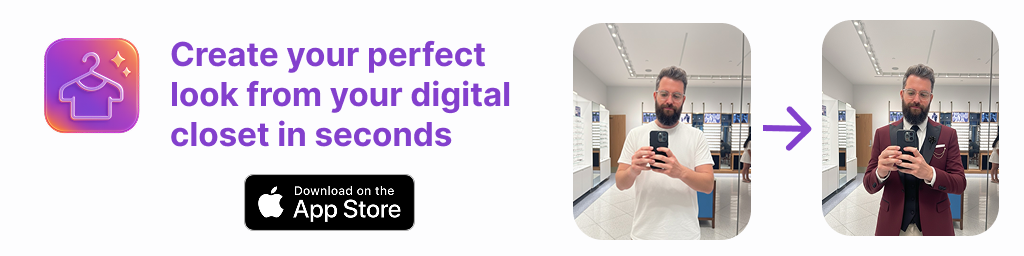
A capsule wardrobe sounds simple: fewer pieces, more outfits, less decision fatigue. In practice, it can feel tricky—especially when you’re not sure which items truly mix well, what gaps you have, or how to plan outfits for real-life situations (work, weekends, events, weather shifts). That’s where an ai outfit generator for ios can help: it turns your actual closet into a searchable, visual system and makes outfit planning much more objective.
This guide shows how to build a capsule wardrobe using your iPhone, a digital wardrobe workflow, and virtual try-on previews. You’ll learn what to track, how to tag items, how to validate a “small but powerful” wardrobe, and how to keep it accurate over time.
What a capsule wardrobe really is (and what it isn’t)
A capsule wardrobe is a curated set of clothes that:
- Fits your lifestyle (the places you actually go)
- Coordinates easily (colors, silhouettes, and dress codes work together)
- Reduces friction (fewer “I have nothing to wear” moments)
It is not a strict item count or a rule that you can’t own extras. Think of it as your “starting lineup”: the pieces you can rely on to create outfits quickly.
Stylist principle: A capsule works when you can make outfits for your hardest day, not your easiest day.
Why use an AI outfit generator on iPhone for capsule planning?
Traditional capsule advice often fails because it’s based on generic lists: “white tee, blazer, jeans.” Your best capsule depends on your body, climate, commute, workplace norms, and personal style.
A digital wardrobe plus AI recommendations helps because it can:
- Show combinations visually (instead of imagining them)
- Surface underused items that work better than you think
- Reveal gaps (e.g., no shoes that match your dressier bottoms)
- Prevent duplicates by making your closet searchable
- Speed up outfit planning with reusable formulas
Step 1: Define your capsule “use cases” before choosing pieces
Start with the life you live. Create 3–6 categories that represent most of your weeks.
Example capsule use cases
- Work (smart casual)
- Errands / casual
- Fitness
- Date night / going out
- Events (weddings, formal dinners)
- Weather-specific (rain, extreme heat, cold)
Then estimate how often each occurs. This matters because your capsule shouldn’t be 50% officewear if you work from home most days.
Step 2: Build a digital wardrobe inventory (fast, not perfect)
Capsules fail when your inventory is incomplete. But you also don’t need a museum-quality catalog. Aim for a usable dataset first.
Quick inventory checklist
- Gather by category: tops, bottoms, layers, dresses/jumpsuits, shoes, bags, outerwear.
- Photograph in consistent light (near a window works).
- Capture the essentials: front view, true color, and enough detail to recognize the item.
- Log what you actually wear first—your top 30–50 pieces.
If your app supports it, add your own photos for virtual try-on previews. The goal is to see combinations without changing clothes, especially for “maybe” pairings you don’t want to physically test.
Step 3: Tag items like a stylist (the tags that matter)
Tags are the difference between a digital closet that looks nice and one that makes decisions for you. Keep tags limited and functional.
High-impact tag system
| Tag Type | Examples | Why It Matters |
|---|---|---|
| Occasion | work, casual, event | Filters outfits quickly for the day |
| Warmth/Weather | hot, mild, cold, rain | Prevents “wrong-season” picks |
| Color Family | black, cream, navy, olive | Makes mixing and matching predictable |
| Silhouette | wide-leg, slim, cropped, oversized | Helps balance proportions |
| Formality | relaxed, smart casual, formal | Stops outfits from feeling “off” |
| Fabric/Texture | denim, knit, linen, leather | Adds depth; avoids awkward combos |
Limit yourself to 5–8 core colors for the capsule. You can own other colors, but your “starting lineup” should mix easily.
Optional: a simple item schema you can copy
If you like structure, here’s a minimal format you can use when naming or tagging items (in notes, spreadsheets, or any tool):
{
  "name": "Black tailored trousers",
  "category": "bottoms",
  "colors": ["black"],
  "formality": "smart casual",
  "weather": ["mild", "cold"],
  "silhouette": ["straight", "high-rise"],
  "goes_with": ["white tee", "silk blouse", "blazer"],
  "avoid_with": ["oversized hoodie" ]
}
Step 4: Use outfit formulas instead of random mixing
Outfit formulas are repeatable structures that make a capsule feel effortless. Once you identify 8–12 formulas that fit your life, you can rotate them with different colors and textures.
Capsule-friendly outfit formulas
- Straight-leg pants + fitted top + third piece (blazer, cardigan, overshirt)
- Wide-leg pants + tucked knit + clean sneakers
- Midi skirt + tee + denim jacket
- Monochrome base + contrasting outerwear
- Dress + structured layer + boots
With a virtual try-on workflow, you can validate these formulas in minutes: test proportions, color harmony, and whether the look fits the occasion. Save the winners as “go-to” outfits.
Step 5: Run a “capsule stress test” (the make-or-break step)
Before you declutter or shop, stress-test your capsule set by generating outfits for a full week—ideally two. The purpose is to prove the capsule works across your real schedule.
Two-week capsule stress test
- Choose your draft capsule: start with ~25–40 pieces (including shoes and outerwear).
- Create 10–14 outfits using your formulas (include at least two “hard days”: travel, weather, big meeting, long walk).
- Check repeats: are you relying on the same 2 bottoms? If yes, add one more bottom or swap a top for better versatility.
- Check shoe coverage: every bottom should have at least two shoe options that feel right.
- Check layering: can you adapt outfits when temperature changes?
When an outfit doesn’t work, diagnose the cause rather than blaming your style. Usually it’s one of these:
- Color mismatch (undertone clash or too many competing hues)
- Proportion issue (two oversized pieces, hem lengths fighting)
- Formality mismatch (athletic sneakers with a formal skirt)
- Texture conflict (chunky knits + bulky outerwear without balance)
Step 6: Identify gaps (and avoid “fantasy self” shopping)
Once you can see outfits, gaps become obvious—and more importantly, specific. “I need tops” is vague. “I need a light layer that works with dresses and high-rise jeans” is actionable.
Gap checklist (buy less, buy smarter)
- Connector pieces: simple layers that make outfits (blazer, cardigan, overshirt)
- Bridge shoes: pairs that work for both casual and polished looks
- Weather solution: rain layer, heat-friendly fabric, cold-proof base
- Occasion-specific outfit: one complete look for events (not just a dress)
Use your saved outfits as a guardrail: only buy items that plug into at least 3 existing outfits (ideally 5). If a new piece needs special shoes, a new bag, and a different bra to work, it’s usually not capsule-friendly.
Step 7: Maintain the capsule with a simple weekly workflow
A capsule is easiest when it stays accurate. Set a lightweight routine that takes 10 minutes per week.
Weekly maintenance routine
- Review saved outfits: mark what you actually wore and what felt “off.”
- Retire friction items: anything that constantly needs adjusting, special layering, or uncomfortable shoes.
- Refresh 2–3 outfits: swap one component (shoe, layer, bag) to create new combinations.
- Update tags when seasons change (e.g., move linen to “hot”).
This is where a smart closet organizer approach pays off: over time, your outfit library becomes a set of proven solutions, not just ideas.
Common mistakes when using an AI outfit generator for a capsule
1) Cataloging everything before you start planning
Start with your most-worn items. Add the rest later. A smaller, accurate dataset beats a big unfinished one.
2) Ignoring shoes and outerwear
Capsules break at the shoe and coat level. Include them in your core set and stress test.
3) Overloading on statement pieces
One statement item is great; five of them compete. Keep your capsule anchored with “connectors,” then sprinkle personality.
4) Not saving outfit wins
If you generate a great look, save it immediately with an occasion tag. Your future self will thank you on rushed mornings.
FAQ: Capsule wardrobes + virtual try-on
How many pieces should my capsule include?
Use a range, not a rule. Many people land around 25–40 pieces for a core capsule (including shoes and outerwear). Start where you are and refine after your stress test.
Can a capsule still include trends?
Yes—treat trends as accessories or single pieces that integrate into multiple outfits. If a trend item only works one way, it’s not capsule-friendly.
Does virtual try-on replace real try-ons?
It’s best for planning and comparison: color harmony, silhouette balance, and outfit variety. You’ll still rely on real wear for comfort and movement.
Putting it all together
A capsule wardrobe becomes practical when it’s visual, searchable, and tested against your actual calendar. With an AI-assisted digital wardrobe on iPhone, you can build a reliable set of outfits, spot gaps early, and stop buying “almost” pieces that don’t integrate.
If you’re looking for an iOS tool that combines a digital wardrobe, virtual try-on, and outfit planning in one place, Outfit Maker is one option to explore.