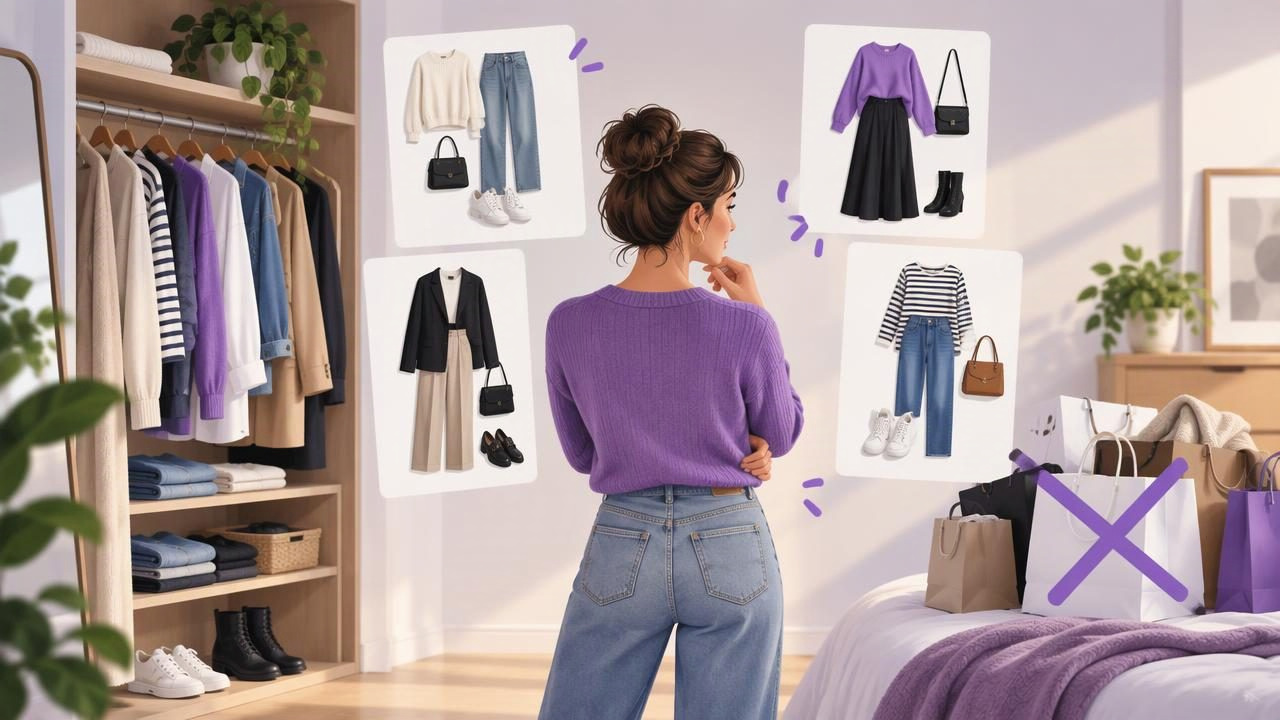
When a closet feels repetitive, buying something new can seem like the quickest fix. But sometimes the issue is not a lack of clothes—it is that existing pieces are hard to see, pair, or remember. The best outfit combination maker can help you explore what you own before adding more, making it easier to identify fresh looks and separate a genuine wardrobe gap from an impulse purchase.
An outfit tool cannot decide what you need or guarantee that an item is worth buying. Its value is in helping you visualize combinations from your own garments and make a more considered choice. With a digital wardrobe, outfit planning becomes a practical way to use clothes already in rotation, notice what is missing, and shop with a clearer purpose.
What makes an outfit combination maker useful for mindful shopping?
An outfit combination maker brings clothing into a visual catalog so you can consider pieces together rather than one at a time. Depending on the tool, you may be able to create outfit combinations from photos of your garments, save looks, and use AI try-on to visualize clothing on your photo. This can make a crowded or hard-to-recall closet easier to think through.
For avoiding unnecessary purchases, the important feature is not the number of looks an app can produce. It is whether you can test a specific idea against clothes you already own. If you are considering a new blazer, for example, can you name several outfits it would complete using your current trousers, skirts, or dresses? If not, the purchase may depend on imagined outfits rather than a clear wardrobe need.
Try this example before buying another black top
Imagine you have a black crew-neck top in your online or app-based closet and are tempted to buy another because you cannot remember how you have worn it. Add the top to a few real combinations: with straight-leg jeans and sneakers for a casual day, with a midi skirt and boots for dinner, and under a jacket with tailored trousers for work. These are not guaranteed to be your best outfits; they are prompts to assess whether the piece already serves different occasions.
Now ask what is actually limiting those looks. If the jeans fit the occasion but you lack comfortable shoes, the missing item may be footwear—not another top. If the top does not work because its neckline clashes with the jackets you wear, a different cut could fill a real gap. If you simply have not worn the combinations recently, saving a few options may be enough to make the top feel useful again.
This small exercise turns a vague shopping urge into a more specific decision. You can decide to wear the top in a new way, alter your outfit plan, or note a genuine gap. The tool helps you see possibilities; you still judge comfort, practicality, and personal style.
How to use a digital wardrobe to check a shopping idea
- Start with the item you are thinking of buying. Write down what you expect it to do: replace a worn-out garment, work for a particular event, or coordinate with a color you wear often. A clear job makes the decision easier to evaluate.
- Look for similar pieces you already own. Search your mental or digital closet for garments with the same function, color, or silhouette. A duplicate is not automatically unnecessary, but it deserves a closer look if you already have options that meet the same need.
- Build combinations from your actual clothes. Try the potential role with garments you own rather than relying on inspiration images. Make a note of which combinations feel wearable and which fail because of a specific missing piece.
- Check the calendar and context. Consider how often the item would suit your real week, climate, dress code, and activities. A look that works in a picture may not work for your commute, daily comfort, or the occasions you attend.
- Pause and make a specific decision. If the purchase still makes sense, record the exact gap it fills and what it needs to coordinate with. If the reason has become hard to explain, wait and revisit the idea later.
This process is more useful than asking an app to produce a large number of random looks. It connects outfit planning to a concrete choice and helps you distinguish a styling problem from a missing-item problem.
Signs you may not need the item
A potential purchase may be unnecessary when it repeats a role already covered by several garments, requires additional shopping to become wearable, or only works with one hypothetical outfit. Another clue is that you cannot identify when you would wear it. These are reasons to pause, not strict rules: a duplicate may be justified if an existing favorite is worn out, difficult to care for, or needed frequently.
It can also help to track outfits you actually wear, not just combinations that look promising on screen. A digital wardrobe can support planning and recall, but your own experience—comfort, weather, laundry routines, and how often an outfit suits your day—should guide what stays in rotation. A saved look is an option, not proof that it works in everyday life.
What an AI outfit generator can—and cannot—tell you
AI outfit generation and virtual try-on can make it easier to visualize garments together using photos. That can be helpful when you want to compare color combinations, explore a silhouette, or remember how your own pieces might work as a look. A visual preview can prompt ideas that are easy to miss when clothes are stored in different drawers or hangers.
However, style visualization is not the same as a reliable prediction of fit. A generated image may not accurately represent garment measurements, how fabric drapes, texture, thickness, stretch, or how a piece feels when worn. Lighting, photo angles, and the way an item is represented can also affect what you see. Treat the image as a styling aid, not a substitute for checking sizing information, material details, or trying a garment on where possible.
Likewise, an outfit tool cannot know your budget, values, or personal definition of a worthwhile purchase unless you apply those yourself. It can help organize choices; it cannot promise that a new item will be worn often or that using an app will reduce spending. Those outcomes depend on the decisions you make.
A simple decision table for your next purchase
| Question | What to check | Possible next step |
|---|---|---|
| Do I own something similar? | Compare the item's role, color, and use with your closet. | Style the existing piece first, or identify why a replacement is needed. |
| Can I make outfits with it? | Name a few combinations using garments you already own. | Buy only if the combinations suit real occasions and feel wearable. |
| What specific gap does it fill? | Look for a repeated obstacle in outfits you want to wear. | Write down the gap; avoid adding unrelated items to make the purchase work. |
| Does the visual preview answer my question? | Separate appearance from size, construction, and fabric behavior. | Check product details and fit through other reliable means. |
Make the habit manageable
You do not need to catalog every garment before making a better shopping decision. Start with the category you tend to buy repeatedly, such as tops, jeans, or occasionwear. Add the pieces you reach for most, then use those to test one purchase idea at a time. You can expand the catalog when it is useful, rather than turning wardrobe organization into a project that must be finished before you can get dressed.
When you save a combination, include a short note about its use—such as “office on a warm day” or “casual dinner.” That context makes a look easier to recall and helps you see whether the same items serve several parts of your routine. If you share looks with a friend, ask for feedback on the styling idea rather than treating someone else's preference as a shopping requirement.
Frequently asked questions
Can an outfit combination maker help me shop less?
It can help you review and style existing clothes before shopping, which may make some purchases easier to reconsider. It cannot control spending or guarantee a particular result. Use it as one part of a deliberate decision process.
Do I need to upload my whole closet?
No. Begin with the clothes relevant to the question you are trying to answer. A small, useful digital wardrobe can help you test combinations without requiring a complete catalog.
Is AI virtual try-on accurate for sizing?
Do not rely on a visual preview as an exact fit or fabric prediction. It can support style visualization, but sizing, garment construction, and material behavior need separate consideration.
Use what you own as your first styling resource
A useful outfit combination maker does more than suggest another look: it helps you connect a potential purchase to the clothes, occasions, and needs you already have. Before buying, test the role of the item against real wardrobe combinations, identify any genuine gap, and remember that an AI preview is a visual aid—not a fit guarantee. If you want to organize garments as a starting point, Outfit Maker's guide to building a digital closet explains the basics of creating a more visible wardrobe.