Cold-weather dressing is a balancing act: an outfit needs to feel warm enough outdoors, comfortable indoors, and coordinated from head to toe. A useful outfit combination maker can help you see how the clothes you already own work together before you get dressed. Instead of repeatedly changing layers, you can compare possible looks and plan around the day’s conditions.
The best outfit combination maker for cold weather is not simply one that produces a stylish picture. It should help you think through layers, footwear, colors, and the practical demands of your plans. Whether you use a digital closet, a notebook, or a mirror, the same method applies: start with the weather, build a functional outfit, and then refine the combination.
What to look for in a cold-weather outfit combination maker
Cold-weather outfits have more moving parts than a simple top-and-bottom combination. A base layer, a sweater, outerwear, and accessories may all affect comfort and appearance. A helpful tool makes it easier to consider those pieces as one look and compare alternatives without losing track of what you have tried.
- Works with your own wardrobe: Outfit planning is most useful when combinations reflect clothes you own, rather than generic inspiration that may not suit your closet.
- Supports layered thinking: You should be able to account for indoor and outdoor layers, not just the coat you wear outside.
- Makes comparison simple: Seeing two combinations side by side can help you choose between, for example, a warmer coat and a lighter one that suits your plans better.
- Lets you save useful looks: Keeping a record of combinations you like can make future mornings or repeat occasions easier to plan.
- Shows visual possibilities without overstating accuracy: A virtual try-on can help you picture a combination, but it cannot guarantee exact fit, warmth, or how a fabric will behave.
A digital wardrobe can be especially useful when seasonal clothes are stored in different places or you forget which pieces pair well. The goal is not to create a perfect image of every outfit. It is to make realistic options easier to review.
Build a warm outfit in four practical steps
1. Start with the day, not the coat
Check the expected temperature, wind, precipitation, and how much time you will spend outside. A short walk from a car to a building calls for different layering than a long outdoor commute. Also consider indoor heating: a thick sweater and heavy coat may feel comfortable outside but become cumbersome once you are indoors.
Write down the day’s main requirements. For example: “cold and windy, 20-minute walk, heated office, possible rain.” This simple note gives your outfit planner a purpose and prevents choosing a look based on appearance alone.
2. Choose a comfortable base
Begin with a top and bottom that feel comfortable for the activities ahead. If you already own a thin thermal top, it may fit beneath a shirt or sweater without adding much bulk. Otherwise, a long-sleeved top can serve as the first layer. Choose trousers, a skirt with warm tights, or another bottom that works for both the weather and your plans.
Think about how the layers will sit together. A base layer that bunches beneath a fitted sweater can be distracting, while a bulky top may not fit comfortably beneath a tailored coat. These details are easier to consider when planning the full combination, rather than choosing each garment in isolation.
3. Add an insulating layer and outerwear
A sweater, cardigan, fleece, or other mid-layer adds warmth. Your coat or jacket then protects the outfit from outdoor conditions. The right combination depends on the weather and the coat you have: a roomy coat may accommodate a chunky knit, while a closer-fitting jacket may work better with thinner layers.
Plan for transitions, too. If you will be indoors for much of the day, consider whether the mid-layer looks complete on its own. A practical outfit should still feel presentable after you take off your coat.
4. Finish with shoes and accessories
Footwear should suit the route and conditions. Boots may be useful in slush or on wet sidewalks, while a different pair may work better for an indoor event. Add accessories such as a scarf, hat, and gloves when they serve a real purpose, and consider whether their colors and textures work with the rest of the look.
Accessories can also make a familiar coat feel different. A neutral scarf may keep the combination understated; a brighter one can bring color to dark winter layers. Try the options against the clothes you actually plan to wear.
Concrete example: three looks from a small winter wardrobe
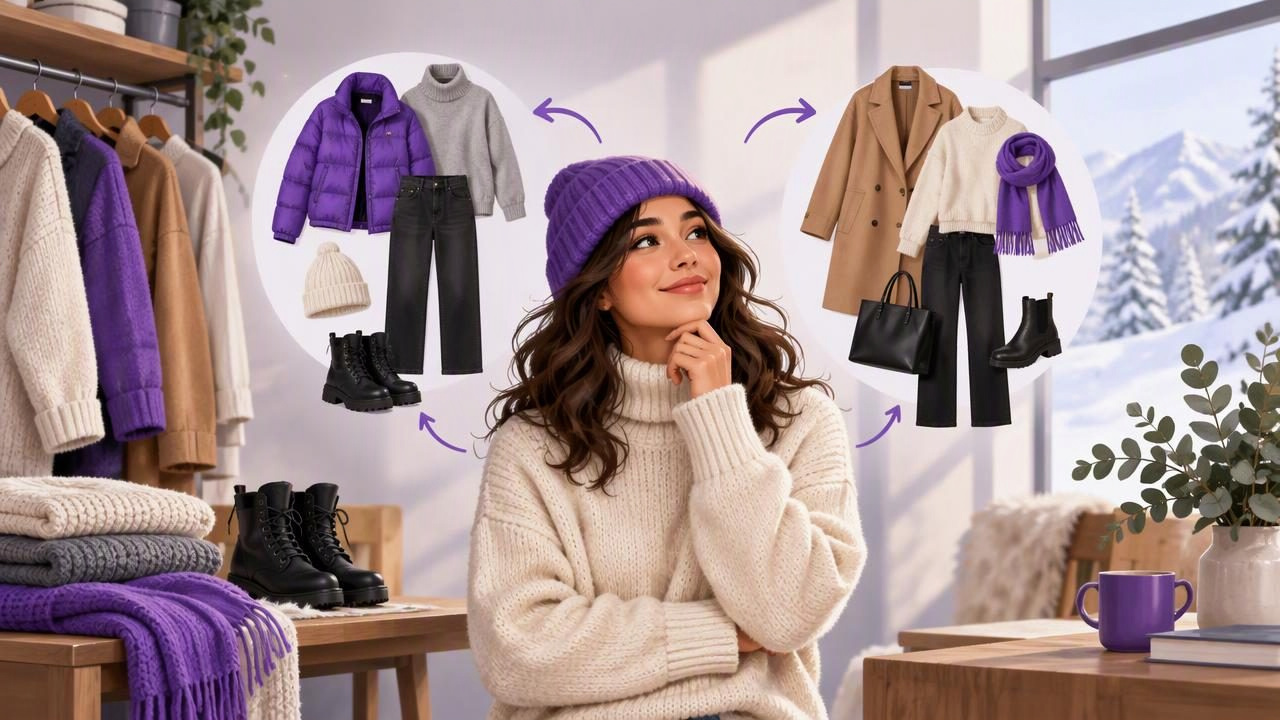
Imagine your closet contains a black long-sleeved top, a cream sweater, dark jeans, a wool coat, a padded jacket, ankle boots, a scarf, and a beanie. The forecast is cold and windy, with a walk to work and a warm office. Rather than starting from scratch, use an outfit combination maker to compare a few combinations built from these garments.
| Look | Combination | Best suited to |
|---|---|---|
| A: Layered and polished | Black top, cream sweater, dark jeans, wool coat, ankle boots, scarf | A cold commute when you want a coordinated office look |
| B: More weather-focused | Black top, cream sweater, dark jeans, padded jacket, boots, beanie | A windier route or more time outdoors |
| C: Lighter indoors | Black top, dark jeans, wool coat, scarf, with the coat removed at work | A milder day or a short outdoor journey |
These are starting points, not universal prescriptions. The padded jacket may be warmer, but its actual performance depends on its construction and condition. The wool coat may look more formal, but it may not be comfortable in strong wind. Check the garments and the forecast rather than assuming that a visual preview tells you how warm an outfit will be.
Comparing the three looks also reveals what might be missing. If none seems suitable for wet weather, the problem may be footwear or a rain-resistant outer layer—not a need to buy an entirely new outfit. A planner can help identify that gap, but it cannot supply an item you do not own.
How to compare winter outfit combinations
When two outfits both look good, evaluate them against the same criteria. This keeps the decision grounded in your actual day:
- Warmth: Are the layers appropriate for the forecast and the amount of outdoor time?
- Flexibility: Can you remove a layer comfortably when you enter a heated space?
- Movement: Can you walk, sit, and carry what you need without the clothes feeling restrictive?
- Weather suitability: Are your shoes and outer layer sensible for wind, rain, snow, or slush?
- Coordination: Do the colors, proportions, and textures feel balanced to you?
- Availability: Are the garments clean, in good condition, and ready to wear?
You can save a combination that meets these needs and add a short note such as “good for windy commute” or “too warm for a heated office.” That small bit of context makes saved looks more useful than a collection of images without explanations.
Use a virtual try-on as a visual aid, not a fit guarantee
AI outfit generators and virtual try-on tools can help you visualize clothing combinations from photos. They may make it easier to compare a coat with different sweaters or see how a scarf changes a familiar look. This can be valuable when you want to explore your own wardrobe without physically changing clothes for every variation.
Still, visualization has important limits. A generated image should not be treated as proof that a garment fits correctly, feels comfortable, or provides enough insulation. Photo angles, garment images, body position, and how clothing drapes can affect the preview. A digital representation also cannot reliably tell you whether a fabric is itchy, a coat blocks wind, or boots have adequate grip.
Use the image to answer visual questions: “Do these colors work together?” or “Would I prefer the scarf with this coat?” For physical questions, rely on wearing the clothes, checking garment details, and considering the weather. Style visualization and fit or fabric prediction are different tasks.
Make a digital closet more useful in winter
A smart closet organizer works best when its contents reflect the clothes you actually reach for. You do not need to catalog every item at once. Start with a few frequently worn cold-weather pieces: your main coats, warm tops, everyday bottoms, shoes, and accessories. Clear photos and simple labels can make items easier to find later.
As you build outfit combinations, notice which pieces appear repeatedly and which rarely make it into a look. A coat that works with several outfits may be a reliable anchor. A bright accessory might help refresh neutral basics. These observations can guide future outfit planning without turning the process into a strict wardrobe audit.
For a practical approach to cataloging clothes and creating a usable digital closet, see this guide to building a digital closet. Keep the catalog manageable: a useful selection of well-documented garments is often easier to work with than an unfinished list of everything you own.
Common cold-weather planning mistakes
- Choosing only by appearance: A sleek combination may not suit a long, cold walk. Consider comfort and conditions first.
- Ignoring indoor temperatures: Wearing every warm layer all day can be uncomfortable in heated spaces. Plan for layers you can remove.
- Forgetting footwear: Shoes affect comfort and practicality, especially on wet, icy, or uneven routes.
- Assuming a preview proves fit: A virtual image can support style decisions, but check the real garments for fit and ease of movement.
- Planning around clothes that are unavailable: Confirm that your chosen items are clean, accessible, and suitable for the day.
- Making too many options: A few realistic combinations are easier to compare than a long list of barely different looks.
Choose combinations that work in real life
The best outfit combination maker for cold weather helps you turn wardrobe pieces into outfits that make sense for a particular day. Begin with the forecast and your plans, layer for comfort, and compare complete looks—including shoes and accessories. Save combinations that work and note when they are useful.
Most importantly, treat AI-generated previews as a way to explore style, not as a promise about warmth, sizing, or fabric behavior. A digital closet and thoughtful fashion planning can reduce guesswork, while your own comfort and the real conditions remain the final test. Outfit Maker offers an AI outfit generator and digital wardrobe planner for people who want to organize garments and visualize combinations from their closet.