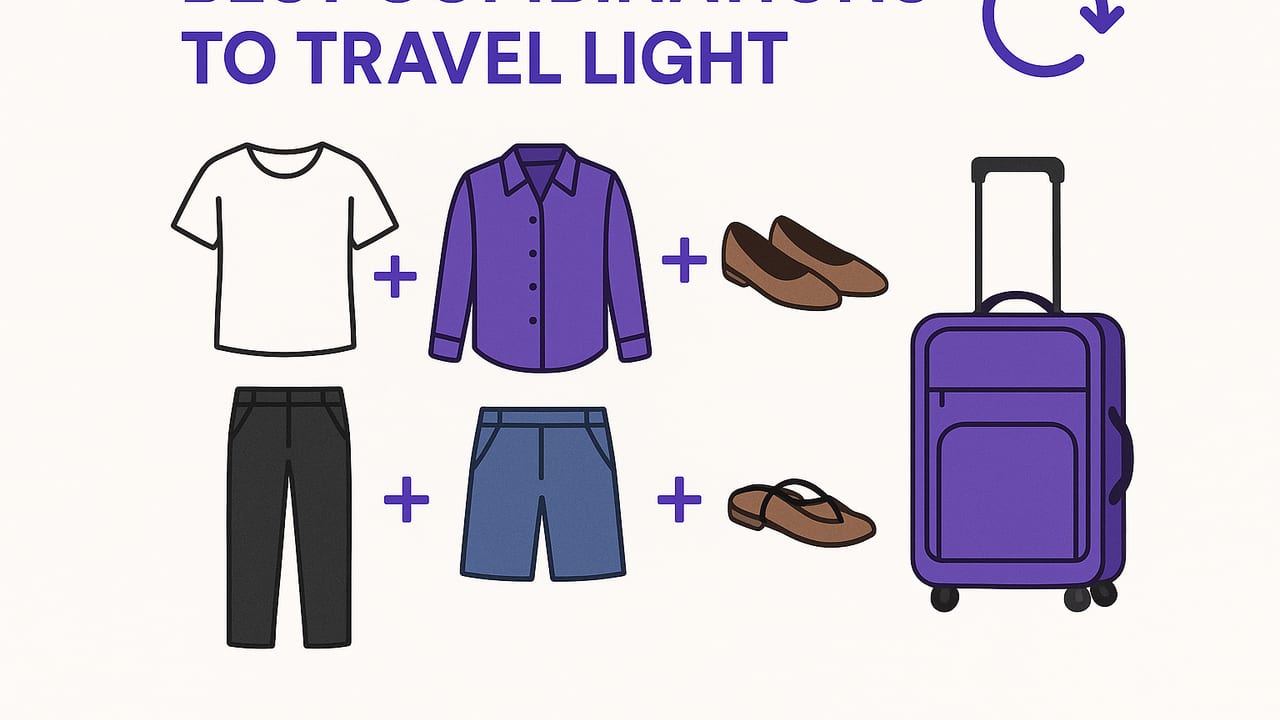
Traveling with ease isn’t about taking more—it’s about combining smarter. The best combinations to travel are rooted in a simple idea: every item earns its place by multiplying outfit options. With the right fabrics, colors, and layering strategy, you can pack a compact capsule that handles changing weather, dress codes, and activities—all in a carry-on.
Pack items, not outfits. Then use smart combinations to create outfits.
What “combinations” really means
The power of a travel wardrobe comes from mix-and-match versatility. A small set of tops, bottoms, layers, and shoes can produce dozens of looks if they harmonize in color, silhouette, and function.
Think in simple math:
Outfit options ≈ Tops × Bottoms × Layers × Shoes (context-dependent)
Example: 4 tops × 3 bottoms × 2 layers × 2 shoes = 48 combinations
Of course, not every combo is practical (a rain shell over linen suiting may feel off), but the math illustrates your goal: selective pieces that multiply. If you’re wondering about the best combinatios to travel with carry-on only, start by ensuring every piece pairs with at least three others.
Core packing formulas that work
Use these proven formulas as a starting point, then tailor for climate and activities.
5–4–3–2–1 (10–14 days, carry-on only)
- 5 tops (mix of short/long sleeve, one dressy)
- 4 underwear + 4 socks (plan to wash)
- 3 bottoms (2 casual, 1 dressy or technical)
- 2 layers (light insulating midlayer + weather shell)
- 1 versatile shoe (wear the bulkier pair; pack the lighter one)
Why it works: Tops drive variety, bottoms ground silhouettes, layers extend climate range.
3–2–1 (long weekend)
- 3 tops
- 2 bottoms
- 1 layer (plus 1–2 shoes total)
Expect 12+ workable looks with color coordination.
2–1–1 (business overnight)
- 2 tops (one dress shirt, one knit)
- 1 tailored bottom
- 1 blazer or smart cardigan
Dress up or down with a shoe swap and accessory shift.
Climate-responsive combinations
Build around the forecast and your activity map.
Hot & dry
- Fabrics: Linen blends, lightweight cotton, technical polyester that resists wrinkles.
- Core combo: Linen shirt + breathable chino short or trouser + sandals or breathable sneakers.
- Layer: Ultra-light sun shirt or UPF overshirt.
Hot & humid
- Fabrics: Moisture-wicking knits, Tencel/Modal, mesh-lined shorts.
- Core combo: Quick-dry tee + technical short + water-friendly slides.
- Layer: Featherweight rain shell; avoid heavy cotton.
Temperate (variable)
- Fabrics: Merino tees, stretch chinos, light down or synthetic puffer.
- Core combo: Merino tee + dark jean or chino + city sneaker.
- Layer: Packable puffer + rain shell to stack if needed.
Cold
- Fabrics: Merino base, fleece midlayer, down or synthetic insulated jacket.
- Core combo: Base layer + warm trouser + insulated jacket + waterproof boot.
- Accessories: Beanie, gloves, thermal socks (small items with big impact).
Rainy
- Fabrics: DWR-treated outerwear, quick-dry pants, merino socks.
- Core combo: Quick-dry top + softshell pant + waterproof shell + water-resistant shoe.
Color strategy: one base, one neutral, one accent
Color cohesion is the backbone of mix-and-match packing. Follow a simple palette plan:
- Base: A dark anchor that hides wear (navy, charcoal, black).
- Neutral: Mid-tone that bridges pieces (taupe, olive, gray, stone).
- Accent: One color pop (rust, teal, burgundy, soft blue).
Example palette: Navy (base) + Stone (neutral) + Sage (accent). Every top and bottom should play with all three where possible. Patterns? Choose micro-patterns in your palette so they still pair broadly.
Footwear: the heaviest choices you’ll make
Shoes can make or break your carry-on plan. Pick 2 (wear 1, pack 1) that cover your itinerary.
| Itinerary | Pair 1 (wear) | Pair 2 (pack) | Notes |
|---|---|---|---|
| City sightseeing | Supportive sneaker | Low-profile loafer/flat | Neutral colors match most looks |
| Beach + town | Breathable sneaker | Minimal sandal | Choose quick-dry options |
| Business + casual | Leather sneaker | Dress shoe | One polish kit/conditioner wipe |
| Wet/cold | Waterproof boot | Packable sneaker | Wear the bulky boot |
Accessories that transform outfits
- Belts: Reversible belt saves space.
- Scarves: Lightweight scarf changes silhouette and adds warmth.
- Jewelry: Small, powerful style shifters; keep to one metal tone.
- Hats: Packable sun hat or beanie for climate control.
- Packs: Compressible daypack; use packing cubes for clothing modules.
Fabric choices that travel well
- Merino wool: Odor-resistant, temperature-regulating, great for repeat wears.
- Performance blends: Nylon/elastane or polyester blends for quick-dry and stretch.
- Linen/linen-blends: Airy for heat; embrace natural wrinkles.
- Stretch denim/chino: Adds comfort on long transit days.
Prioritize garments that dry overnight and resist wrinkles. That single choice cuts your packing list in half.
Sample capsules and outfit math
City + Museum + Casual Dining (7 days, carry-on)
- 4 tops: merino tee (navy), knit polo (sage), white oxford, striped tee
- 3 bottoms: dark jean, stone chino, tailored technical jogger
- 2 layers: light puffer, rain shell
- 2 shoes: leather sneaker (wear), loafers (pack)
Potential looks: 4 × 3 × 2 = 24 (before shoes/accessories). Realistically, you’ll rotate 10–12 outfits without repeats feeling stale.
Beach + Day Trips (5 days)
- 3 tops: quick-dry tee, breezy linen shirt, tank
- 2 bottoms: tech short, tapered chino
- 1 dress or jumpsuit (optional swap for one top)
- 1 light overshirt + packable rain shell
- 2 shoes: breathable sneaker (wear), sandal (pack)
Warm-weather combos prioritize airflow and sun coverage; your overshirt doubles as shade and light layer at dinner.
Common mistakes (and quick fixes)
- Packing “outfits” rather than systems: Fix by enforcing a tight color palette and cross-compatibility.
- Ignoring shoes until the end: Decide footwear first; ensure every bottom works with both pairs.
- Overloading “just in case” items: Replace with a layering piece or a multi-use accessory.
- All-cotton in humidity: Swap to quick-dry knits and merino to avoid damp discomfort.
- No laundry plan: Choose fabrics that can be sink-washed and dried overnight.
A quick planner you can adapt
Use this simple logic to finalize your list:
# inputs: days, climate, activities (e.g., business, hiking, beach)
if days <= 4:
    tops = 3; bottoms = 2; layers = 1
elif days <= 8:
    tops = 5; bottoms = 3; layers = 2
else:
    tops = 6; bottoms = 3; layers = 2 (add 1 if cold/rainy)

if climate in ["hot", "humid"]:
    prioritize quick-dry fabrics; add sun layer
if climate == "cold":
    add thermal base + insulated jacket
if "business" in activities:
    include 1 smart layer (blazer/cardigan) + dress shoe
if "hiking" in activities:
    swap one bottom for trail pant + add performance socks

shoes = 2 (wear bulkier, pack lighter)
accessories = belt + scarf + compact umbrella (if rain)
Mini checklist you can copy
- Palette: 1 base + 1 neutral + 1 accent
- Tops: 3–6 (include one that can go dressy)
- Bottoms: 2–3 (one dark, one light/neutral)
- Layers: 1–2 (insulation + weather shell)
- Shoes: 2 (wear one)
- Underwear/socks: 3–4 pairs (wash halfway)
- Sleepwear: 1 set (can double as lounge)
- Accessories: belt, scarf, hat, minimal jewelry
- Laundry kit: travel detergent, sink stopper, clothesline
- Outerwear: based on climate (packable if possible)
How to test your combinations before you pack
Lay items out by category, then validate with the following:
- Bottom-up test: Each bottom must pair with every top and both shoes.
- Layer test: Each top + bottom should accept either layer without awkward bulk or clashing lengths.
- Event test: At least two outfits should pass for your dressiest expected moment.
- Weather test: Add/subtract a layer and confirm you’re covered across the forecast range.
If any item fails two tests, remove or replace it.
Example micro-capsule for mixed weather
| Category | Item | Notes |
|---|---|---|
| Top | Merino tee (navy) | Base color, odor-resistant |
| Top | Oxford shirt (white) | Dresses up with loafers |
| Top | Knit polo (sage) | Smart-casual bridge |
| Bottom | Dark jean | Travel workhorse |
| Bottom | Stone chino | Light neutral |
| Layer | Light puffer | Packs small, big warmth |
| Layer | Rain shell | Weather insurance |
| Shoes | Leather sneaker | Wear on flight |
| Shoes | Loafer/flat | Dress-up swap |
With this set, you’re covered for museums, casual dinners, an unexpected drizzle, and even a nicer restaurant.
Pro tips for even better combinations
- Repeat silhouettes: If two bottoms share rise and leg shape, your tops will drape consistently across outfits.
- Dual-purpose layers: A thin down jacket under a rain shell becomes a winter parka; separately, each handles shoulder-season temps.
- Neutral footwear: Shoes in black, white, tan, or mid-brown slot into most palettes without drawing attention.
- Compression strategy: Roll knitwear; fold structured shirts with a plastic sheet or folder to minimize creases.
Final thought: the “best combinations to travel” mindset
The best combinations to travel aren’t about deprivation; they’re about design. When every piece cooperates—in color, fabric, and form—you get more style with less stuff, more agility with less stress. Plan your palette, pick fabrics that work as hard as you do, and test the math before you zip your bag.
If you like to preview outfits and log your wardrobe so you can mix and match faster, the iOS app Outfit Maker lets you digitize items, visualize combinations, and plan looks before you pack.