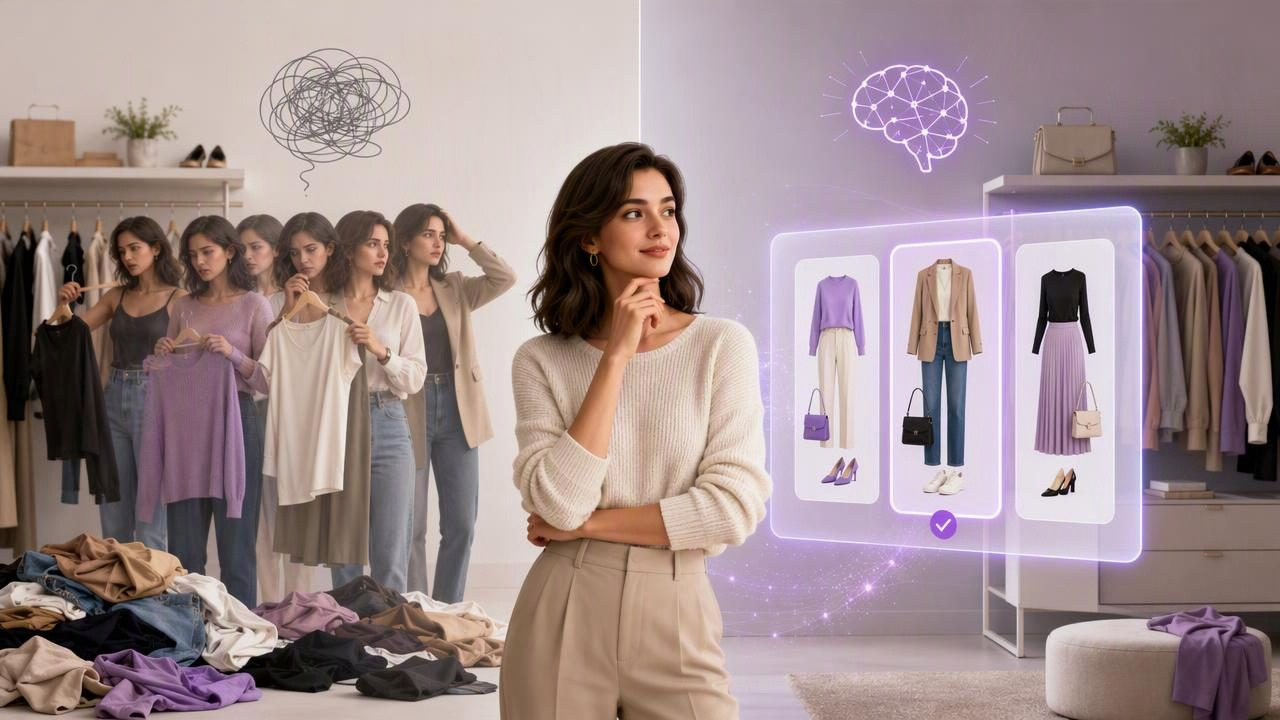
Getting dressed can become unexpectedly time-consuming. You pull on jeans, swap the shirt, change shoes, add a jacket, then decide the first option was probably better. For a workday, dinner, trip, or event, this process can mean trying several outfit combinations before leaving the house.
An AI outfit generator offers a different approach: visualize possible looks from photos before physically changing clothes. Rather than replacing personal style or the final mirror check, it can reduce the number of combinations you need to try on in real life. The result is often a more efficient way to make a decision using the clothing you already own.
This guide compares an AI outfit generator with changing clothes repeatedly, explains where each method works best, and shows how to use both for practical fashion planning.
The Traditional Method: Changing Clothes Until Something Works
Trying outfits on physically is familiar because it gives immediate, real-world information. You can feel the fabric, move around, check the fit, and see how an outfit looks in your actual lighting. For important occasions, that information matters.
However, repeated changes have a clear downside: each new item creates more decisions. A closet with ten tops, five bottoms, three layers, and four shoe options contains hundreds of potential combinations. Most people do not need to test all of them, but even narrowing the choices can take longer than expected.
What repeated outfit changes do well
- Confirm whether clothes fit comfortably right now.
- Reveal how a fabric feels, stretches, wrinkles, or layers.
- Help you assess footwear comfort and movement.
- Show the outfit in the real setting and lighting you will experience.
- Make it easier to notice details such as a loose button, static cling, or an uncomfortable waistband.
Where the process becomes inefficient
- It is slow when you begin without a clear outfit direction.
- It creates laundry, clutter, and a pile of rejected clothes.
- It can make you overlook good garments that were not immediately visible.
- Decision fatigue may cause you to default to the same familiar outfit.
- It is particularly inconvenient when planning several days, such as a workweek or trip.
Changing clothes repeatedly is not a bad method. It is simply a high-effort method when the main question is visual: Do these pieces look good together?
What an AI Outfit Generator Changes
An AI outfit generator helps you explore outfit combinations digitally. Typically, you use photos of yourself and photos of garments in your wardrobe to visualize how selected pieces may look together. This makes it useful for narrowing options before opening every drawer or changing into each look.
The key benefit is not that technology makes every fashion decision for you. It is that it moves early-stage experimentation into a digital space. You can compare a blazer with trousers versus jeans, test whether a bright bag works with a neutral outfit, or check the overall balance of layers without physically changing three times first.
| Decision factor | AI outfit generator | Changing clothes repeatedly |
|---|---|---|
| Speed for comparing many visual combinations | Usually faster once wardrobe photos are available | Often slower because each look requires a physical change |
| Fit and comfort confirmation | Limited visual guidance only | Best option for real fit and movement |
| Planning several outfits | Useful for comparing and saving look ideas | Can be tiring and create clutter |
| Using forgotten wardrobe items | Can make cataloged pieces easier to review | Depends on what you remember to pull out |
| Last-minute decision making | Helpful for quickly narrowing choices | Reliable, but may take more time |
A Concrete Example: Choosing a Dinner Outfit Without Six Changes
Imagine you are meeting friends for dinner after work. The forecast is cool, the restaurant is casual but polished, and you have twenty minutes to get ready. Your available pieces include dark straight-leg jeans, black trousers, a cream knit top, a black fitted top, a charcoal blazer, a leather jacket, loafers, ankle boots, and a small burgundy bag.
With the repeated-changing approach, you might start with the jeans and cream knit. Then you add the blazer. You wonder whether trousers would look sharper, so you change. Next, you try the black top. The ankle boots look good, but you question whether loafers would feel more relaxed. Within minutes, four or five combinations are on the bed.
With a digital wardrobe approach, you could first compare three visual directions:
- Relaxed polished: dark jeans, cream knit, charcoal blazer, loafers.
- Evening minimal: black trousers, black fitted top, ankle boots, burgundy bag.
- Casual edge: dark jeans, black fitted top, leather jacket, ankle boots.
Seeing those directions side by side can make the decision easier. If the evening-minimal option best matches the venue, you only need to physically try on that look and perhaps one backup. You still check comfort, fit, and the weather—but you avoid changing through every possible variation.
This is the practical advantage in the AI outfit generator vs changing clothes repeatedly comparison: digital visualization can narrow the field, while physical try-on confirms the final choice.
What AI Outfit Visualization Can and Cannot Tell You
Realistic-looking visualizations are useful for style planning, color coordination, silhouette comparison, and layering ideas. They can help answer questions such as, “Does this jacket make the outfit feel more formal?” or “Which bag gives this neutral outfit more contrast?”
But an AI-generated visualization should not be treated as a guarantee of how clothing will fit or perform. Photos may not accurately show exact proportions, garment construction, fabric thickness, or wear-related changes. The output is best viewed as a planning aid rather than a replacement for trying on clothes.
Use digital outfit visualization to choose what to test, not to make assumptions about sizing, comfort, fabric behavior, or exact fit.
Always do a physical check when these details matter
- You are wearing the outfit for a wedding, interview, presentation, or other high-stakes occasion.
- The garment is new to you or has not been worn recently.
- You need to confirm undergarments, support, opacity, or neckline placement.
- You will walk, commute, dance, sit for long periods, or encounter changing weather.
- The outfit includes shoes that need a comfort test.
When Changing Clothes Repeatedly Is Still the Better Choice
There are situations where the physical method should take priority. If you are deciding between two dresses with very different cuts, preparing for a full day on your feet, or testing layers for cold weather, real wear tells you more than an image can.
Likewise, people whose bodies fluctuate in size or whose comfort needs change from day to day may benefit from trying on final candidates. A garment that looked ideal in a previous photo may not feel right today. There is no need to choose technology over intuition; the strongest wardrobe routine uses both.
How to Make Either Method More Efficient
Whether you prefer a smart closet organizer or a traditional mirror session, a little preparation reduces friction. Start by organizing clothes around decisions you make frequently, not just broad categories. For example, separate “office-ready layers,” “comfortable walking shoes,” “evening tops,” or “rain-friendly outerwear.”
It also helps to create a short list of dependable outfit formulas. These are not rules; they are starting points that reduce blank-page anxiety.
- Straight-leg trousers + fitted top + structured layer + loafers.
- Dark denim + knitwear + ankle boots + crossbody bag.
- Midi skirt + simple top + lightweight jacket + low-profile sneakers.
- Neutral base + one accent color in a bag, shoe, scarf, or outer layer.
When using an AI outfit generator, photograph garments clearly against a simple background when possible. Include the front view and capture colors in natural light. Better inputs make it easier to recognize pieces in a digital closet and compare realistic-looking combinations. For physical try-ons, limit yourself to three finalist looks before you start. This gives you a useful comparison without turning the bedroom into a changing-room floor.
Make Better Decisions With a Hybrid Outfit Planning Routine
The most effective solution is usually a hybrid routine: plan digitally, then validate physically. Use digital tools when you want to explore, compare, remember, and save outfit ideas. Use the mirror when you need to judge comfort, fit, texture, and confidence in motion.
A simple routine might look like this:
- Review the occasion, weather, schedule, and desired dress level.
- Choose three to five garments that meet the practical requirements.
- Compare a few outfit combinations digitally or on a written list.
- Select one leading option and one backup.
- Try on the finalists physically, including shoes and outerwear.
- Save the winning combination so it is easier to repeat or adapt later.
This method is especially helpful for people who own plenty of clothing but feel they have “nothing to wear.” Often, the issue is not a lack of garments. It is a lack of visibility into what works together.
Final Takeaway
In the comparison between an AI outfit generator and changing clothes repeatedly, neither option wins every time. Physical try-ons remain essential for fit, comfort, movement, and fabric reality. But digital outfit visualization can dramatically reduce the trial-and-error stage by helping you compare outfit combinations before you change.
For anyone building a more intentional digital wardrobe, Outfit Maker’s digital closet guide explains how cataloging your own garments can support easier outfit planning, visual comparison, and saved looks. Use the technology to explore possibilities, then trust your real-world comfort check to make the final call.