An AI outfit generator can make it easier to explore combinations from clothes you already own. But the suggestions are only as useful as the wardrobe information, occasion details, and judgment you bring to the process. A convincing preview can still miss a dress code, feel wrong for the weather, or misrepresent how a garment fits.
Knowing which mistakes to avoid helps you use virtual try-on as a style-planning aid rather than a final verdict. Here are common pitfalls, with practical ways to get more relevant outfit ideas from your digital wardrobe.
1. Adding only part of your wardrobe
If your digital closet includes a few favorite tops but not the trousers, shoes, or layers you wear with them, an AI outfit generator has an incomplete picture of your options. It may suggest combinations that look appealing on screen but rely on items you do not own or overlook pieces that would make the outfit work.
You do not have to catalog every garment in one sitting. Start with the clothes you reach for most, then add useful supporting pieces: bottoms, shoes, outerwear, and everyday layers. Update the catalog when your season changes or you bring a new item into regular rotation.
Try this: Before asking for outfit ideas, check whether the digital closet includes the key pieces for the occasion. A useful wardrobe record is one you can maintain, not necessarily a perfect inventory.
2. Using unclear or misleading garment photos
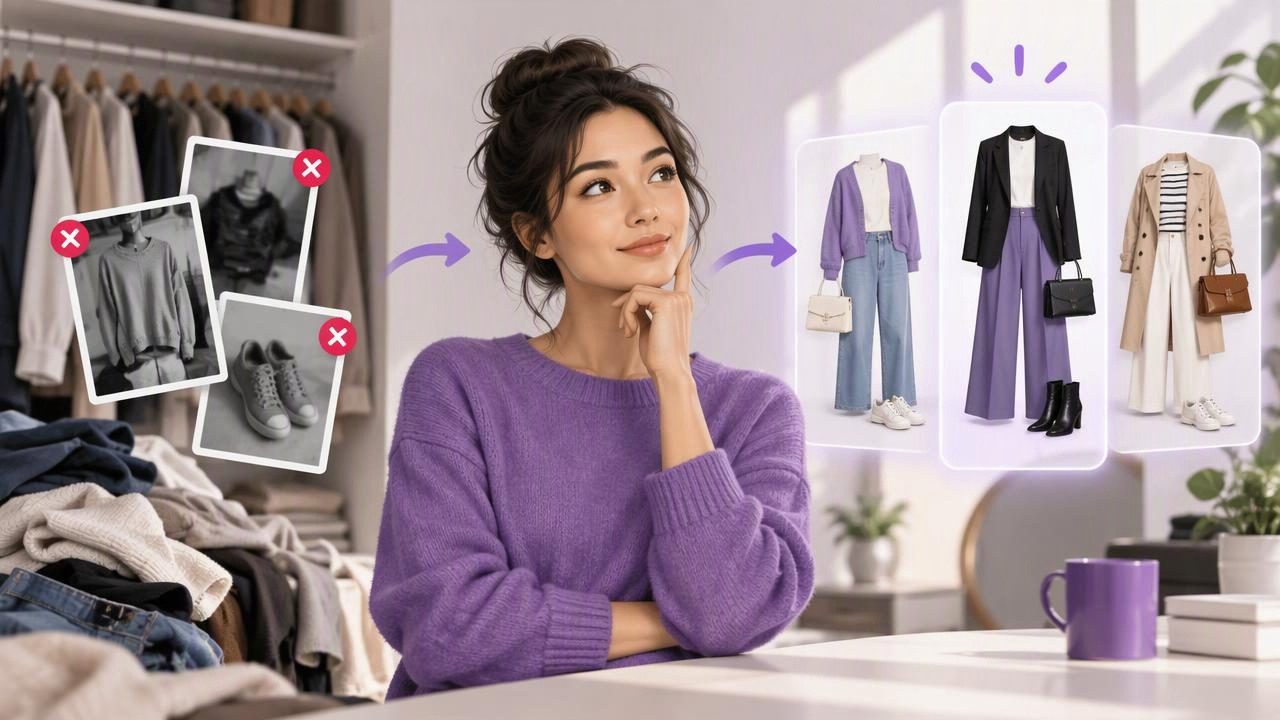
Photos affect how a clothing item is represented. A crumpled shirt, a dark image, or a garment partly hidden by other clothes may make details difficult to see. If the image does not show the color, shape, or important features clearly, the resulting visualization may not reflect the item as you understand it.
When possible, photograph garments in good light against a simple background. Lay the item flat or hang it so its outline is visible, and avoid cropping off details such as sleeves or hems. For patterned clothing, make sure the print can be seen without the image being so busy that the garment shape disappears.
Think of this as improving the reference, not guaranteeing a perfect result. Even a clear photo cannot communicate every detail of texture, drape, or construction.
3. Treating a visual preview as an exact fit check
A virtual try-on can help you picture how clothing items might look together, but an image is not the same as trying on the real garments. A preview may not reliably show precise sizing, ease, garment length, or how fabric moves on your body. Do not use a generated image as proof that an item fits or will feel comfortable.
Use the visualization to compare styling choices: for example, whether a tucked-in top creates the look you want, or whether a particular color pairing appeals to you. For fit and comfort, rely on the garment’s actual measurements, your experience wearing it, and an in-person try-on when available.
Keep the distinction clear: AI can support style visualization. It cannot replace a reliable fit assessment or tell you exactly how a fabric will behave.
4. Leaving out the occasion and practical constraints
“Make an outfit” is a broad request. A look for a casual lunch may not suit a formal meeting, and an outfit that works indoors may be impractical for a long walk. If you do not set the context, you may get combinations that are visually coherent but unsuitable for the day.
Before exploring options, define the occasion, expected level of formality, likely weather, and how much walking or sitting you will do. Also note practical needs such as comfortable shoes or a layer for a cool room. These details help you judge suggestions against real requirements rather than appearance alone.
For instance, a client meeting followed by a walk across town calls for a different decision than a seated video call. A blazer, comfortable trousers, and shoes you can walk in might be a more useful starting point than choosing the sharpest-looking shoes without considering the route.
5. Letting the generator override your personal style
AI suggestions are options, not instructions. If every recommendation feels unlike you, do not assume you need to change your style to make the tool useful. You may need to adjust which garments you include, specify the occasion more clearly, or simply reject combinations that do not feel right.
Notice what you consistently choose: certain silhouettes, colors, or levels of formality. Use that pattern to guide future outfit decisions. A digital wardrobe is most helpful when it reflects your real preferences, including the reliable basics you wear often, rather than an imaginary closet built around trends.
It can also be useful to save a look you like and record why it works: perhaps the colors feel balanced, the layers suit the weather, or the outfit is comfortable for your commute. That gives you a personal reference point without turning every choice into a trend check.
6. Expecting every item to combine with everything
Cataloging more clothes can reveal new possibilities, but it does not mean every top, bottom, and layer will make a wearable outfit together. Differences in formality, proportion, color, or season can make a combination feel awkward. A generated arrangement is a prompt to evaluate, not a guarantee that the pieces belong together.
Consider the outfit as a whole. Ask whether the pieces suit the same setting, whether the proportions feel balanced to you, and whether the shoes and outer layer support the rest of the look. If an outfit seems close but not quite right, change one element at a time. Swapping the shoes or adding a familiar jacket may be more useful than discarding the whole combination.
7. Ignoring weather, comfort, and garment care
An outfit can look appropriate in a preview and still be uncomfortable in the conditions you will face. A lightweight top may not be enough for a cold evening; a heavy layer may be uncomfortable on a warm commute. Some garments may also need special care or feel unsuitable for a full day of wear.
Check the forecast and think about your schedule before settling on a look. Consider temperature changes, rain, indoor heating, and time spent outdoors. If you are unsure how a garment feels after several hours, treat that as a real-world question rather than something a virtual image can answer. Practicality is part of personal style, not an afterthought.
8. Saving too many looks without useful labels
Saving every combination that looks interesting can make a digital wardrobe harder to use. When you need an outfit for a particular day, a long, unorganized list offers little help. Keep looks that you would realistically wear, and give them names or notes that make them easy to find, such as “office—warm weather” or “casual dinner.”
Review saved combinations occasionally. Remove looks that no longer fit your routine, rely on clothes you have stopped wearing, or were saved only because they seemed novel. If sharing a look with a friend helps you compare options, use their feedback as another perspective—not as a substitute for your comfort and preference.
A concrete example: planning for a rainy client meeting
Imagine you own dark trousers, a light blouse, a blazer, ankle boots, and a raincoat. You want an outfit for a client meeting that includes a short walk from the station. A weak approach is to ask for a polished outfit, accept the first preview, and assume the image proves the boots are comfortable or the blazer will be warm enough.
A more useful approach is to confirm that those five garments are represented clearly in your digital closet, then consider the meeting’s dress code and the weather. Compare combinations using the trousers and blouse, with the blazer as a layer. Think through whether the boots suit your walk and whether the raincoat fits over the outfit. The preview can help you compare the overall appearance of the pieces, while your experience with the real garments answers questions about fit, warmth, and comfort.
If the suggested look uses an item you do not own, or misses a practical requirement, treat that as a cue to refine your selection or make the adjustment yourself. The goal is not to obey a generated outfit; it is to make a better-informed choice from your own clothes.
A simple way to get more useful outfit ideas
- Choose a real situation. Identify the occasion, dress code, weather, and practical demands.
- Check the relevant closet items. Make sure the garments you want to compare are represented clearly.
- Review the combination critically. Look at color and overall styling, then separately consider fit, comfort, and fabric.
- Make one change at a time. Swap a shoe, layer, or other piece to see whether the outfit better suits your needs.
- Save only useful looks. Keep combinations you would actually wear and label them for easy retrieval.
This approach makes fashion planning more practical: the AI helps you visualize outfit combinations, while your knowledge of your clothes and routine guides the final decision. It also helps you spot gaps in your digital wardrobe without assuming you need to buy something new.
Use AI as a styling aid, not a final authority
The most common AI outfit generator mistakes come from expecting too much from a visual preview, giving it incomplete wardrobe information, or ignoring the realities of the day ahead. Clear garment photos, relevant context, and honest feedback about what you would actually wear can make suggestions more useful. Still, style visualization is different from confirming exact fit, sizing, fabric behavior, or comfort.
For a practical starting point, Outfit Maker’s guide to building a digital closet explains how to organize clothing for outfit planning. Use any AI outfit generator as one part of your decision-making process: explore combinations, keep what suits you, and trust real-world experience for the details an image cannot establish.