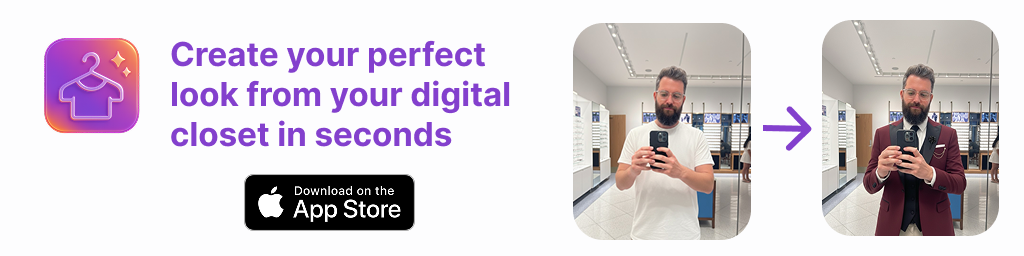
For working parents, getting dressed is rarely the only job happening in the morning. You may be packing lunches, finding a missing shoe, checking the weather, and trying to be ready for a meeting at the same time. An AI outfit generator for working parents can help reduce one decision: what to wear. The most useful approach is to build outfits from clothes you already own, then plan ahead for the real demands of your day.
An AI tool cannot make a busy morning effortless, and a picture of an outfit cannot guarantee how a garment will fit or feel. But a digital wardrobe and virtual try-on can make it easier to see possible combinations before you are standing in front of your closet. With a small amount of preparation, you can create a practical rotation for work, school drop-off, errands, and unexpected schedule changes.
What an AI outfit generator can do for a busy parent
An AI outfit generator uses photos or digital representations of clothing to help you explore outfit combinations. In a digital wardrobe, you can catalog garments and use those items as the starting point for planning. Depending on the app, you may also be able to visualize a look on a photo, save a combination, or share it with someone else.
That changes the task from “invent an outfit while everyone is waiting” to “choose between a few combinations I considered earlier.” It can be especially helpful when your week includes different dress codes or when you need clothes that can handle more than one setting. For example, you might want a look that feels appropriate for a video call but is also comfortable enough for the school run.
The goal is not to generate the most fashionable outfit in isolation. It is to find a combination that fits your calendar, comfort needs, available clothes, and likely activities. Treat AI suggestions as options to review, not instructions you have to follow.
Start with the actual shape of your week
Before adding clothes or generating looks, identify the situations you regularly dress for. A working parent’s week might include office days, remote meetings, a commute, childcare drop-off, playground stops, and errands after work. Those activities can place different demands on the same outfit.
Write down a few practical requirements rather than trying to plan every detail. Consider whether you need layers for changing temperatures, shoes that work for walking, clothes that feel comfortable while sitting, or a backup top in case of a spill. Also note any workplace dress expectations. An outfit that works for a casual home day may not be suitable for an in-person client meeting.
- Work setting: remote, office, client-facing, or a mix.
- Movement: commute, walking, lifting, or sitting for long periods.
- Comfort: preferred fabrics, footwear, and layers.
- Family logistics: drop-off, pick-up, and activities immediately before or after work.
- Weather: rain, temperature changes, or a need for outdoor layers.
This quick inventory helps you judge an AI-generated combination against your real day, not just how it looks on a screen.
Build a useful digital wardrobe without cataloging everything
A digital wardrobe is more helpful when its contents reflect what you actually wear. You do not have to photograph every item before you can begin planning. Start with a manageable group of reliable garments: a few work-appropriate tops, trousers or skirts, comfortable shoes, a layer, and any pieces you reach for repeatedly.
Choose clear photos where the clothing is easy to recognize. Keep categories simple, such as tops, bottoms, dresses, shoes, and outer layers. If an item has a practical detail that affects your choice—such as being especially warm, delicate, or suitable for a particular dress code—make a note if the app allows it. The aim is to make future choices easier, not to create a perfect inventory.
For a more detailed overview of how to organize clothes digitally, read this guide to building a digital closet. A small, accurate catalog is often more useful than a large collection of outdated or rarely worn items.
Use a repeatable outfit formula
When time is limited, a formula can be more useful than a new styling idea every day. Choose a basic structure that works for your workplace and adapt the colors, layers, or accessories. For example: comfortable trousers, a simple top, a light layer, and shoes suitable for the day’s walking. The formula gives you a starting point; the garments can change.
Here is a concrete example. Imagine that Tuesday includes school drop-off, a commute, an office presentation, and grocery shopping on the way home. Your digital wardrobe contains navy trousers, a white knit top, a washable cardigan, a neutral belt, and flat shoes. You could test that combination in an AI outfit generator, then check the calendar and weather. If the presentation calls for a more formal layer, swap in a blazer. If rain is expected, choose weather-appropriate footwear and bring outerwear. Save the final combination so you can find it again without rebuilding the idea on Tuesday morning.
The same formula can produce several variations. A different top or layer may make the outfit feel less repetitive, while familiar bottoms and shoes keep planning simple. This is not about forcing a capsule wardrobe or wearing the same thing every week. It is about making dependable combinations easier to spot.
Plan around real-life transitions
Parents often dress for more than one context in a single day. Rather than planning only for the most formal event, think about the transitions between activities. Will you be carrying a child? Walking from a parking area? Sitting on the floor? Changing from a commute to a video call? Those details can determine whether an outfit is practical.
For a day with both home and office work, you might choose a comfortable base that looks polished on camera, then add a jacket for an in-person meeting. For a day with outdoor drop-off and a warm office, consider a removable layer. If there is a chance of spills or messy activities, decide whether you want a spare top or a garment that is easy to wash. An AI image can help you compare visual combinations, but your knowledge of your routine is what makes the plan useful.
Create a simple weekly plan, not a rigid schedule
Planning a week’s outfits does not mean you have to predict every disruption. Use a flexible plan with a few saved options. Begin by matching outfit ideas to the most predictable parts of your calendar, such as office days or scheduled events. Leave one or two combinations unassigned as backups for weather changes, laundry delays, or a last-minute meeting.
- Check the calendar: identify dress codes, meetings, and family activities.
- Check the forecast: note weather that could change your shoes or layers.
- Choose a base outfit: start with garments already in your wardrobe.
- Review the practical details: comfort, movement, temperature, and care.
- Save the combination: keep the option available for the morning you need it.
Keep the plan easy to revise. If a saved look no longer suits the day, switch to a backup rather than treating the plan as a rule. The purpose of fashion planning is to reduce repeated decisions, not add another obligation.
Know what virtual try-on does—and does not—show
Virtual try-on can help you visualize how clothing items might work together on a photo. It is useful for comparing colors, layers, and general styling without changing clothes for every experiment. It may also help you remember combinations you would otherwise overlook.
However, visualization is not the same as a reliable fit or fabric prediction. A generated image cannot confirm exact sizing, garment measurements, how a fabric stretches, whether it feels comfortable during a commute, or how an item moves on your body. Lighting, image quality, pose, and the way clothing is represented can also affect what you see. Use the preview to explore a look, then rely on the actual garment and your own experience to decide whether it works.
This distinction matters when you are planning for a long day. A combination may look coordinated in a preview but still be too warm, restrictive, delicate, or impractical for childcare and travel. Before saving it as a go-to, consider how each item performs in the situations you expect.
Make the system easier to maintain
A planning routine only helps if it is simple enough to keep using. Add a few frequently worn items first, then update the digital wardrobe when your regular rotation changes. Remove or set aside pieces you no longer wear if they keep appearing in your choices. You can also save outfits by context—such as office, remote work, or errands—if that organization fits how you think.
When a combination works particularly well, save it with a short note about the occasion or useful detail. For example, you might remember that a certain layer works in a cool office or that a pair of shoes is comfortable for walking. If you share outfit ideas with a partner or friend, use that as a way to compare options, not as a substitute for your own comfort and dress-code judgment.
Outfit Maker is one option for parents who want to explore outfits from their own garments with a digital wardrobe and AI-based visualization. Whatever tool you choose, the best result is a realistic shortlist that supports your routine—not a perfect-looking plan that ignores it.
A faster morning starts with fewer decisions
An AI outfit generator for working parents is most useful when it reflects the demands of everyday life. Build a small digital wardrobe, use repeatable outfit formulas, and plan around work, weather, movement, and family transitions. Save combinations that prove practical, while keeping a backup for the days that do not go to plan.
Use virtual try-on as a way to picture possibilities, not as proof of fit or comfort. When the tool supports your judgment instead of replacing it, getting dressed can become a smaller decision in an already busy morning.